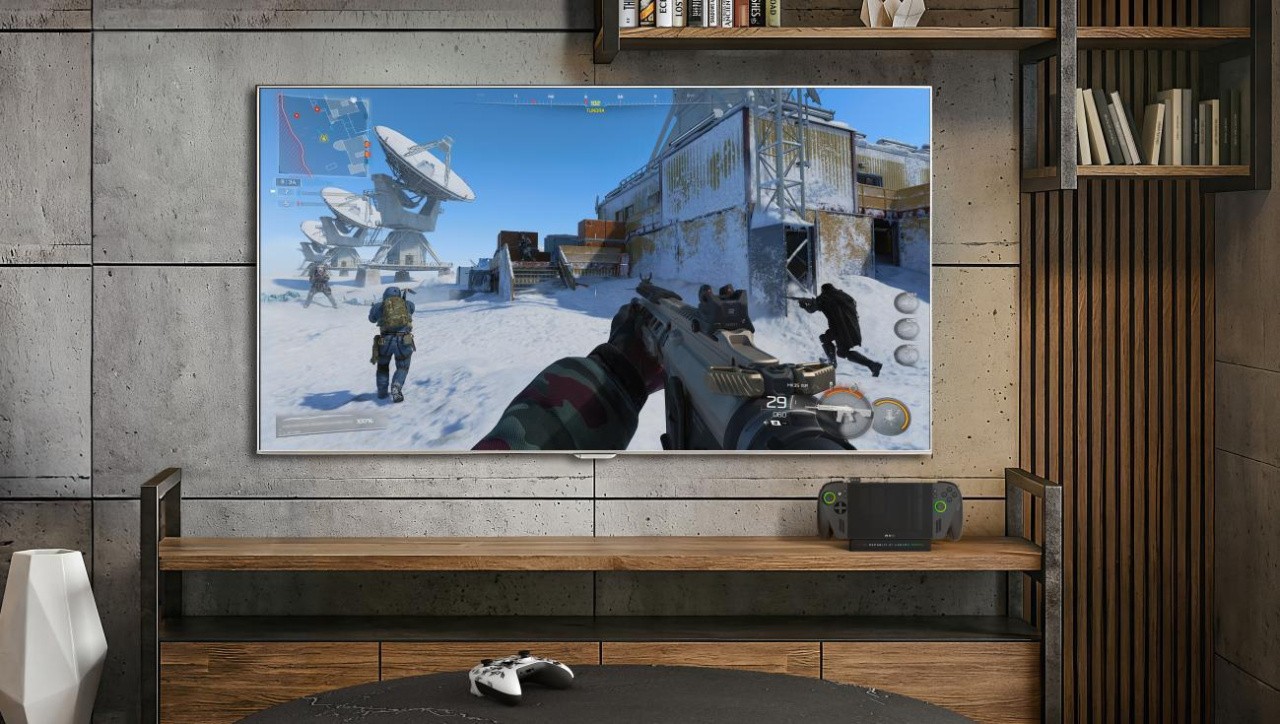
Microsoft is bringing Auto Super Resolution to the ROG Xbox Ally X in docked mode, targeting 4K output with "1440p-like" visuals and frame rates similar to native 720p. The update rolls out first to Xbox Insiders on April 30 and also adds several docked-mode enhancements, including default TV output, HDR/ALLM/VRR support, and controller/input improvements. The standard ROG Xbox Ally will not support Auto SR because its chipset lacks an NPU.
The incremental value here is not the feature itself, but Microsoft's ability to convert a software capability into a hardware pull-through lever. By making the best experience dependent on an NPU-equipped form factor and a docked living-room use case, MSFT is reinforcing a bifurcation in Windows gaming hardware: premium handhelds with AI silicon vs commodity devices that cannot participate in the upgrade path. That should modestly improve attach rates for higher-end SKUs and strengthen the case for OEMs that can monetize AI-capable gaming devices without waiting on game developer adoption. Second-order benefit accrues to the broader Windows ecosystem more than to gaming content publishers. A driver-level, game-agnostic upscaler lowers the friction of playing older and poorly optimized titles at larger-screen resolutions, which should extend the viable life of the PC game library and reduce sensitivity to native optimization quality. That is supportive for platform engagement, but also a subtle headwind for vendors whose differentiation rests on game-integrated reconstruction quality, because the market may increasingly treat "good enough" system-level upscaling as the default for handheld and docked play. The main risk is execution and user-perceived latency: screen-space upscaling can look acceptable in demos but still lose on responsiveness once paired with controllers, TVs, and couch gaming. If early adopters perceive image quality or input lag as inferior, the feature may remain a niche utility rather than a meaningful demand driver. The catalyst window is near-term: uptake should be visible over the next 1-3 months through OEM commentary, accessory attach, and gamer sentiment; if the feature is not expanding beyond enthusiasts by then, the equity read-through is likely limited. The contrarian angle is that this is more defensive ecosystem protection than a true new revenue engine. The market may overestimate near-term monetization while underestimating the strategic benefit of locking premium Windows handheld users into Microsoft's software stack. In our view, the best expression is not a standalone hardware bet, but a relative-value trade that assumes this feature incrementally improves Microsoft’s platform stickiness without meaningfully expanding the total addressable market for handheld gaming devices.
AI-powered research, real-time alerts, and portfolio analytics for institutional investors.
Request DemoOverall Sentiment
mildly positive
Sentiment Score
0.25
Ticker Sentiment
