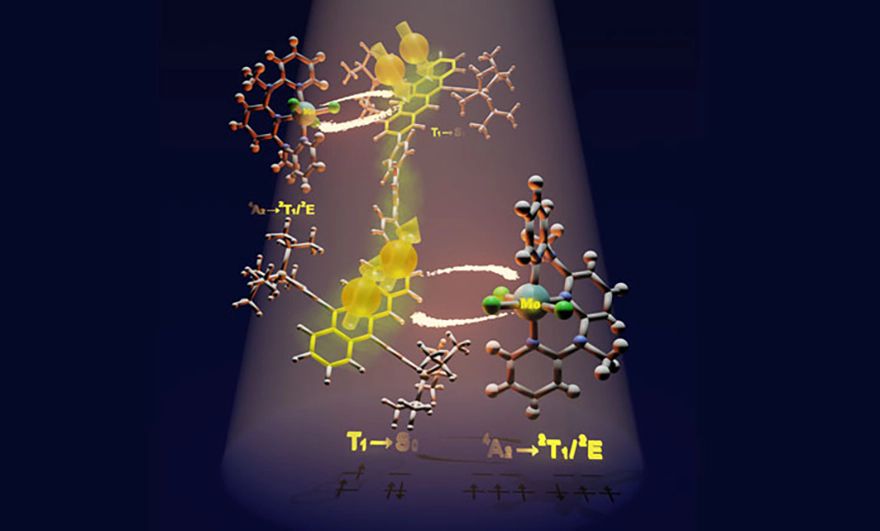
Researchers reported a proof-of-concept exciton-harvesting system that achieved about 130% quantum yield, exceeding the conventional 100% limit for energy capture. The molybdenum-based spin-flip emitter selectively harvested singlet-fission–amplified triplet excitons from tetracene-based materials, pointing to a potential path toward higher-efficiency solar cells. The work is early-stage, but it could influence future solar, LED, and quantum-tech material design.
This is a real scientific de-risking event for next-gen photovoltaic economics, but the commercial read-through is not “better solar tomorrow”; it is that the ceiling on exciton-utilization may be higher than assumed, which extends the runway for premium IP holders in tandem-cell architectures, exciton-management layers, and specialty organic emitters. The second-order winner is likely not utilities or panel makers first, but materials platforms that can monetize a new design rule before mass manufacturing catches up; that favors small-cap enabling names, university spinouts, and patent-rich chemical suppliers more than commoditized module producers.
The main competitive implication is that this raises the strategic value of singlet-fission stacks and wavelength-conversion layers in niches where area is constrained: satellites, portable power, low-light indoor harvesting, and tandem rooftop systems. In those markets, a few points of efficiency can justify materially higher bill-of-materials, so the adoption path is much faster than in utility-scale solar, where cents-per-watt dominates and proof-of-concept science often dies in scale-up. Expect incumbent silicon vendors to treat this as a long-dated hedge rather than an immediate threat, while specialty OLED/phosphorescent emitter companies may see increased investor scrutiny on whether their own triplet-management IP can be repurposed into solar-adjacent licensing.
The contrarian view is that the market may over-interpret a solution to an absorption/extraction bottleneck as a full stack breakthrough. The hard part now shifts to solid-state morphology, degradation under heat/UV, and manufacturability at thicknesses and defect tolerances compatible with roll-to-roll processes; those are multi-year hurdles, not quarters. If the system’s efficiency gain collapses outside solution-phase lab conditions, the whole narrative reverts to academic curiosity, so the catalyst risk is a negative scale-up readout rather than a policy headline.
From a portfolio perspective, this is a long-duration option on a broader IP cycle in advanced photovoltaics and excitonics. The immediate trade is not to chase broad clean-energy beta, but to own the picks-and-shovels around materials discovery, deposition, and metrology, with upside if the research translates into licensing deals or JV announcements over the next 12-24 months.
AI-powered research, real-time alerts, and portfolio analytics for institutional investors.
Request DemoOverall Sentiment
strongly positive
Sentiment Score
0.72
