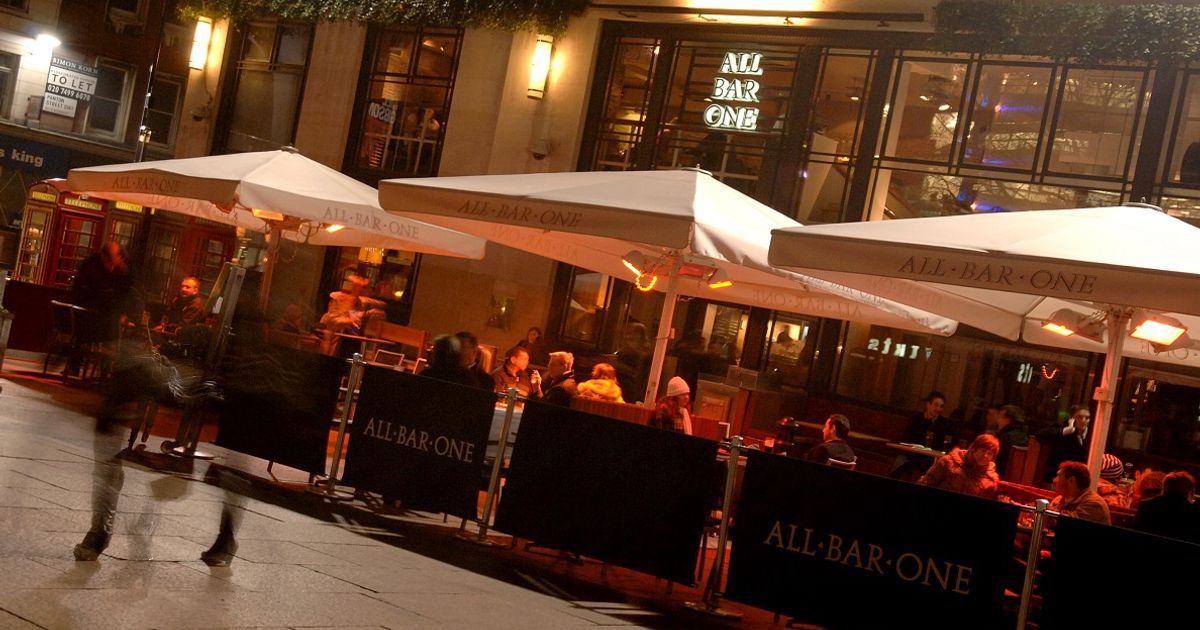
Mitchells & Butlers reported a strong start to its financial year with total sales up 3.5% and like-for-like sales rising 4.5% in the 15 weeks to 10 January; LFL rose 7.7% across the core three-week festive period and 10.5% over the five key trading days. Food sales increased 5.1% and drink sales 3.8% for the quarter, the group has completed 51 conversions/remodels and says it remains confident it can manage approximately £130m of additional costs this year, underpinning management’s view that the business is well-positioned to grow market share.
Market structure: Mitchells & Butlers (MAB.L) is a clear near-term winner — 4.5% LFL and 7.7% core festive LFL imply resilience in discretionary dine-out demand and a shift toward higher‑margin food (food +5.1% vs drinks +3.8%). The 51 conversions/remodels point to market share gains in premium locations at the expense of undifferentiated wet‑led pubs and some casual dining chains; that increases MAB's pricing/leverage on peak days (five key days +10.5%). Strong services demand should modestly pressure UK yields and GBP (services inflation risk) and raise upstream beverage/food commodity demand, while leaving corporate credit spreads for well‑located operators tighter than low‑quality peers.
Risk assessment: Key tail risks are (a) failure to contain the ~£130m extra costs — a 20% overshoot (~£26m) would meaningfully hit EBITDA and could erase the upside from LFL growth, (b) coordinated wage or utility shocks, and (c) demand reversion if consumer sentiment weakens post‑Jan. Immediate (days) risk is sentiment reversal on a disappointing trading update; short term (weeks/months) is cost/wage inflation crystallising; long term (12–24 months) is estate capex/cannibalisation risk from rapid conversions. Hidden dependency: heavy revenue concentration in a small number of peak days increases margin volatility and working capital strain.
Trade implications: Direct: establish a 2–3% long position in MAB.L, target +30% in 12 months, initial stop-loss -12% (tighten if cost guidance breached). Pair: long MAB.L (2%) vs short MARS.L (1.5%) to express relative share gain in food-led pubs over wet-led peers; close if spread narrows <5% or if MAB cost overruns >£10m. Options: buy a 12‑month call spread on MAB (buy 20% OTM, sell 40% OTM) sized to 0.5% portfolio risk to cap premium and play a 6–12 month re-rating. Rotate +1–2% into UK leisure sector (MAB, selected hotels) funded by -1–2% from staples (e.g., TSCO.L).
Contrarian angles: Consensus may underprice the £130m cost risk and overrate festive strength as sustainable — 10.5% on five days can mask weaker non‑peak months; history (post‑spike recoveries) shows reversion risk once novelty fades. Conversely, the market may under‑reward durable estate upgrades: if conversions achieve targeted ROI (trackable in next 2 quarterly updates), MAB could re-rate faster than peers. Unintended consequence: aggressive roll‑out of conversions can raise capex and fixed costs, turning a revenue beat into cash‑flow strain if demand softens; set tight monitoring triggers for any cost slippage >£10m within 60 days.
AI-powered research, real-time alerts, and portfolio analytics for institutional investors.
Request DemoOverall Sentiment
moderately positive
Sentiment Score
0.55
