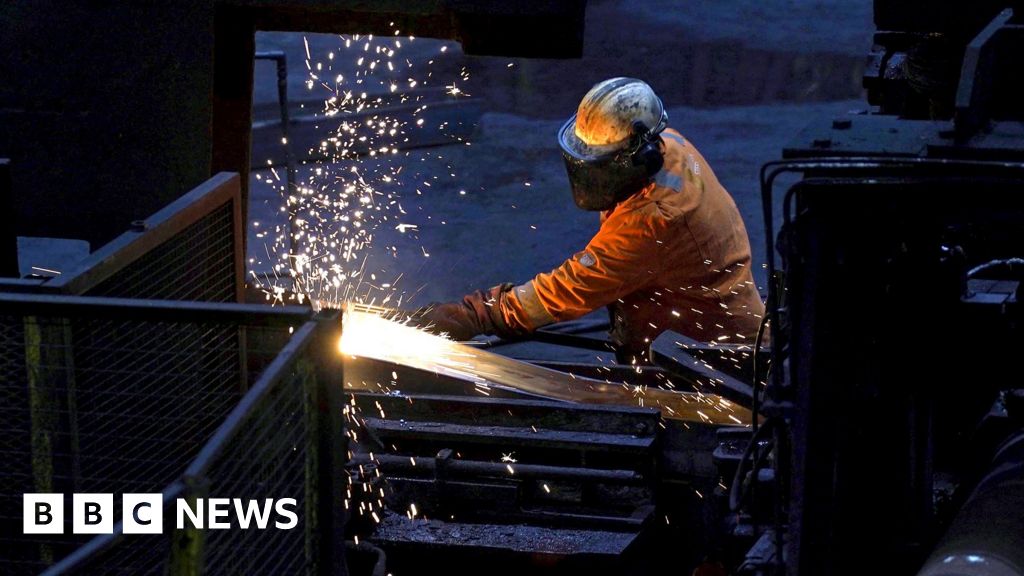
The UK government will legislate this week to enable full public ownership of British Steel, with a public interest test centered on national security, critical infrastructure and the economy. The move follows the state seizure of the Scunthorpe works last year and comes amid ongoing losses of about £1m a day, with the NAO saying supervision has already cost roughly £377m and could exceed £1.5bn by 2028 if current spending persists. The announcement provides certainty for the 2,700-worker site and reduces near-term closure risk, though the long-term investment plan and any compensation to Jingye remain unresolved.
This is less about one steel mill and more about the state moving from backstop to operator of last resort. The first-order beneficiary is obviously labor stability, but the second-order winner is the downstream infrastructure complex: rail, defense, and public works buyers get some near-term supply certainty, which reduces the odds of forced import substitution during an already inflation-sensitive procurement cycle. The subtle loser is the broader private-capital bid for UK heavy industry, because any prospective buyer now has to price in political optionality, union leverage, and a much lower probability of receiving operational control without conditions.
The bigger implication is a likely shift in policy from rescuing capacity to mandating local content. Once the government owns the asset, it becomes far easier to steer procurement toward UK steel through rail, grid, and defense spending rules. That is bullish for domestic flat-rolled and long-products volumes over a multi-year horizon, but it also risks keeping marginal capacity alive longer than economics justify, which can crowd out investment in more efficient downstream processors and raise input costs for UK manufacturers versus EU peers.
Near term, the key catalyst is not the legislation itself but the funding framework: who pays for capex, working capital, and environmental upgrades. If the state simply nationalizes without a credible modernization plan, the equity value of the business remains a policy instrument rather than a tradable asset, and the market will eventually focus on the fiscal drag. The tail risk is a repeat of 2019-style restructuring costs if furnace stability or coke/ore procurement becomes politically constrained; on the upside, a clean long-term capital plan could create a durable domestic supply floor and reduce import dependency within 12-24 months.
The consensus is probably underestimating how this changes bargaining power across the UK industrial base. Nationalization does not just save jobs; it gives government a direct lever over pricing, procurement, and strategic reserves, which could support domestic producers of iron ore logistics, industrial gases, refractory materials, and steel-consuming prime contractors if local-content rules tighten. The market may initially read this as a one-off rescue, but the more important read-through is that strategic manufacturing assets are now more likely to be treated like regulated infrastructure than cyclical companies.
AI-powered research, real-time alerts, and portfolio analytics for institutional investors.
Request DemoOverall Sentiment
mildly positive
Sentiment Score
0.15
