Enterprises are racing to deploy agentic AI but face a steep production gap—Deloitte finds 30% exploring, 38% piloting, yet only 14% ready and 11% in production—while Gartner warns legacy limitations could cause over 40% of projects to fail by 2027. The bottlenecks are structural: legacy-system integration, data architectures optimized for ETL rather than enterprise search/indexing (48% cite searchability and 47% cite reusability as problems), and inadequate governance/FinOps for continuously operating agents; remedies include agent-native microservice architectures, orchestration frameworks, new management practices for a “silicon” workforce, and emerging protocols (MCP, A2A, ACP). Case studies from HPE, Dell, Toyota, Mapfre and Moderna show real ROI when firms redesign end-to-end processes and pair human oversight with specialized, orchestrated agents, underscoring that winners will be those who rearchitect workflows, pursue selective modernization, and choose build-vs-buy partnerships (externally built pilots are twice as likely to reach deployment).
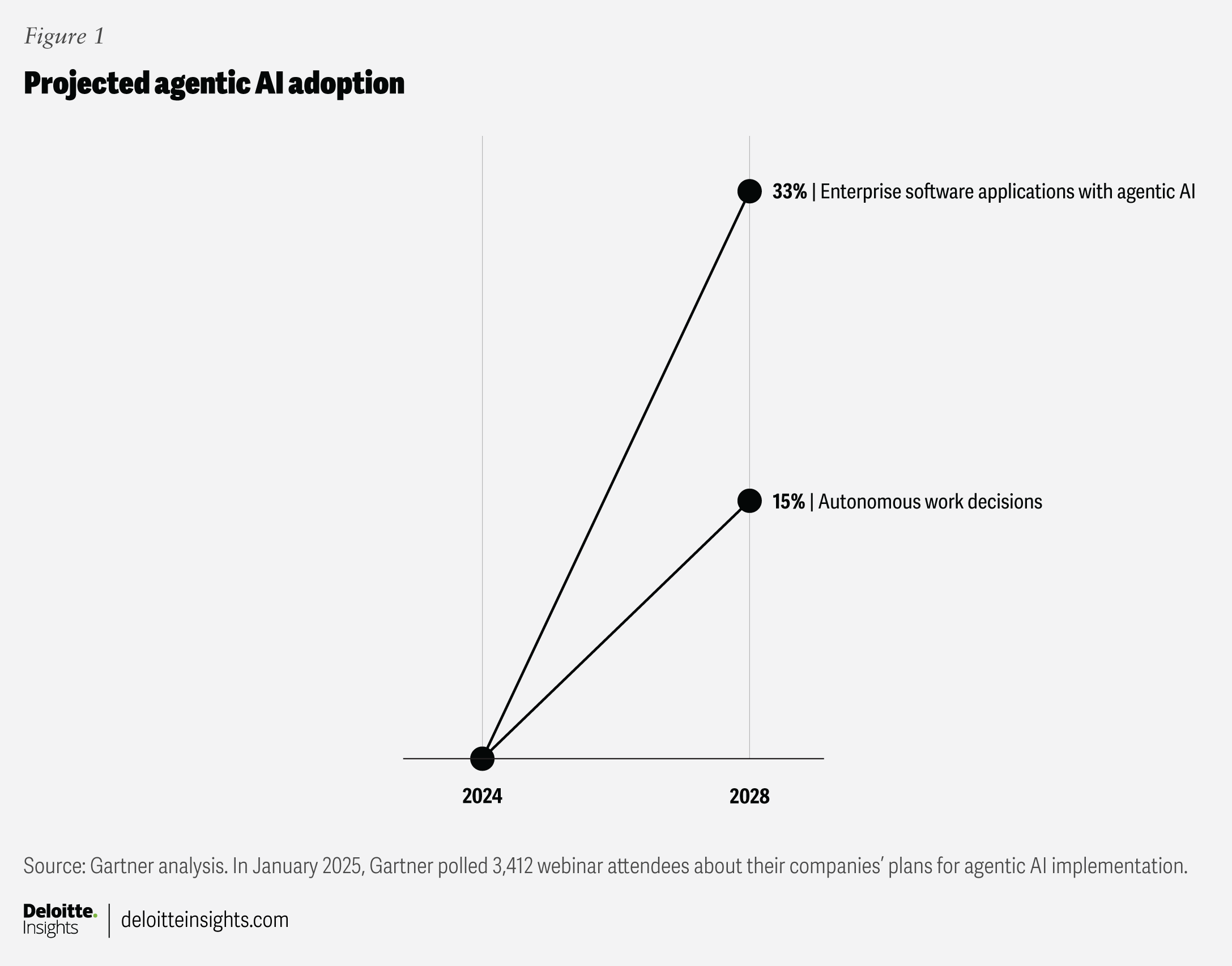
Enterprises are accelerating toward agentic AI but face a pronounced production gap: Deloitte finds 30% exploring, 38% piloting, only 14% production-ready and 11% actively using systems in production, while Gartner forecasts 15% of day-to-day work decisions will be made autonomously by 2028 and warns that over 40% of agentic projects may fail by 2027 due to legacy-system constraints. These figures indicate strong demand but an execution cliff driven by architecture and process mismatch rather than lack of capability.
Three structural bottlenecks limit scaling: legacy-system integration that lacks real-time APIs and identity management, data architectures built for ETL rather than enterprise search (48% cite searchability and 47% cite reusability issues), and immature governance/FinOps practices that expose projects to “agent washing,” workslop, and runaway token costs. The article highlights remedial approaches including microservice-based agent architectures, knowledge-graph indexing, orchestration frameworks, and emerging protocols (MCP, A2A, ACP), but cautions these introduce new operational and security integration challenges.
Real-world examples validate the thesis: HPE’s Alfred, Dell’s dozen POCs with strict ROI gates, Toyota’s agentic mainframe bridging, Mapfre’s human-in-the-loop claims use, and Moderna’s org redesign show production value when organizations redesign end-to-end processes and govern agents deliberately. Research showing externally built pilots are twice as likely to reach deployment and deliver higher employee usage underscores build-versus-buy and partnership importance. Investors should therefore focus on firms demonstrating measurable pilot-to-production conversion, process reengineering, formal governance/FinOps, and selective modernization rather than vendor hype alone.
AI-powered research, real-time alerts, and portfolio analytics for institutional investors.
Request DemoOverall Sentiment
mildly positive
Sentiment Score
0.30
Ticker Sentiment
