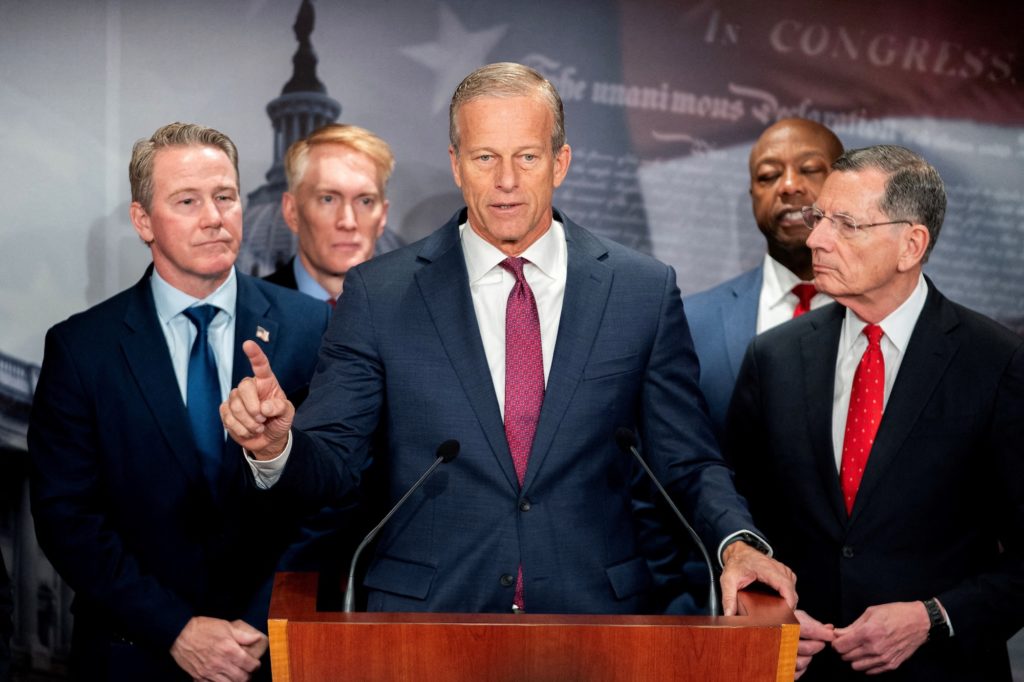
Partial DHS shutdown nears ~40 days; President Trump rejected a Senate proposal to fund DHS agencies while excluding ICE and is pressing for the SAVE Act (election ID), which has complicated negotiations. ICE agents are being deployed to airports and 'hundreds of thousands' of TSA workers could miss roughly a month of pay, creating operational risk for airports and the travel sector, though the story is unlikely to be market-moving beyond travel and airport service providers in the near term.
The political standoff is creating an acute, front-loaded operational shock to travel networks that will compress near-term revenue more via punctuality and customer-acquisition channels than headline passenger counts. Each day of sustained staffing disruption raises per-flight marginal cost (turn delays, gate congestion, rebooking, crew-dayoverheads) — conservatively $500–$2,000 per affected flight — which aggregates into low-single-digit percent revenue hit for large carriers within 2–6 weeks if unresolved.
Second-order winners and losers diverge from the obvious: short-haul leisure demand should reallocate to car rental and drive-to destinations (favoring HTZ/ALGT-like exposures), while international inbound travel and premium-yield traffic suffer disproportionately (hitting legacy, hub-focused carriers and airport luxury concessionaires). Payment processors and travel-adjacent consumer-facing stocks will see weaker discretionary spend the week following high-profile operational failures, creating transient volatility but a quick mean-reversion if Congress patches funding.
Key catalysts to watch in immediate timeframes: whether members stay in town (hours–days), an explicit payroll-catchup or partial-funding vote (48–72 hours), and new ICE deployments or litigation that change traveler behavior (days–weeks). Tail risks include a prolonged standoff into the summer travel season, which can shift booking curves and force capacity cuts that materially widen airline credit spreads over 3–12 months; conversely, a rapid bipartisan stop-gap could trigger a violent short-covering rally in beaten-down travel names within 24–72 hours.
AI-powered research, real-time alerts, and portfolio analytics for institutional investors.
Request DemoOverall Sentiment
mildly negative
Sentiment Score
-0.15
