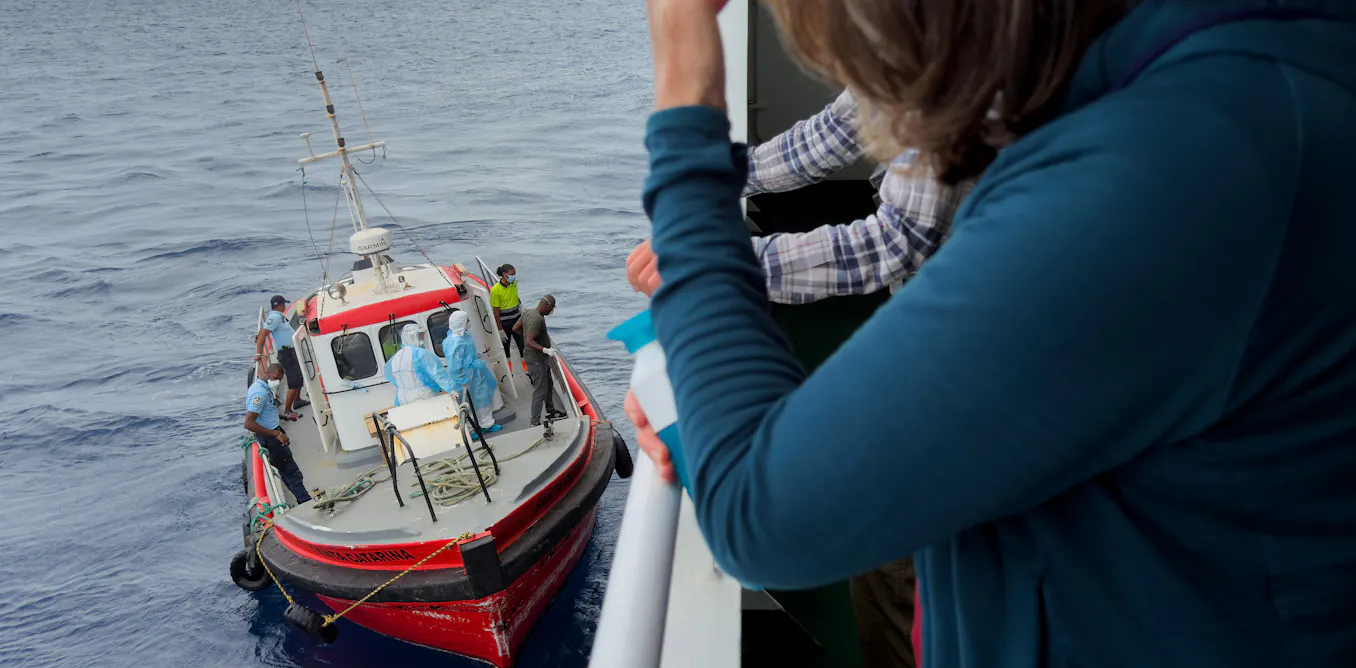
An Andes hantavirus outbreak aboard the MV Hondius has reached 11 cases, including 3 deaths, highlighting the persistent infectious-disease risks of cruise travel and the difficulty of coordinating responses across borders. The article argues that cruise ships remain vulnerable outbreak environments despite international public health frameworks, and says U.S. withdrawal from the WHO has made global health coordination slower and more fragmented. The direct market impact is limited, but the piece flags elevated operational and regulatory risk for cruise and expedition travel.
The immediate market impact is not on ship operators alone but on the broader web of border-control services, medical logistics, and high-touch travel providers that depend on frictionless cross-border movement. The bigger second-order effect is that expedition cruising and remote itineraries carry a structurally higher compliance burden than mainstream leisure sailing, so the margin mix for operators shifts toward insurance, onboard medical staffing, testing, evacuation planning, and legal coordination. That tends to favor the largest, best-capitalized players that can absorb fixed compliance costs while pressuring smaller niche operators and charter businesses. The more important risk is regulatory memory: a single high-profile outbreak can trigger faster port denials, mandatory reporting, and tighter pre-boarding screening across an entire region even if the pathogen is low-contagion. That means the downside is less about an endemic health shock and more about intermittent operating interruptions, itinerary changes, and reputational damage that can hit bookings with a 1-2 quarter lag. Watch for a cascade where ports in South America, Antarctica gateways, and island jurisdictions quietly raise scrutiny, creating hidden schedule risk for the next expedition season. The contrarian view is that this is not a broad “travel is unsafe” event; it is a governance story. The market may overread the epidemiology and underprice the operational advantage of firms with deep government relations, destination diversification, and crisis-management capability. In that sense, the selloff risk is concentrated in premium, remote, small-ship expedition exposure, while mass-market cruise demand may barely move once the headline fades.
AI-powered research, real-time alerts, and portfolio analytics for institutional investors.
Overall Sentiment
mildly negative
Sentiment Score
-0.20
