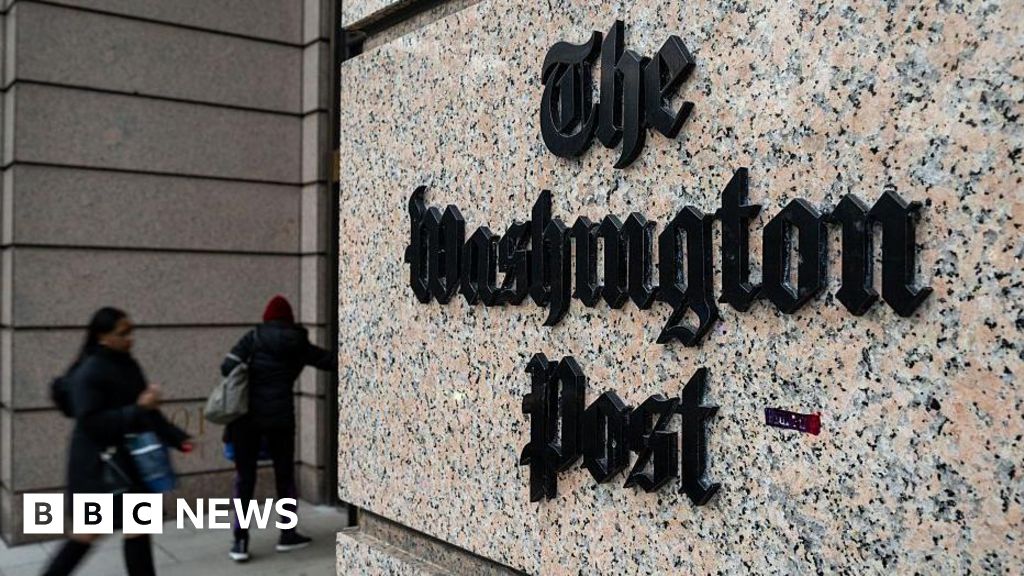
The Washington Post announced sweeping layoffs that sharply scale back sports and foreign coverage, with newsroom cuts hitting metro, local and international desks; executive editor Matt Murray cited plummeting online traffic over the last three years amid the AI boom and the need to reinvent the business model. Owner Jeff Bezos, who bought the paper for $250mn in 2013, has faced internal backlash after prior editorial shifts (including a decision not to endorse a 2024 presidential candidate) that coincided with tens of thousands of lost subscribers; the article notes The New York Times added ~450,000 digital-only subscribers in the last quarter of 2025. The moves underscore structural subscriber and revenue pressures at the Post and a cost-driven response that may further weaken coverage quality and subscriber retention.
Market structure: The Post cuts are a net positive for paywalled, subscription-first publishers (NYT) and for platforms/aggregators that capture commoditized news (Google/META). Expect 5-10% incremental share shift toward national paywalls over 12 months as regional/specialist supply collapses and ad revenue reallocates to platforms; pricing power rises for survivors who can hold churn <5% on small price hikes.
Risk assessment: Tail risks include (1) regulatory backlash to platform aggregation or Bezos governance moves, (2) a rapid AI aggregator monetization that further depresses publisher traffic, and (3) reputational contagion if high-profile reporting gaps create political reactions. Time buckets: immediate (days) – social/traffic volatility; short (weeks–months) – subscriber and ad-revenue reallocation; long (quarters–years) – structural consolidation and margin re-rating; monitor quarterly subs and weekly traffic data as leading indicators.
Trade implications: Primary actionable trade is long NYT exposure and hedged, opportunistic protection on AMZN for owner/governance risk. Use options to express asymmetric upside in NYT (6–12 month call structures sized 2–3% portfolio) and small put spreads on AMZN (0.5–1% portfolio) to limit downside; reduce or short legacy/ad-dependent media exposure and reallocate into subscription winners and ad-platform beneficiaries (GOOGL, META) over 3–12 months.
Contrarian angles: Consensus underestimates the scarcity value of high-quality foreign/local reporting as supply tightens — consolidation can increase ARPU for survivors by 5–15% over 2 years. The market may be overreacting to short-term Post turmoil; if NYT sustains net adds >300k/quarter the long case is underpriced. Unintended consequence: reduced investigative capacity could raise event risk and politicization, increasing volatility in media-related equities and creating periodic buying opportunities.
AI-powered research, real-time alerts, and portfolio analytics for institutional investors.
Request DemoOverall Sentiment
moderately negative
Sentiment Score
-0.60
Ticker Sentiment
