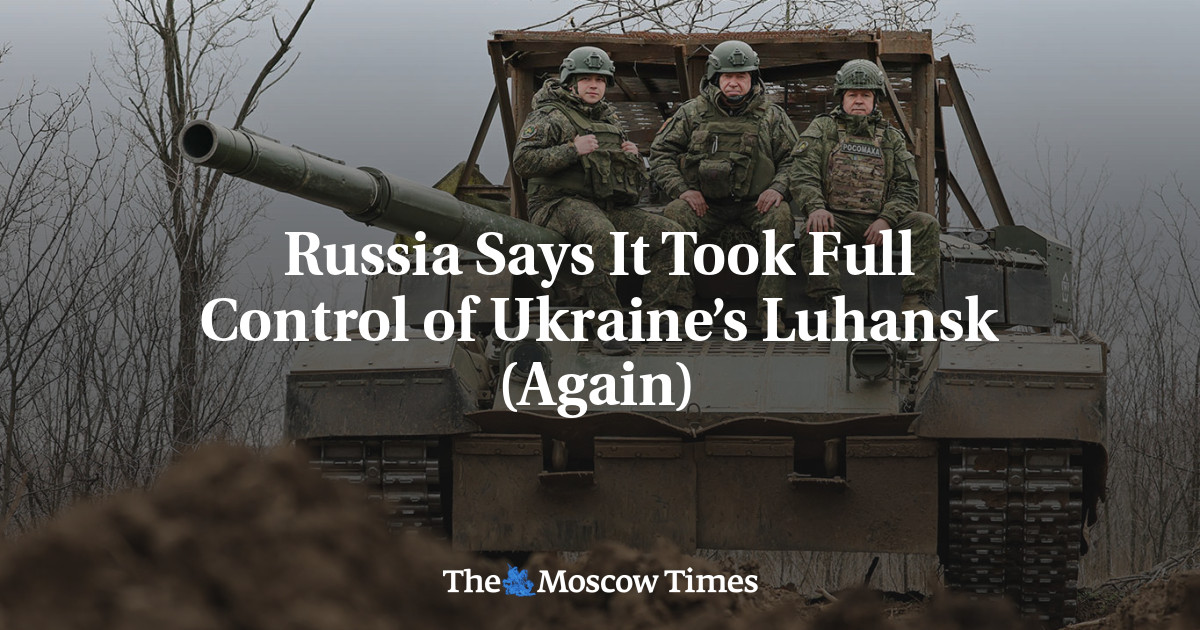
Russia’s Defense Ministry claimed full control of Ukraine’s Luhansk region (≈26,700 sq km), the third such claim since the Feb 2022 invasion (prior claims: July 2022 and July 2025). Kremlin rhetoric and a reported ultimatum — asking Ukraine to withdraw from neighboring Donetsk within two months — plus signs Russia is preparing a new summer offensive raise the probability of escalation, tilting markets risk-off and likely supporting defense stocks and energy prices while pressuring European/EM assets and investor sentiment.
This looks like a politico-military signaling campaign that increases the probability of an extended, grinding Donbas-centric contest rather than a quick negotiated settlement. Operationally that implies sustained attrition of artillery, rockets and armored platforms over the next 3–12 months, forcing Western suppliers into a higher replacement cadence (ammo and loitering munitions orders accelerating before major procurement cycles). Expect NATO partners to prioritize fast‑deliverables (ammo, air defenses, guided rockets) over platform buys, which boosts near-term revenue visibility for contractors that can scale munitions lines within 6–18 months.
On markets, the persistent war premium will manifest unevenly: shipping and insurance costs for Black Sea grain exports will stay elevated in weeks-to-months, feeding into European food inflation and fertilizer tightness; energy and strategic metals will see episodic spikes tied to sanctions decisions and export-control leakages. Payment and logistics frictions will push commodity buyers toward longer-term contracted supply (favoring large trading houses and vertically integrated miners) and raise working capital needs for European importers over the next 1–3 quarters.
The consensus reaction (risk-off into cyclicals, safe‑haven into conventional bonds) understates idiosyncratic alpha opportunities: defense primes able to convert lines to high‑consumption munitions will re-rate before broad indices catch up, while short-duration hedges (3–9 month VIX or equity puts) will pay for themselves if a summer offensive triggers a volatility spike. Key catalysts to watch that could reverse this: a credible peace mediation within 30–90 days, a major battlefield defeat for either side, or a decisive vote on EU defense spending commitments over the next 6–12 months.
AI-powered research, real-time alerts, and portfolio analytics for institutional investors.
Request DemoOverall Sentiment
strongly negative
Sentiment Score
-0.70
