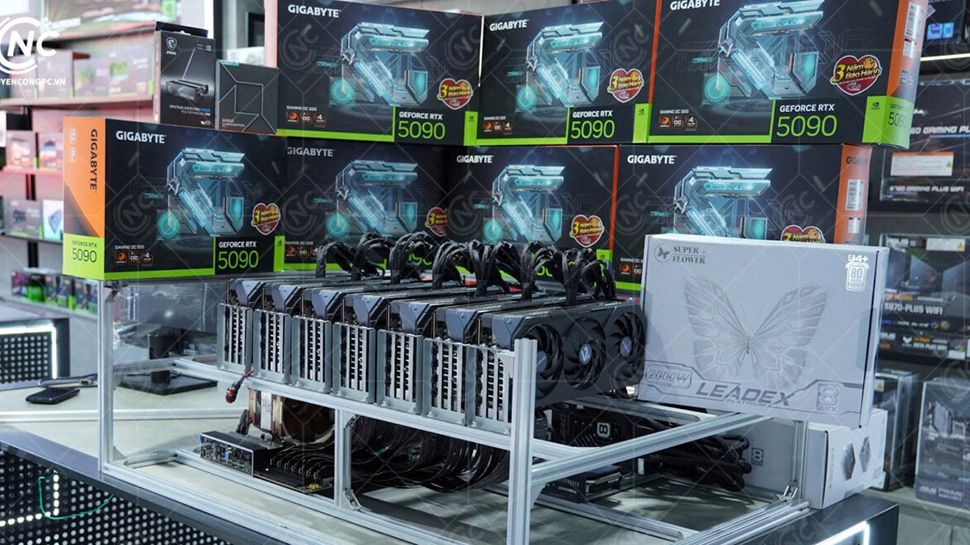
Retailers have materially marked up high-end GPUs amid a RAM shortage driven by surging AI datacenter demand: Nvidia GeForce RTX 5090 third‑party listings are trading as high as ~$4,000, while the Founders Edition remains at $1,999; an Asus ROG Astral RTX 5090 is listed at $3,610.78 versus a typical ~$2,799 third‑party price. AMD cards show similar retailer-driven increases (e.g., XFX Mercury RX 9070 XT OC at $849.99 from $599 MSRP). The dynamic suggests upstream memory scarcity and robust AI demand are compressing consumer supply/pricing, raising downside risks to PC gaming demand while creating potential margin opportunities for sellers and ambiguous implications for Nvidia/AMD toplines absent any confirmed MSRP changes.
Market structure: AI-driven DRAM demand is re-allocating pricing power from consumer retailers to memory suppliers and datacenter GPU winners. Retailer markups are already large (RTX 5090 listings ≈ +80–100% vs FE MSRP; RX 9070 XT ≈ +42%), signalling scarcity-driven pass-through rather than manufacturer-led MSRP moves in the near term.
Risk assessment: Key tail risks are: 1) export/regulatory curbs on AI chip sales (US–China) that would reprice NVDA/AMD downward; 2) a rapid memory build-out (new fab capacity) that causes DRAM oversupply and >20% price declines within 6–18 months. Near term (days–weeks) volatility will be driven by retailer inventory prints and weekly DRAM spot updates; medium term (3–12 months) by quarterly guidance from MU/NVDA/AMD.
Trade implications: Bias overweight semiconductors/DRAM suppliers and underweight consumer retail exposure to discretionary GPU sales. Use directional stock exposure for multi-quarter structural AI upside (NVDA, MU; INTC tactical), and use puts/shorts to express weak consumer demand at retailers (BBY) over the next 1–3 quarters. Enter ahead of NVDA/Micron earnings cadence and DRAM price releases; exit or trim if DRAM spot falls >15% QoQ or NVDA guidance disappoints.
Contrarian angles: Consensus misses that retailer markups are historically transient (parallel: 2017–18 crypto GPU spike → 50–70% repricing). If DRAM pricing remains elevated for >12 months, cloud-native GPU consumption (favoring NVDA and datacenter CPU partners like INTC) accelerates — net outcome: long-term winners concentrated, short-term pain for retail and DIY gaming demand.
AI-powered research, real-time alerts, and portfolio analytics for institutional investors.
Request DemoOverall Sentiment
moderately negative
Sentiment Score
-0.50
Ticker Sentiment
