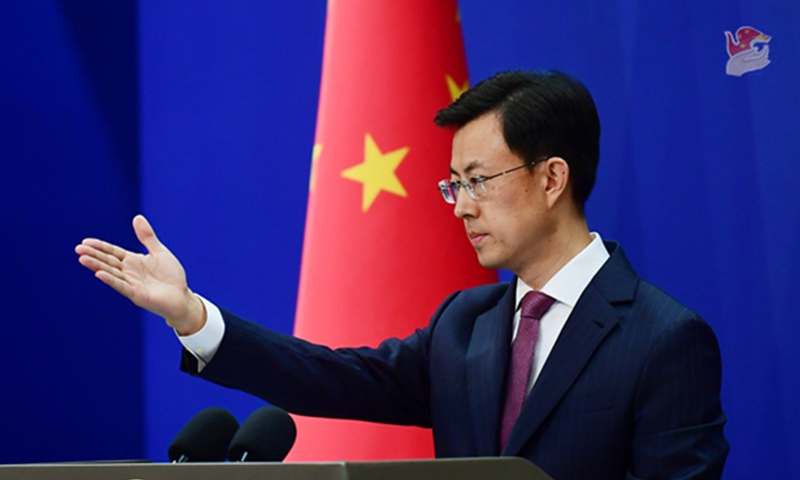
The US State Department publicly sided with Japan over an alleged Chinese "radar illumination" of Japanese SDF jets, with Reuters calling it the first open US backing and two Democratic lawmakers urging presidential support; Beijing sharply rejected the claim, saying its carrier-based operations were lawful, professional and restrained, accusing Japan of intruding into Chinese exercise areas and fabricating the incident while releasing recordings to support its account. Chinese Foreign Ministry spokesperson Guo Jiakun and analysts from state-linked institutions framed Japan as the instigator and urged the international community and Japan's allies not to be misled, warning that escalation would have consequences. The episode risks heightening Sino-Japanese tensions and testing US-Japan alliance dynamics in the Asia‑Pacific, even as the article notes US leadership has been cautious about direct involvement following recent Japanese political remarks.
US State Department publicly sided with Japan over an alleged Chinese "radar illumination" of Japanese SDF jets, with Reuters noting it was the first explicit US backing; a State Department spokesperson said China's actions "are not conducive to regional peace and stability" and called the US alliance with Japan "unwavering." Chinese Foreign Ministry spokesperson Guo Jiakun rebutted the claim at a Wednesday press conference, saying China has released on-site recordings and that carrier-based exercises "fully comply with international law" and were "professional, standard, safe, and restrained." The article also notes two Democratic lawmakers sent a joint letter urging the US president to back Japan and cites domestic analysts Lü Xiang and Li Haidong who portray Japan as the instigator.
The exchange raises near-term geopolitical risk between China and Japan and tests US-Japan alliance dynamics, while the piece highlights US caution after Prime Minister Sanae Takaichi's prior Taiwan remarks, implying restrained direct involvement. Quoted analysts warn any escalation will carry consequences and stress narrative control; attached sentiment metrics are moderately negative (score -0.45) with a hawkish tone and a modest market impact score (0.35), suggesting targeted market sensitivity rather than systemic shock.
Market implications are concentrated in defense, security-sensitive sectors and trade-exposed regional assets; the article contains no corporate tickers but signals heightened political risk for Japan and neighboring Asian markets. Investors should monitor the credibility of China's released recordings, subsequent State Department and Japanese responses, and any repeat air/sea incidents as triggers for repricing; absent further kinetic escalation, impacts are likely to be policy- and sentiment-driven rather than structurally transformative.
AI-powered research, real-time alerts, and portfolio analytics for institutional investors.
Request DemoOverall Sentiment
moderately negative
Sentiment Score
-0.45
