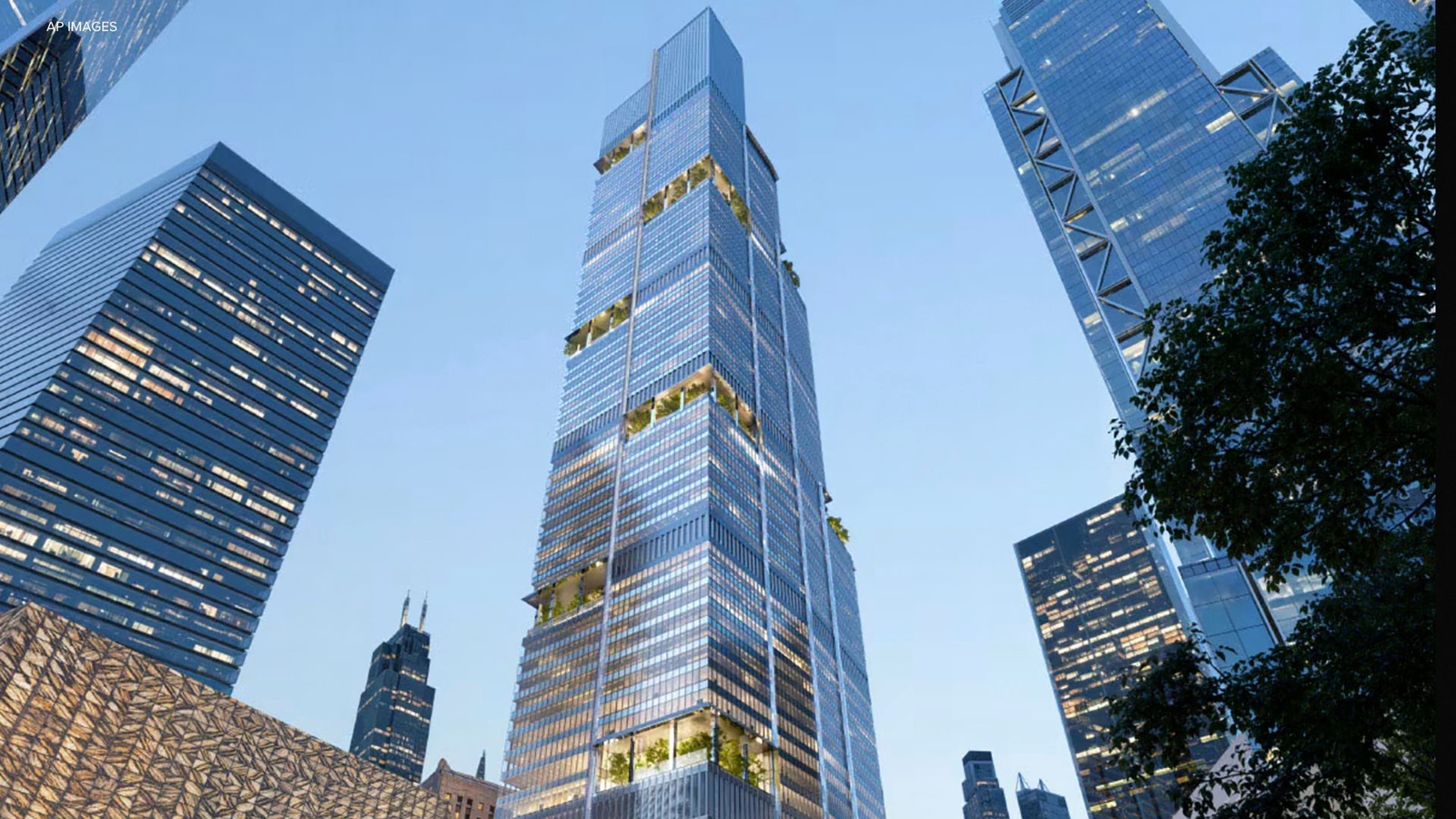
American Express will make the 55-story, roughly two‑million‑square‑foot 2 World Trade Center its new headquarters, with construction slated to begin as soon as this spring; the company will own the Norman Foster–designed tower and lease the underlying land. The move (expected to house up to 10,000 employees) requires no state, city or Port Authority financing and signals renewed investment in Lower Manhattan commercial real estate after pandemic-driven office weakness. Key takeaways for investors: an anchor corporate commitment reduces completion and leasing risk for this high-profile redevelopment, supports construction activity and downtown office demand dynamics, but American Express has not disclosed project cost or timing beyond the construction start window.
Market structure: American Express (AXP) taking full ownership of a 55‑story, ~2M sqft 2 WTC and occupying up to 10,000 workers tightens prime Lower Manhattan office demand by removing a large potential vacancy and benefits construction, materials and localized services. Winners: AXP (branding/control of real estate), steel/concrete suppliers (NUE, VMC, MLM), union contractors and Manhattan transit/retail operators; losers: speculative Manhattan office landlords and some office REITs (e.g., SLG, VNO) facing secular remote‑work risks. Cross‑assets: modest positive for regional bank construction loan pipelines and MBS spreads; negligible FX/commodity market impact beyond construction metals (steel) tightening in spot and near‑term forward curves.
Risk assessment: Key tail risks include significant cost overruns (>$2B), prolonged pandemic/occupancy declines reducing utilization below 60% after opening, or a delay/stop from political or Port Authority disputes — any of which could depress AXP free cash flow and local developer returns. Immediate (days): market sentiment move on the announcement; short (3–12 months): capital allocation disclosures and construction financing terms; long (1–4 years): actual occupancy, utilization and ROIC on building ownership. Hidden dependencies: AXP’s decision reduces its flexibility (capital tied up vs buybacks) and could force changes to dividend/buyback policy if capex exceeds internal thresholds.
Trade implications: Favor cyclical construction/materials exposure (NUE, VMC, MLM) over Manhattan office REITs. For AXP, a modest directional exposure is warranted but sized to company capex risk: prefer structured options to limit downside and exploit event windows (construction start, 8‑K/earnings). Rotate into industrials/materials and underweight Manhattan office landlords; monitor 8‑Ks/Port Authority filings as catalysts to re‑rate positions.
Contrarian angles: Consensus views the move as purely positive PR and demand signal; it understates ownership cost and concentration risk — owning vs leasing materially changes AXP’s balance sheet (depreciation, maintenance, vacancy risk). The market may underprice downside if capex >$2B or if remote work reduces utilization below 70%; conversely, positive outcomes (full occupancy, clustering effects) could spark a >15% re‑rating in AXP and local service firms. Historical parallel: corporate HQ consolidations (e.g., Goldman’s moves) lifted local services but also increased operational leverage when macro softens.
AI-powered research, real-time alerts, and portfolio analytics for institutional investors.
Request DemoOverall Sentiment
mildly positive
Sentiment Score
0.30
Ticker Sentiment
