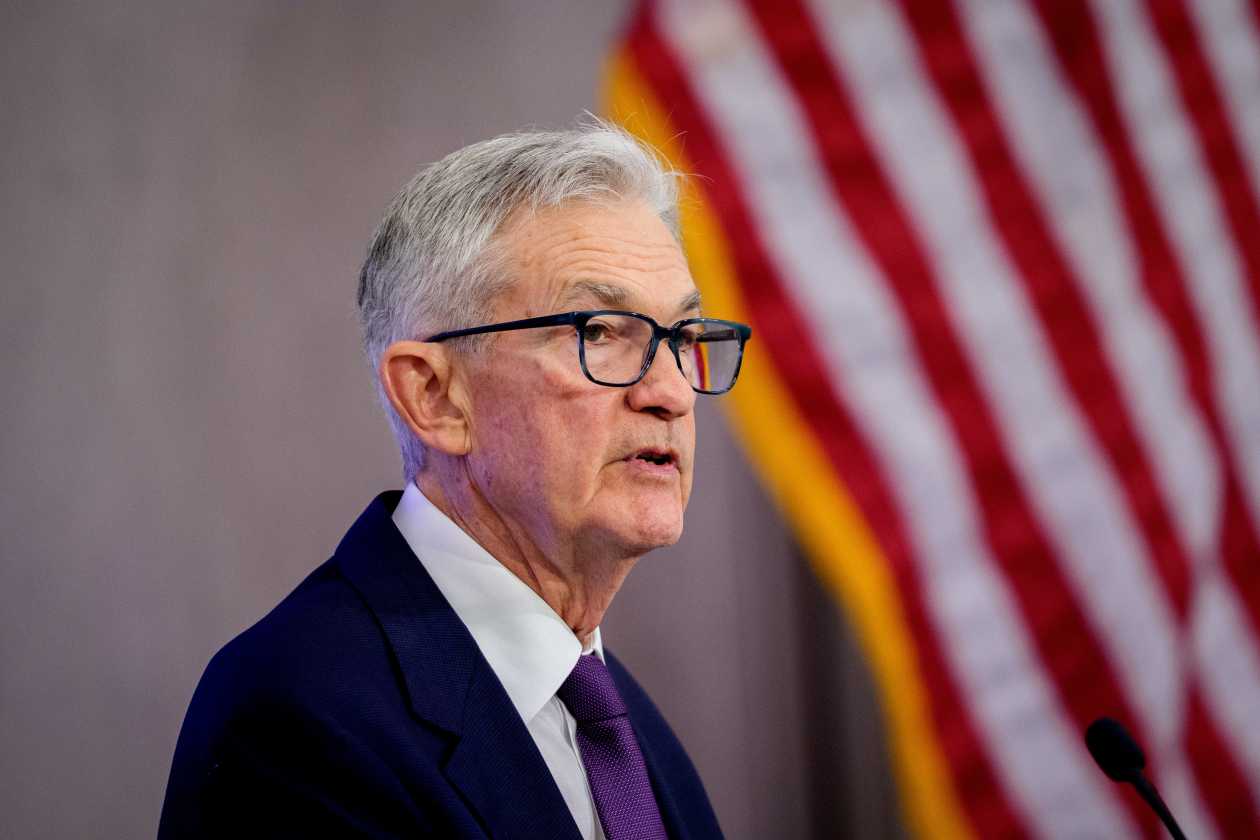
According to the May 6-7 FOMC meeting minutes, Fed officials expressed concerns about persistent inflation stemming from trade policies, even as staff warned of a potential recession. This divergence led the committee to maintain a cautious approach to interest rates, holding the benchmark steady at 4.25%-4.5% for the third consecutive meeting. While the staff projected a weakening labor market and heightened recession risk, officials emphasized the need to prevent the public from anticipating higher prices despite some easing of trade war fears, leaving the Fed in a wait-and-see mode with traders anticipating rate cuts later in the year.
Federal Reserve officials, as per the May 6-7 meeting minutes, are maintaining a cautious monetary policy stance, holding the benchmark interest rate stable in a range of 4.25% to 4.5% for the third consecutive meeting due to heightened economic uncertainty, particularly surrounding the net effects of trade policies. A significant divergence exists within the Fed: 'almost all' officials expressed concerns that higher inflation, potentially fueled by trade tariffs, could become more persistent than expected, emphasizing the priority of preventing public inflation expectations from rising. Conversely, Fed staff highlighted substantial recession risks, viewing an economic downturn as 'almost as likely as the baseline forecast,' and projected a markedly weaker labor market with unemployment rising by year-end and remaining elevated through 2027, following a slight economic contraction in the first quarter. Despite these staff warnings, officials seemed less concerned about the immediate economic outlook, though some acknowledged potential for reduced demand from increased consumer savings. This internal tension, underscored by a moderately negative sentiment (score -0.5) and a notable market impact potential (score 0.7), reinforces the Fed's 'wait-and-see' approach, with future policy heavily dependent on clearer data regarding inflation and the economic impact of government policies, even as traders have priced in two quarter-point rate cuts this year.
AI-powered research, real-time alerts, and portfolio analytics for institutional investors.
Overall Sentiment
moderately negative
Sentiment Score
-0.50
