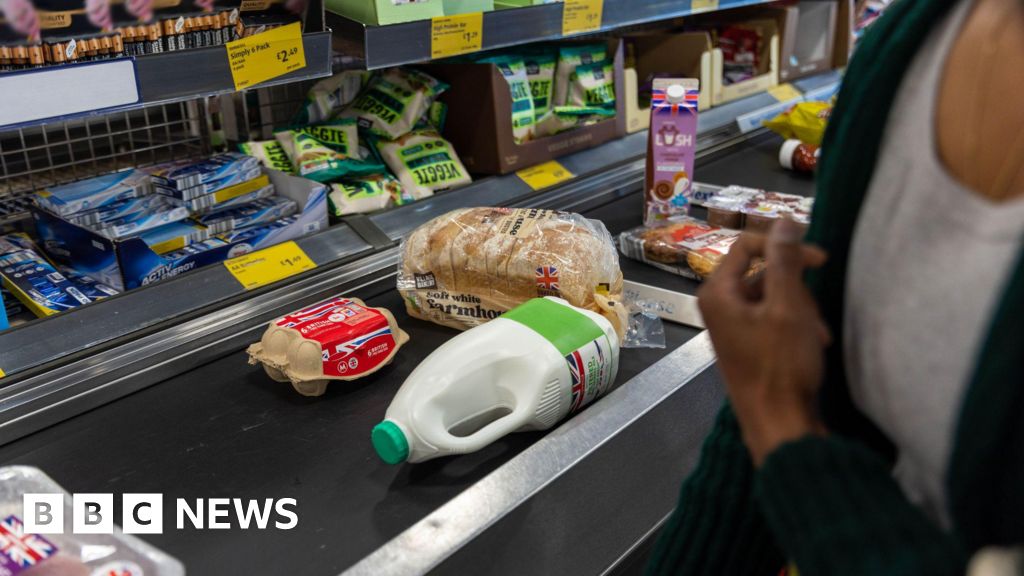
The UK government is reportedly urging supermarkets to freeze prices on key groceries such as eggs, bread, and milk in exchange for easing packaging rules and delaying some healthy-food regulations. Retailers and the BRC warn the proposal would force sales at a loss, adding pressure to margins already strained by higher wage, tax, energy, and commodity costs. The debate comes as UK food inflation runs at 3.7%, with some industry groups warning it could approach 10% by year-end.
This is less a direct margin shock than a negotiation over who absorbs the next leg of cost inflation: supermarkets, suppliers, or consumers. A voluntary freeze on staple baskets would compress gross margin only if retailers cannot offset it through mix, shrink, or supplier funding, but the bigger risk is a broader reset in pricing power expectations across UK food retail. If policymakers extract concessions on packaging and food-regulation timing, the market should treat this as an implicit tax on defensives: near-term optics may be positive for household sentiment, but EBITDA quality worsens because cost inflation becomes less pass-throughable. The second-order winner is likely the largest scale players with the strongest supplier leverage and data-led promo tools, not the sector as a whole. Smaller grocers, convenience chains, and branded food suppliers are more vulnerable because they have less room to absorb margin pressure and less bargaining power to negotiate cost-sharing. Over months, the more important transmission is upstream: if retailers resist list-price increases, suppliers may reduce innovation, tighten case sizes, or trim promotions, which eventually raises out-of-stocks and deteriorates service levels rather than lowering true inflation. The policy also creates a political-regulatory overhang that can outlast any voluntary pledge. If inflation remains sticky into the next CPI prints, pressure to move from voluntary to quasi-mandatory measures rises quickly, and that tail risk is bad for valuation multiples in UK consumer staples and food retail. Conversely, if commodity and freight costs roll over in 1-2 quarters, the issue fades; in that scenario the market will realize the headline gesture was more signaling than economics. The contrarian view is that the near-term equity reaction may overstate the probability of lasting price suppression. The government has limited enforcement leverage without undermining supply incentives, so any freeze is likely narrow, temporary, and offset elsewhere in the basket. That means the best trade may be not to short the whole sector, but to fade the weakest operators and those with the least ability to pass through cost shocks.
AI-powered research, real-time alerts, and portfolio analytics for institutional investors.
Request DemoOverall Sentiment
mildly negative
Sentiment Score
-0.25
