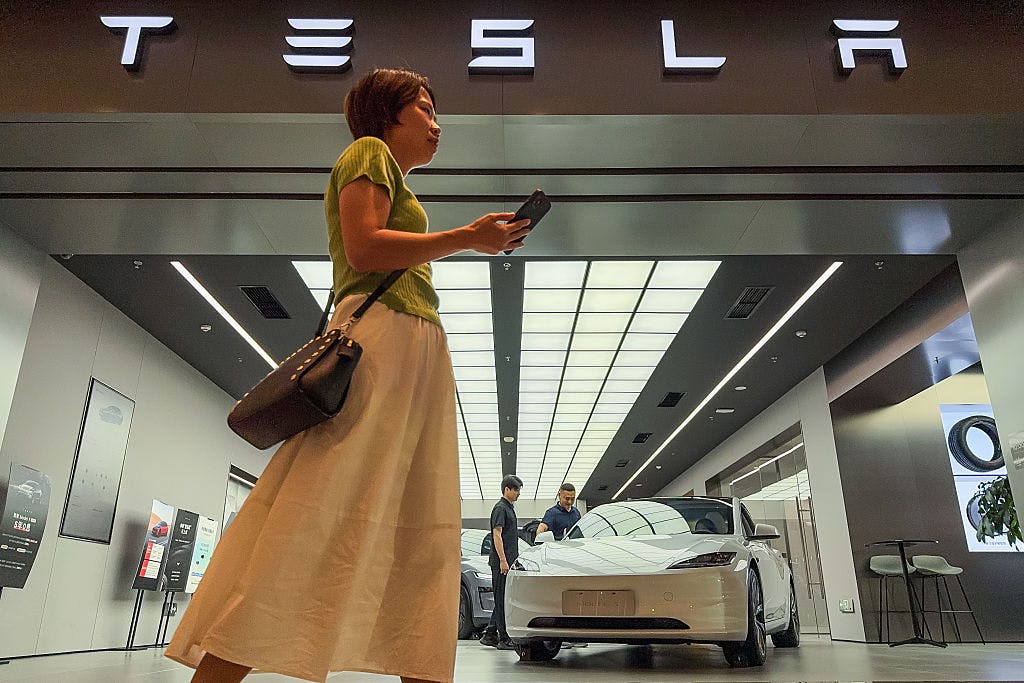
Tesla’s made-in-China vehicle sales rose 36% year over year in April to 79,478 units, marking a sixth straight month of annual growth. The data suggests overseas demand for China-built Teslas may be stabilizing, though wholesale deliveries declined from March even as overall NEV sales increased 7%. China-only sales will be reported later this month, which should give a clearer read on Tesla’s second-largest market.
The read-through is less about a single-month pop and more about Tesla regaining utilization on a China-based export platform. That matters because incremental volume from a fixed-cost manufacturing base has outsized margin leverage, and it also suggests the company can keep moving product without relying solely on China domestic demand recovery. The beneficiary set is broader than TSLA: battery cell suppliers, Shanghai-linked logistics, and European EV infrastructure names all get a small tailwind from a steadier export cadence.
The second-order dynamic is competitive pressure on legacy OEMs and Chinese EV exporters in Europe. If Tesla can sustain export flow from China while domestic Chinese EV demand remains promotional and price-competitive, it can defend share abroad without materially sacrificing production efficiency, which is a tougher operating position for peers with fragmented supply chains. The risk is that this is still a wholesale print, not true end-demand, so the signal can reverse quickly if inventory is being built ahead of a weak China consumer tape or if Europe slows further.
Near term, the market likely overweights the headline growth rate and underweights the sequencing: the key catalyst is the upcoming China-only sales data, which will determine whether this is genuine stabilization or a channel-shift into exports. In the next 2-6 weeks, volatility should stay elevated because a modest miss on domestic sales would compress the narrative quickly, especially after a multi-month recovery streak. Over a 3-12 month horizon, though, even flat domestic demand with healthy exports is enough to improve TSLA’s operating leverage versus peers still burning cash to preserve share.
Contrarian view: consensus may be too quick to extrapolate China strength from wholesale export data. The more interesting tell is not revenue growth but whether Tesla is defending factory throughput without an aggressive price war; if not, volume quality is deteriorating even as unit counts rise. That makes the setup less about chasing momentum and more about buying optionality into a potentially asymmetric delivery surprise or fading the move if domestic sales confirm weakness.
AI-powered research, real-time alerts, and portfolio analytics for institutional investors.
Request DemoOverall Sentiment
mildly positive
Sentiment Score
0.25
Ticker Sentiment
