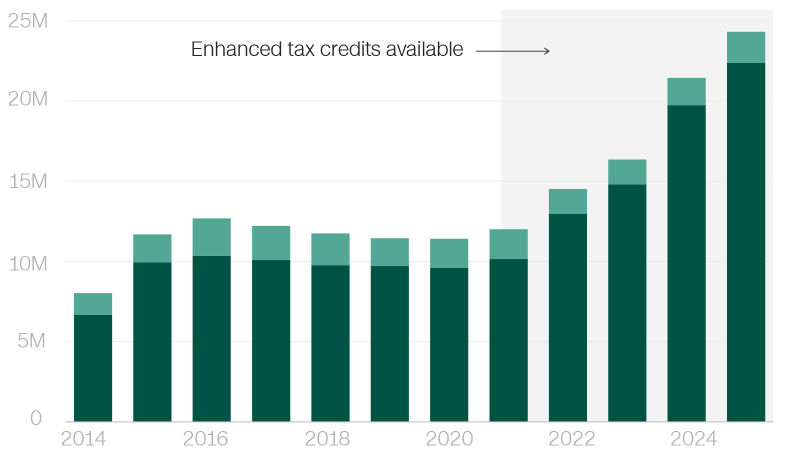
The impending expiration of enhanced Affordable Care Act (ACA) premium subsidies at year-end is set to significantly increase health insurance costs for millions of Americans, with average premiums projected to more than double for many enrollees. This policy change, which previously drove record enrollment of 24 million people for 2025, is expected to lead to approximately 4 million additional uninsured individuals by 2034, according to the CBO. The renewal of these subsidies remains a critical and contentious point in federal spending negotiations, contributing to the ongoing government shutdown and introducing considerable uncertainty for the healthcare insurance market and consumer spending.
The impending lapse of enhanced Affordable Care Act (ACA) premium subsidies at year-end 2026 poses a significant financial burden for millions of Americans, with average health insurance premiums projected to more than double for affected enrollees. These subsidies, which previously attracted a record 24 million individuals to sign up for 2025 coverage, have been critical in reducing monthly costs for over 90% of participants, with roughly half paying $0 or near $0.
This policy shift is expected to lead to approximately 4 million additional uninsured individuals by 2034, according to the Congressional Budget Office, disproportionately affecting lower-income, older, and middle-class consumers, particularly in Southern states like Texas, Florida, Georgia, and North Carolina. The increased out-of-pocket healthcare expenses could consequently impact broader consumer spending and economic stability.
The renewal of these subsidies remains a contentious political issue, contributing to a prolonged government shutdown due to a stalemate in federal spending negotiations. This legislative impasse introduces substantial uncertainty for the healthcare insurance market and the financial outlook of consumers, despite initial broad public support for extending the assistance.
AI-powered research, real-time alerts, and portfolio analytics for institutional investors.
Overall Sentiment
moderately negative
Sentiment Score
-0.60
