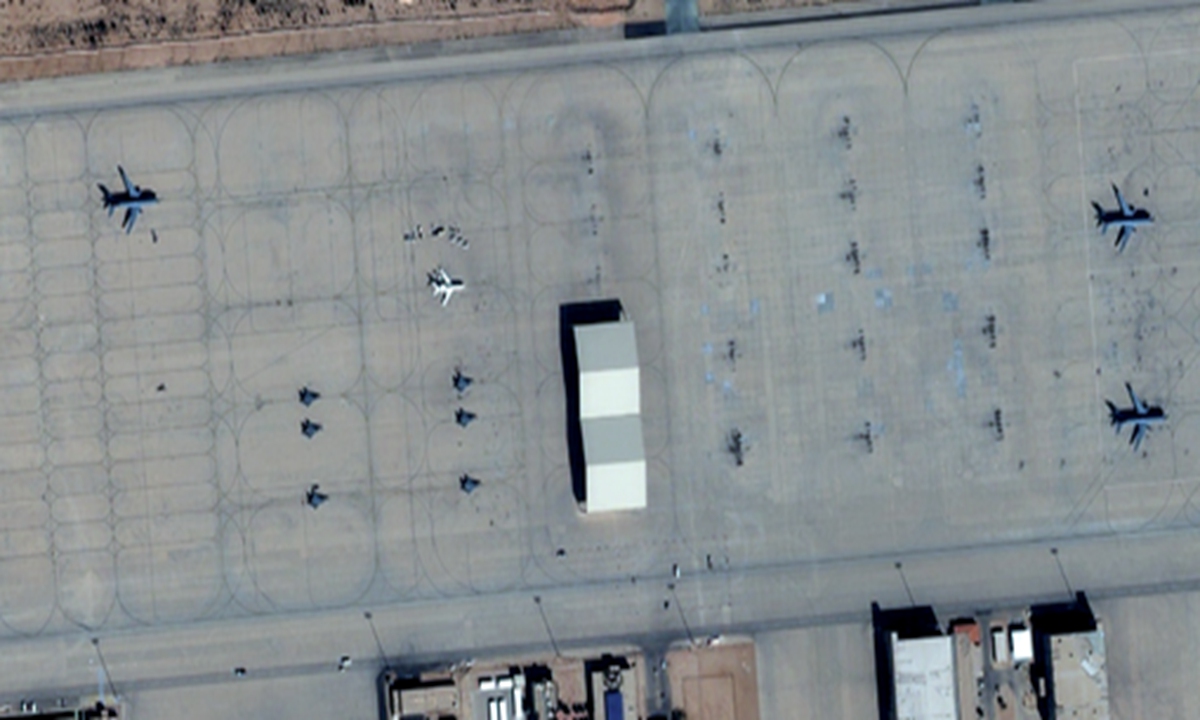
Exclusive satellite imagery and public statements indicate a marked US military buildup around Iran: Al Udeid Air Base saw KC-135 tankers rise from five (Jan 16) to 14 (Jan 25), suspected Patriot air-defense systems were identified at Al Udeid and Ali Al Salem, large numbers of F-15Es were observed in Jordan, and President Trump signaled a carrier strike group led by USS Abraham Lincoln is heading toward Iran. Analysts caution the deployment increases the probability of a limited, targeted strike but note the absence of mass tactical airpower or strategic bombers that would signal a sustained campaign; Diego Garcia shows only two C-17s. For funds, the development elevates geopolitical risk premia—raising upside volatility in oil and defense names and pushing risk-off positioning—while the lack of clear indications of a full-scale operation keeps the outcome uncertain.
Market structure: Defense primes (LMT, RTX, NOC, GD) and aerospace/defense ETF ITA are immediate beneficiaries from higher probability of regional strikes and force posture—expect a 10–25% relative outperformance vs. S&P if tensions persist 30+ days. Energy producers (XOM, CVX, XLE) gain from upside oil shocks; an interruption risk to Strait of Hormuz or insurance-led rerouting could tighten seaborne supply by ~1–3m bpd, supporting a $5–$20/bbl move in WTI depending on duration. Airlines, cruise lines and travel-related leisure (UAL, AAL, CCL, RCL, JETS) are direct losers from demand destruction and risk premia widening.
Risk assessment: Tail risks include a full-scale regional war (low probability ~5–10% over 3 months) that could push Brent >$120 and equities down >10%; another tail is a targeted US strike provoking asymmetric Iranian retaliation against shipping/Israel. Immediate (days) effects: volatility spike, safe-haven bid; short-term (weeks–months): energy and defense rerating if strikes occur; long-term: re-shoring of supply chains and defense budgets. Hidden dependencies: ally basing decisions (Diego Garcia, Saudi/Gulf access), OPEC spare capacity, insurance/shipping reroutes and sanctions dynamics that can amplify price moves.
Trade implications: Tactical longs in defense and energy, hedges in Treasuries/gold, and short exposure to airlines/cruise are warranted. Use options to express asymmetric views: 1–3 month call spreads on XLE/XOM and 3–6 month call spreads/LEAPS on LMT/RTX to capture repricing while capping premium. Pair trades: long ITA vs. short JETS (or UAL) to capture relative strength; establish position sizes small (1–3% each) and reprice on trigger thresholds (see decisions).
Contrarian angles: Consensus may overpay for a permanent repricing—historicals (2019–20 Gulf tensions, 2021 tanker incidents) show oil and defense spikes often mean-revert within 4–8 weeks absent sustained supply disruption. If no B-2/strategic bomber deployment or if coalition basing is restricted, upside in defense/energy could be capped; consider selling short-dated vol after first 2–3-week run-up. Unintended consequences: sustained oil upside benefits Russia and Iran’s fiscal position, which can prolong geopolitical risk; central banks could pause tightening if inflation re-accelerates, supporting duration and gold.
AI-powered research, real-time alerts, and portfolio analytics for institutional investors.
Request DemoOverall Sentiment
moderately negative
Sentiment Score
-0.60
