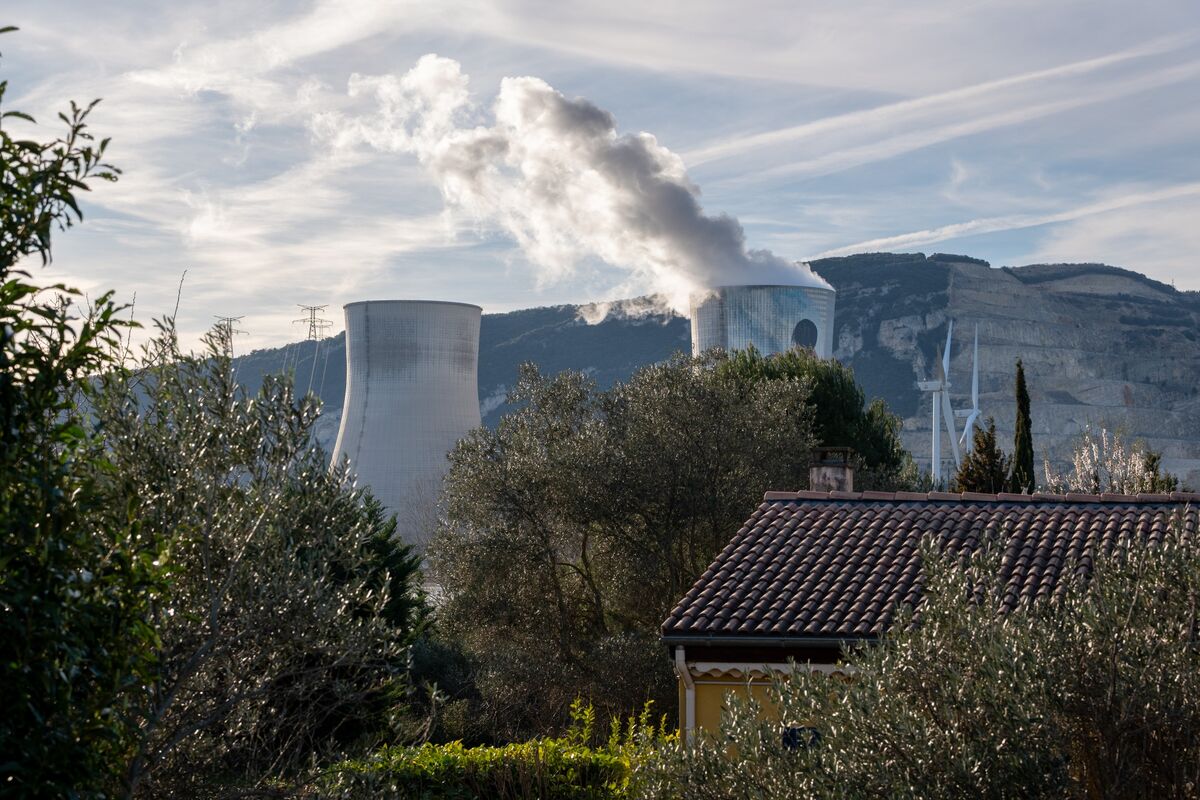
The European Commission has opened an in-depth probe into €72.8 billion ($83.5 billion) of French state-backed financing for six EDF nuclear reactors to assess compliance with EU state aid rules. Although the project was previously deemed 'necessary' for security of supply and decarbonization, the investigation creates regulatory risk that could delay the program, change funding terms, or force remedies that impact EDF and France's fiscal commitments.
Regulatory uncertainty around state-backed financing will functionally act as a financing shock: expect a higher cost of capital and slower drawdown schedules for large-cap nuclear projects, which pushes incremental capex into the 2-5 year window and forces renegotiation with Tier-1 EPC suppliers. That timing mismatch favors modular/accelerating technologies (utility-scale batteries, grid upgrades, repowering renewables) whose cashflows can be brought online inside the regulatory hiatus and capture displaced demand for capacity. Credit markets will reprice issuer-specific sovereign/utility linkages — bank underwriters and holders of long-dated EDF paper are the most exposed to spread widening; a 50–150bp move in 5–10y spreads is plausible in a severe scenario and would meaningfully change funding economics for other state-backed projects across the EU.
Second-order industrial effects: suppliers with flexible pacing (turbine manufacturers, inverter vendors, battery integrators) gain negotiating leverage; fixed-price EPC contractors lose as contingency buffers and longer mobilisation windows become standard. Carbon markets are likely to tighten if thermal generation fills shortfalls from delayed baseload capacity, so EU ETS may reprice higher by 10–30% over 6–12 months under sustained delays. Politically, a hardline regulatory outcome risks creating precedent that chills public-private co-investment across strategic infrastructure — expect cross-border private capital to demand higher returns or equity-like protections in future deals.
Key near-term catalysts to watch are: (1) any conditional remedies proposed by the regulator that increase private co-investor share or require separation of financing tranches; (2) credit-spread moves in EDF and core French sovereign paper; and (3) short-term dispatch/fuel-mix data showing incremental gas burn. Reversal scenarios include a negotiated restructuring that shifts risk to private equity or guarantees limited to debt (compressing spreads), or political intervention that reframes the project as critical security, which would restore much of the premium priced into affected instruments.
AI-powered research, real-time alerts, and portfolio analytics for institutional investors.
Request DemoOverall Sentiment
mildly negative
Sentiment Score
-0.25
