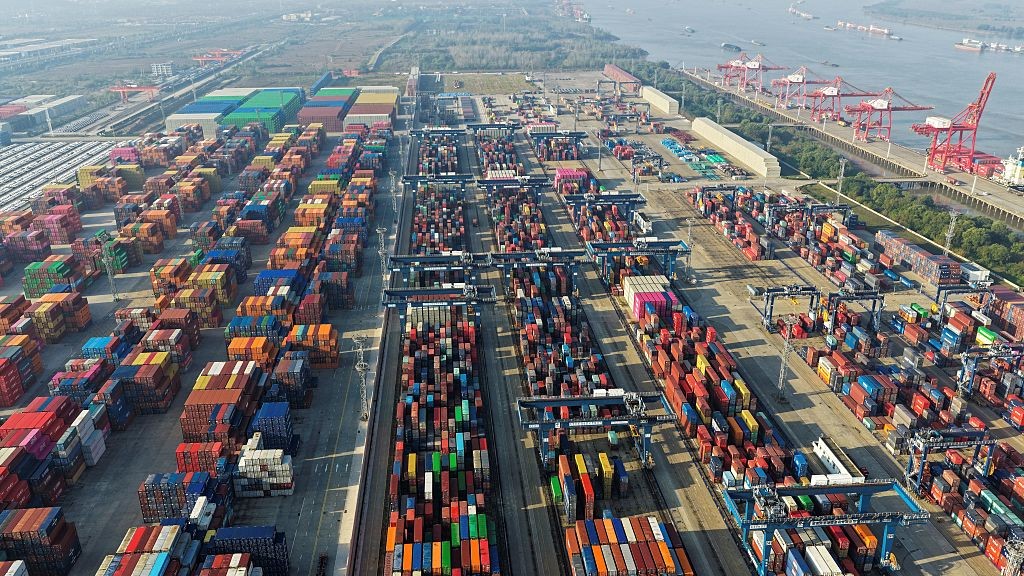
Chinese exporters still ship about $1 billion of goods to the U.S. daily even as exports to America have fallen in double digits for eight months, with many shipments being rerouted through Vietnam, Mexico and other intermediaries. The Politburo's 2026 emphasis on boosting domestic demand is expected to bring only modest stimulus, while weak domestic consumption and competitive Chinese firms imply limited import uptake and smaller global spillovers than the large, import‑heavy 2008 stimulus.
Market structure: The combination of persistent double-digit fall in US-bound exports and re-routing via Vietnam/Mexico implies winners are regional manufacturing/fulfillment hubs and logistics players while Western exporters to China lose pricing power. Expect Chinese domestic OEMs and low-cost exporters to capture share; incremental domestic demand stimulus in 2026 is likely <0.5% of GDP so import uptake will be limited and commodity demand muted for quarters. FX and rates: a sustained trade surplus supports CNY versus peers but weak domestic activity keeps downward pressure on Chinese long yields (benefit to long-duration EM/DM bonds) and reduces commodity inflation upside.
Risk assessment: Tail risks include abrupt US tariff escalation, Chinese export controls, or a property-sector funding shock; any of these could flip flows within weeks and spike shipping volatility >30% volatility on ZIM-like names. Time horizons: immediate (days) — shipping/routes continue to reprice; short-term (1–6 months) — regional exporters (VNM/EWW) should reflect rerouting; long-term (1–3 years) — structural decoupling sustains lower commodity intensity. Hidden dependency: a small fiscal impulse that preferentially subsidizes domestic SOEs would crowd out foreign suppliers, further depressing imports.
Trade implications: Tactical longs — overweight Vietnam (VNM) and Mexico manufacturing exposure (EWW) and select logistics/shipping names (ZIM) for 3–12 month windows; tactical shorts — reduce/hedge commodity producers (BHP, VALE) and copper miners (COPX) given weaker Chinese import demand. Options: buy 3-month puts on COPX (7–10% OTM) to hedge a commodity downside spike; use 3–6 month covered calls on ASHR to harvest premium if Chinese stimulus disappoints. Entry/exit: scale in over 4–8 weeks; trim longs if China PMI >50 for two consecutive months or monthly exports to US reverse to positive yoy.
Contrarian angles: Consensus focuses on China stimulus; market is underestimating structural import substitution — foreign exporters can only regain share if stimulus >0.5–1.0% GDP and explicitly targeted at imported goods. Reaction may be underdone in regional equity prices — Vietnam and Mexico still trade at a 10–20% discount to implied re-routing benefits; unintended consequence: lower global commodity prices could pressure miners’ balance sheets, creating a 12–24 month distressed opportunity in select miners rather than a cyclical bounce.
AI-powered research, real-time alerts, and portfolio analytics for institutional investors.
Request DemoOverall Sentiment
moderately negative
Sentiment Score
-0.25
