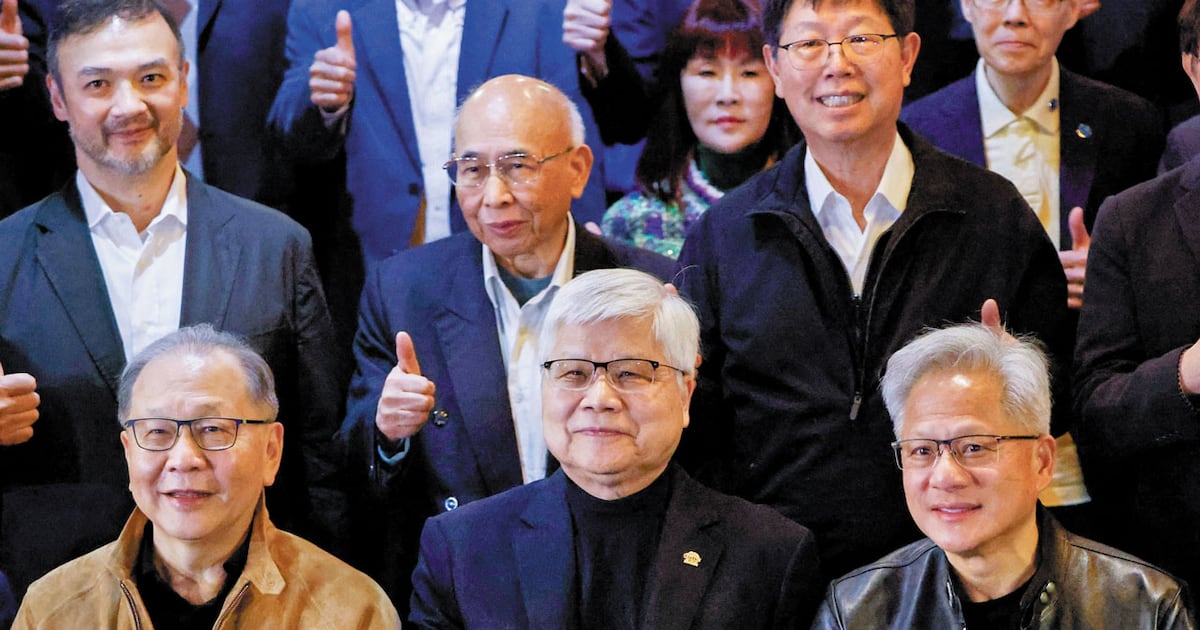
NVIDIA CEO Jensen Huang attended a Taiwan Tech CEO dinner in Taipei, signaling continued engagement with Taiwan's technology and semiconductor ecosystem. No financial figures or formal announcements accompanied the appearance, but the visit underscores relationship-building with Taiwanese partners and is relevant for investors monitoring NVIDIA's supply‑chain ties and geopolitical exposure.
Market structure: Huang’s Taipei appearance signals tighter strategic coordination between NVIDIA (NVDA) and Taiwan’s foundry/ecosystem (TSM, ASML upstream suppliers). Expect winners: NVDA, TSM, semiconductor equipment names (KLAC, LRCX) via sustained high utilization and pricing power; relative losers include commodity GPU/CPU OEMs and emerging China-focused AI chipmakers that lack TSMC access. This coordination suggests constrained advanced-node supply for 12–24 months, preserving margin upside for foundry-led leaders.
Risk assessment: Key tail risks are geopolitical escalation (China–Taiwan conflict) producing >30% drawdowns in NVDA/TSM within weeks, and stepped-up export controls slicing 10–25% off NVDA revenue over quarters. Immediate risk (days): headlines on trade policy; short-term (weeks–months): TSMC capex/lead-time updates; long-term (quarters–years): China domestic fab investments altering competitive dynamics. Hidden dependency: NVDA’s roadmap relies on TSMC node leadership and HBM supply chains — shortages there amplify volatility.
Trade implications: Direct plays: overweight NVDA (tactical) and TSM (strategic) and semicap suppliers; underweight or hedge AMD (AMD) for relative GPU share risk. Use options to define risk: prefer 3–6 month bull-call spreads on NVDA (buy 10% ITM, sell 25–30% OTM) financed by selling 30‑delta puts, and 9–12 month LEAP calls on TSM to capture structural foundry upside. Rotate into LRCX/KLAC for 6–12 months as capex confirms.
Contrarian angles: Consensus downplays operational fragility — the CEO’s Taipei diplomacy could presage binding supply agreements that produce a 10–20% earnings beat window over next 2–4 quarters, underappreciated by markets. Conversely, if markets already price seamless supply, volatility in the near term will create opportunities to sell inflated call premium; longer term the risk of accelerated Chinese foundry investment is an underpriced structural threat to TSMC/NVDA beyond 24–36 months.
AI-powered research, real-time alerts, and portfolio analytics for institutional investors.
Request DemoOverall Sentiment
neutral
Sentiment Score
0.00
Ticker Sentiment
