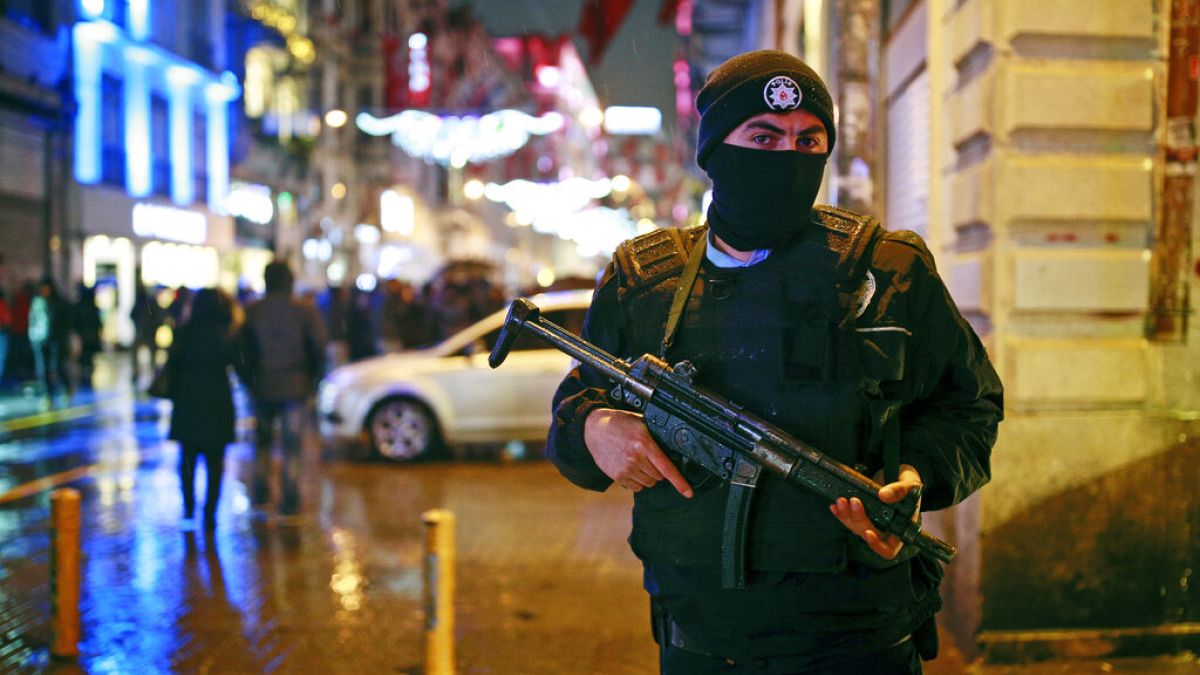
Turkish authorities carried out coordinated counterterrorism actions in Istanbul, raiding 124 addresses and detaining 115 suspects out of 137 arrest warrants tied to alleged Islamic State plots targeting Christmas and New Year celebrations; 22 suspects remain at large and police seized pistols, ammunition and organisational documents. Ankara prosecutors separately issued detention warrants in a probe that identified IS financial flows through bank accounts and led to warrants for 10 suspects, underscoring ongoing domestic security and financial-crime risks. The developments raise short-term risk premia for Turkish consumer-facing sectors—retail, shopping centres and travel/leisure—around the holiday season and may keep investor focus on political/security risk in Turkey.
Market structure: Immediate winners are security and defence suppliers (domestic names like ASELS.IS and global defence contractors) as governments and malls/shopping-centres reallocate security budgets; immediate losers are tourism, retail and leisure operators concentrated in Istanbul (THYAO.IS, TAVHL.IS, PGSUS) where near-term demand and pricing power will compress by a likely 5–20% revenue hit if incidents materialise over the next 2–8 weeks. Cross-asset mechanics: expect short-term TRY weakness, +50–200bp widening in Turkish sovereign spreads, mild safe-haven flows to gold and US Treasuries and 2–6% drawdowns in Turkish equities on volatility spikes.
Risk assessment: Tail risk is a successful coordinated attack causing a multi-week tourism collapse and capital flight (low probability but 100–300bp sovereign shock); this could push USD/TRY sharply higher (>5% in 1–2 weeks) and force emergency macro measures. Time horizons: immediate (days around holidays) sees liquidity and sentiment moves; short-term (weeks/months) affects Q1 tourism receipts; long-term (quarters) depends on repeated incidents and government policy response. Hidden deps: banking asset quality sensitivity to tourism FX inflows and foreign investor sentiment; catalyst risk centers on further arrests, credible deterrence statements, or a high-profile attack.
Trade implications: Tactical hedges first — buy short-dated protection on Turkish exposure (1-month TUR puts or USD/TRY calls) sized 1–2% of portfolio; initiate selective long exposure to defence (ASELS.IS 1–2% of portfolio) with 3–12 month horizon targeting +15% on rerate. Short/underweight travel & retail (THYAO.IS, TAVHL.IS, PGSUS) via 1–3% short positions or 1-month 5–10% OTM puts; complement with +1% GLD as a tail hedge. Timing: implement hedges within 48–72 hours; rotate into contrarian longs only after 10–14 days of no major incidents.
Contrarian angle: The market may over-penalise long-term tourism exposure—if no high-casualty event occurs, expect a bounce of 10–25% in beaten-up travel names over 4–12 weeks as seasonal demand and pent-up international travel resume. Conversely defence wins may be front-loaded and fade if fiscal constraints emerge; avoid levering defence longs beyond 2% until clear procurement commitments are announced.
AI-powered research, real-time alerts, and portfolio analytics for institutional investors.
Request DemoOverall Sentiment
moderately negative
Sentiment Score
-0.55
