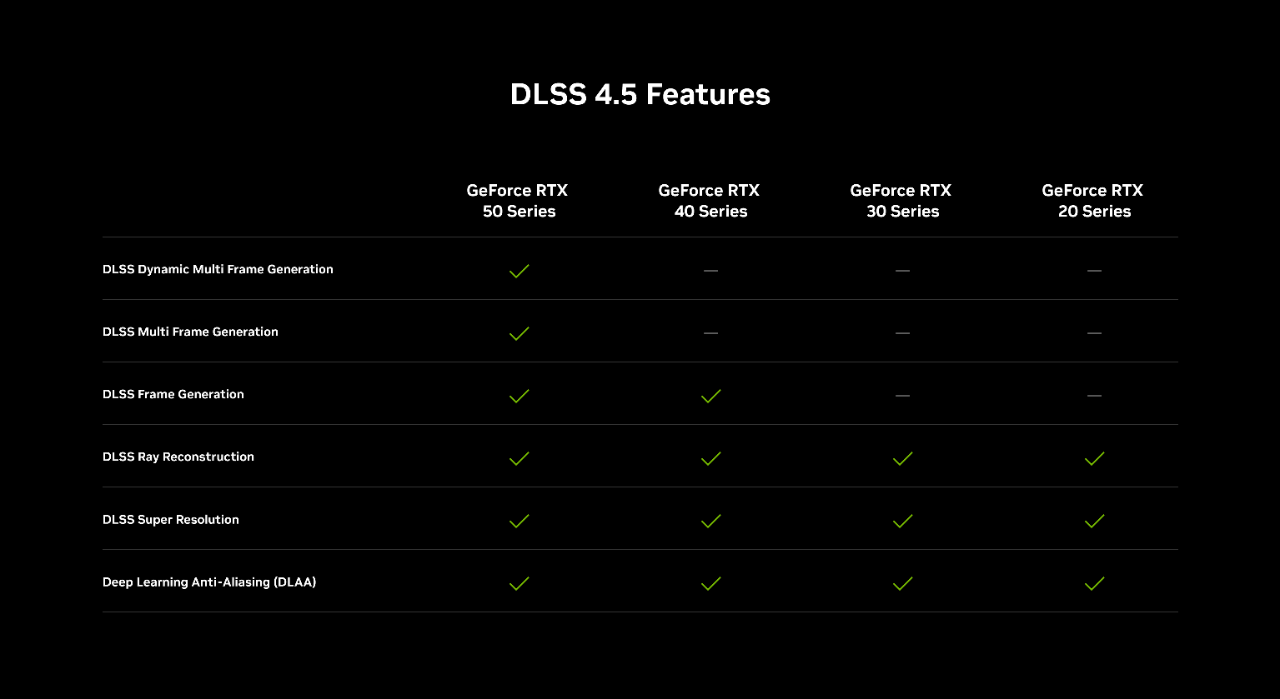
NVIDIA released a beta update to its NVIDIA app adding DLSS 4.5 Dynamic Multi Frame Generation (up to 6X frame generation) and a new DLSS model that can boost 4K path-traced frame rates by up to ~35% on GeForce RTX 50 Series. The update also introduces a beta Auto Shader Compilation feature to rebuild DX12 shaders idle/on demand and requires GeForce Game Ready Driver 595.97 WHQL or newer; several major titles are listed as supported as of March 31, 2026. These changes improve gaming performance and UX and could modestly support RTX GPU demand/adoption without implying immediate material market moves.
NVIDIA’s new software suite functions as leverage on hardware ASPs: by architecting best-in-class perceptual improvements that are materially advantaged on the latest silicon (and requiring newer driver features), NVIDIA increases the marginal return on selling cutting‑edge GPUs while raising the upgrade urgency for serious gamers and creators. If even 5–10% of the global enthusiast installed base upgrades to an RTX‑50–class card within 12 months, the implied incremental TAM for GPUs and high‑refresh monitors is in the low single‑digit billions — a cyclical tailwind that compounds with OEM channel restocking over 1–3 quarters.
Second‑order winners include monitor and display makers (demand for 240Hz+ 4K OLED and 1080/1440p high‑refresh panels) and game engines that bake in NVIDIA features (which reduces friction for future feature monetization). The exclusivity of some models to newer FP8‑capable silicon intentionally segments the market: legacy RTX 20/30 owners face higher switching costs to capture the headline performance gains, increasing short‑to‑medium term pricing power for NVIDIA but also creating an addressable upgrade cliff that competitors and used‑market dynamics can exploit.
Key risks and catalysts: (1) developer adoption pace — meaningful revenue/engagement lift requires ~6–12 months for enough triple‑A titles to integrate the new models; (2) perceptual/latency complaints or regressions could force rollbacks and slow OEM adoption within weeks; (3) competitors (AMD/Intel) or middleware (FSR) parity improvements would compress the upgrade incentive over 3–12 months. Watch driver release cadence, upstream driver bugs, and quarterly gaming GPU sell‑through as 30–90 day catalysts that can reverse the narrative.
AI-powered research, real-time alerts, and portfolio analytics for institutional investors.
Request DemoOverall Sentiment
mildly positive
Sentiment Score
0.35
Ticker Sentiment
