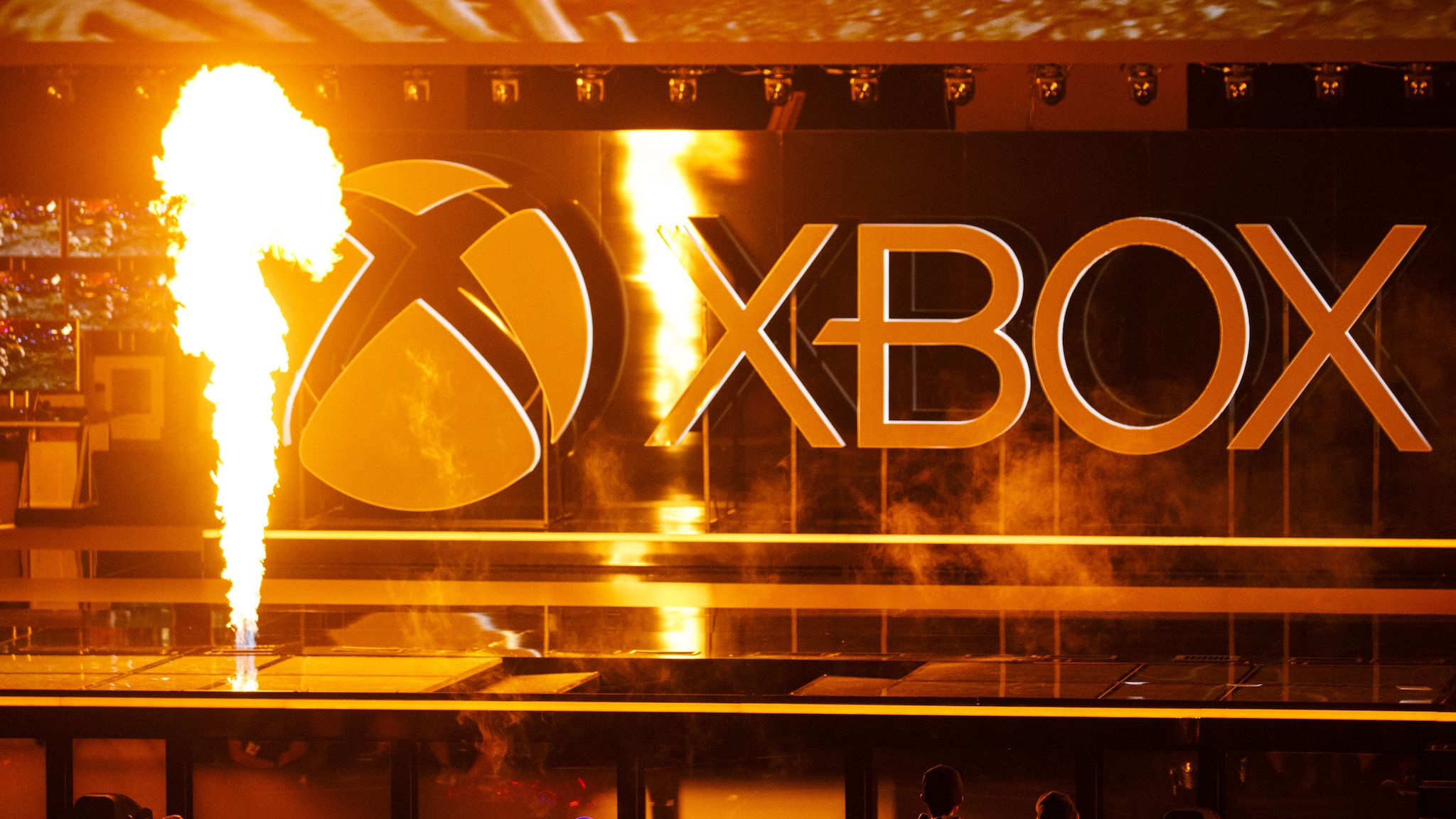
Microsoft's gaming division recorded a $623 million decline in gaming revenue, a 9% year-over-year drop, driven by a 32% fall in sales of Xbox hardware, games and Game Pass versus the same quarter last year. Gaming sits within the "More Personal Computing" segment (about 20% of company revenue) and Xbox is estimated to represent roughly 7% of total revenue, while Azure, cloud services and the company's OpenAI investment continue to drive outsized growth — implying the gaming slowdown is a headwind but unlikely to materially alter Microsoft’s overall financial trajectory.
Market structure: The 32% YoY drop in Xbox console/Game Pass sales is concentrated pain inside a business that we estimate is ~7% of MSFT revenue; primary winners are MSFT’s cloud/AI franchises (Azure/OpenAI) and GPU leaders (NVDA) that capture enterprise spend as consumer gaming softens. Losers are console hardware suppliers, first‑party studios reliant on launch cadence, and any small-cap gaming publishers with weak balance sheets; Sony/PlayStation may take share if price sensitivity persists. Competitive dynamics: Microsoft’s decision to raise Game Pass and console prices twice suggests pricing power limits have been reached — expect margin pressure in gaming and greater capital reallocation to higher‑growth cloud/AI where incremental margin >30%. Supply/demand: softness signals demand shock, not supply shortage; inventory digestion could persist 2–4 quarters, pressuring semi orders for CE (consumer electronics) segments.
Risk assessment: Tail risks include MSFT divesting studios (value realization or writedowns) or deeper subscriber churn >10% after price hikes, which could knock gaming revenue another 5–8% and hurt peripherals makers. Immediate (days): earnings misses/guide down can cause 3–8% equity moves; short term (weeks–months): inventory destocking and promotional pricing; long term (quarters–years): capital reallocation to AI/cloud likely offsets gaming losses. Hidden dependencies: AAA release schedule and exclusive titles can swing quarterly revenue +/-$0.5–1.0bn; console hardware cycles remain a durable but lumpy cash generator. Catalysts: MSFT guidance, Game Pass subscriber metrics, Sony hardware sales, major AAA release dates.
Trade implications: Favor NVDA (AI secular) as a core overweight — accumulate on pullbacks >8% over 6 months; tactically buy MSFT on any post‑earnings drop >5% with 3–12 month horizon (gaming is <10% risk to total revenue). Consider pair: long AMD vs short INTC for 6–12 months (AMD’s console/CPU exposure and data center GPU upside vs Intel’s execution lag); size pair small (1–2% net each) and use 6 month expiries if using options. Options: buy NVDA 3–6 month 10–15% OTM call spreads to limit capital and capture AI catalysts; hedge MSFT exposure with 6 month 5% OTM puts sized to 0.5% portfolio.
Contrarian angles: The market may overreact to a 7%‑revenue segment miss and underprice MSFT’s enterprise AI optionality — a >5% share‑price pullback could be a buying opportunity given Azure/OpenAI growth targeting double‑digit revenue expansion. Conversely, console weakness could be cyclical; if Microsoft stops raising prices or launches a compelling exclusive in 12–18 months, gaming revenues could rebound and re‑rate peripherals and software suppliers. Historical parallel: console cycles 2013–2015 saw multi‑quarter swings but secular platform value recovered; mispricings will cluster around near‑term subscriber datapoints and inventory reads.
AI-powered research, real-time alerts, and portfolio analytics for institutional investors.
Request DemoOverall Sentiment
mildly negative
Sentiment Score
-0.30
Ticker Sentiment
