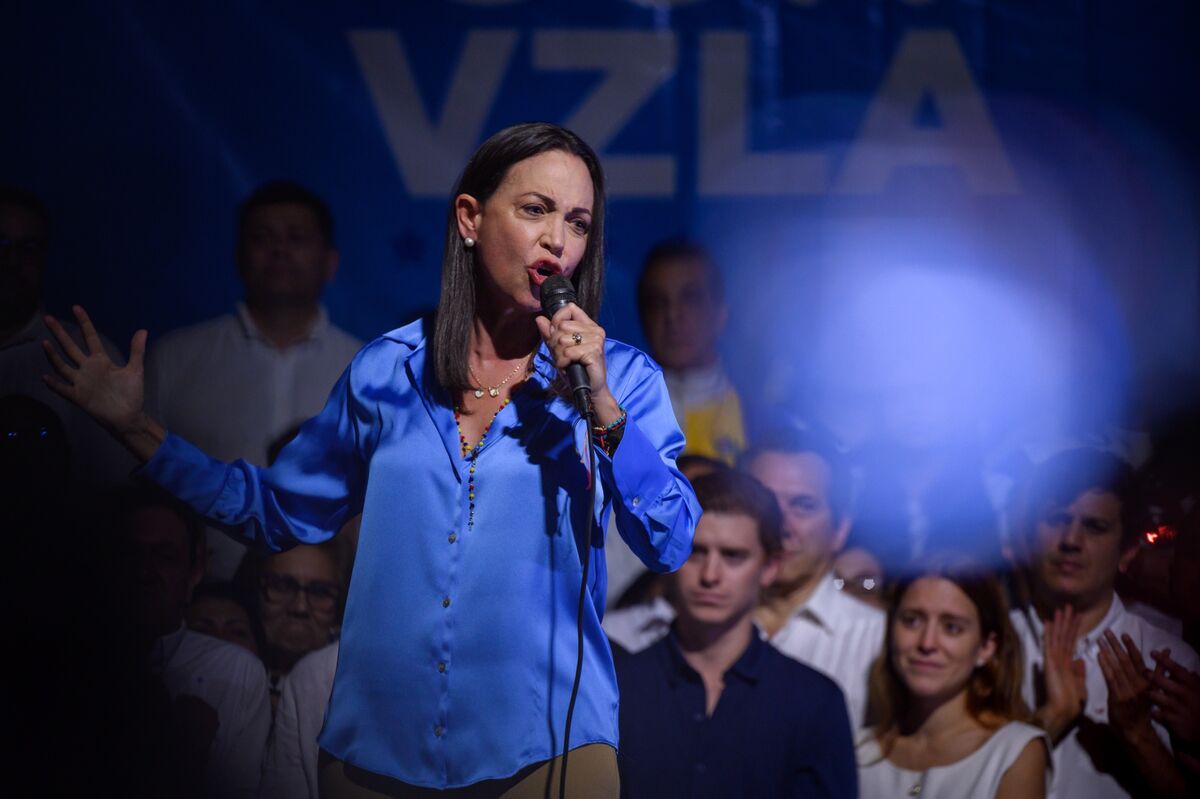
María Corina Machado, this year’s Nobel Peace Prize laureate from Venezuela, has confirmed she will travel to Oslo to receive the award in person on Dec. 10, Nobel Institute director Kristian Berg Harpviken said, while withholding travel details on security grounds. The item is politically notable for Venezuela’s opposition but carries minimal direct near-term implications for financial markets; investors should only monitor for any subsequent geopolitical or sanctions-related developments that could affect Venezuelan assets.
Market structure: Machado attending Oslo increases international diplomatic attention on Venezuela, strengthening the political capital of the opposition (winner) and eroding the Maduro regime’s legitimacy (loser). Near-term market impact is small (market impact score ~0.05) but raises the probability tail of policy changes that would tighten sovereign credit spreads and re-open capital flows to Venezuela and related Latin American assets over 6–24 months. Cross-asset: main channels are EM sovereign credit (CDS wider/tighter), VES FX (strength on transition probabilities), and marginal oil-supply narratives (small absolute supply impact but asymmetric price risk).
Risk assessment: Tail risks include a harsh regime crackdown or expanded sanctions (low probability but high-impact: sovereign CDS +500–1000bps move, VES devaluation >30% intra-month). Time horizons: immediate (days) — PR and volatility spike; short-term (weeks–months) — diplomatic/escalatory steps; long-term (quarters) — policy and asset-recovery outcomes. Hidden dependencies: role of Russia/Cuba, US sanction levers, and splits within Venezuelan security forces; monitoring these shifts is critical. Key catalysts: US/EU sanction announcements (30–90 days), Venezuelan military defections, and oil-price shocks.
Trade implications: Tactical positions should be small and hedged. Consider a 1–2% long in iShares Latin America 40 ETF (ILF) for 6–12 months to express a pickup from potential re-opening (target +15–30% upside if transition probability rises >25%), paired with downside protection. Buy 3-month WTI 10% OTM put spreads (size 0.5–1% notional) to hedge commodity downside if Venezuelan supply prospects re-emerge. If access exists, buy 6–12 month sovereign CDS protection on Venezuela (or 0.5–1% notional put protection on broad LatAm bond ETFs) to guard against shock widening >300bps.
Contrarian angles: Consensus will treat this as symbolic; markets may underprice the probability of substantive policy change — creating a mispricing in LatAm risk premia. Conversely, optimism could be overdone: if US/EU tighten sanctions after the ceremony, assets could gap lower; set hard stop-loss triggers (unwind ILF if Venezuelan CDS widens >200bps in 7 days or VES weakens >15% in 10 days). Historical parallel: Nobel awards to dissidents have accelerated diplomatic pressure but delivered slow market effects; expect 3–12 month asymmetric windows for profitable entry/exit.
AI-powered research, real-time alerts, and portfolio analytics for institutional investors.
Request DemoOverall Sentiment
neutral
Sentiment Score
0.00
