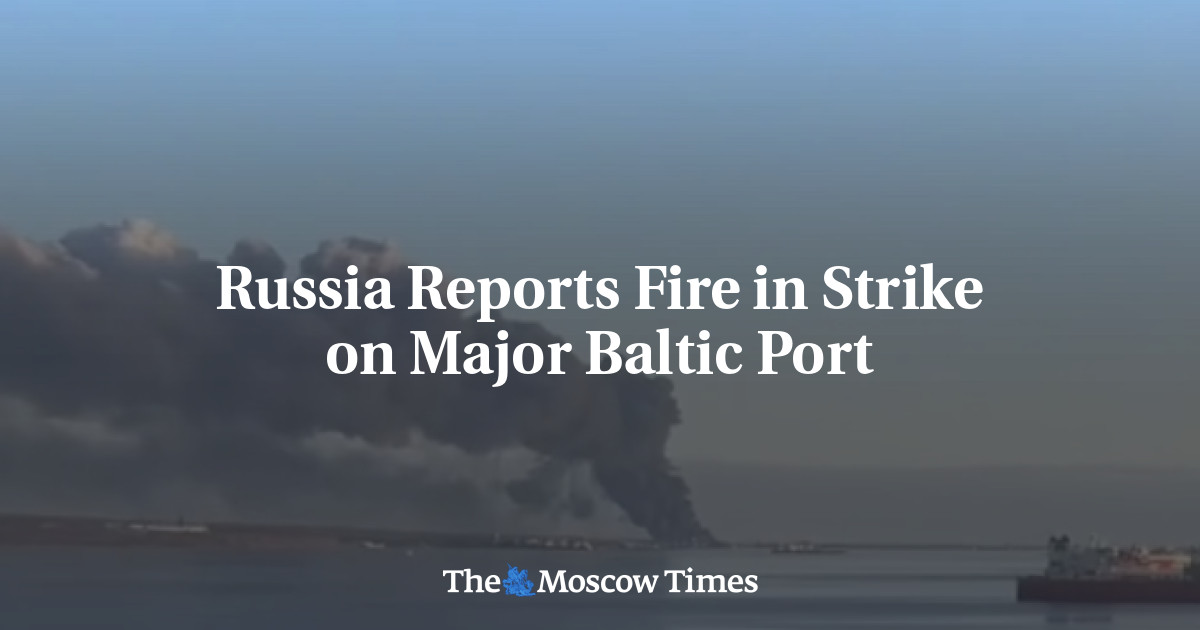
A drone strike sparked a fire at Ust-Luga, a major Baltic export hub for fertilisers, oil and coal, with regional governor reporting 36 drones destroyed overnight and no casualties. Russia said it fired 442 drones and one missile in a recent offensive while Kyiv's forces saw 380 UAVs shot down; Ukraine also struck Primorsk and a drone attack killed a civilian in Belgorod. These strikes risk disrupting Russian commodity exports and Baltic port operations, potentially tightening energy and fertilizer markets and raising shipping and insurance costs; monitor Ust-Luga/Primorsk operational status and near-term commodity price moves.
A localized disruption to a major export node has immediate knock-on effects on voyage geometry and inventory turns: expect export routes to lengthen by 7–14 days and available shipped volumes to fall by a fungible margin (we model 10–25% reduction in outbound throughput while alternate logistics ramp). That transit elongation raises per-tonne landed costs (fuel, port dues, demurrage) and tightens on‑dock storage, which mechanically amplifies spot price moves in thinly traded fertilizer and regional refined-product markets over the next 2–8 weeks.
Because agricultural demand for macronutrients is seasonally concentrated, even a month‑to‑two month supply squeeze can force buyers into the prompt market, producing outsized price responses versus the forward curve; in our scenario a sustained throughput shortfall could lift spot urea/ammonia/urea-based blends by 10–25% within one planting season. Parallel effects propagate into refined fuels and thermal coal flows: constrained seaborne product availability in Northern Europe will widen nearby diesel/gasoil cracks by multiple dollars per barrel for the short run and push coal-to-gas switching in marginal thermal plants.
Market structure favors intermediaries that can flex logistics quickly and producers with idle export optionality. Conversely, vertically rigid exporters, insurers and port operators with concentrated exposure to affected terminals face both cash flow interruption and rising war‑risk premia. Tail risks include rapid escalation that broadens maritime insurance exclusions (days-weeks) or a rapid diplomatic ceasefire/repair window that would erase premiums and cause a sharp mean reversion in spot spreads (7–21 days to rollback if repairs and insurance normalize).
AI-powered research, real-time alerts, and portfolio analytics for institutional investors.
Request DemoOverall Sentiment
strongly negative
Sentiment Score
-0.60
