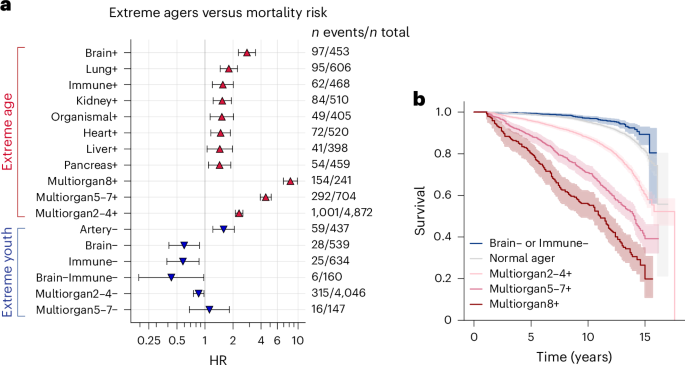
Scientists have developed a blood test capable of estimating the biological age of individual organs by analyzing thousands of proteins from approximately 50,000 plasma samples. This research indicates that an organ's biological age exceeding chronological age correlates with higher disease risk and reduced lifespan, while youthful brain and immune system ages signal improved health and longevity. This advancement, published in Nature Medicine, represents a significant step in personalized diagnostics and could drive innovation in the longevity and healthcare technology sectors.
A significant advancement in diagnostic technology has emerged from research published in Nature Medicine, detailing a blood test capable of estimating the biological age of individual organs. By analyzing thousands of proteins from approximately 50,000 plasma samples, the methodology establishes a tangible correlation between accelerated organ aging, relative to chronological age, and an increased risk of disease and mortality. The study specifically identifies youthful biological ages for the brain and immune system as key predictors of extended healthspan and longevity. While the research does not name specific commercial entities, it represents a foundational development at the intersection of biotechnology, preventative medicine, and artificial intelligence, leveraging proteomics and machine learning. This breakthrough could pave the way for a new class of personalized diagnostics, fundamentally shifting the healthcare paradigm towards proactive and predictive health management rather than reactive treatment.
AI-powered research, real-time alerts, and portfolio analytics for institutional investors.
Request DemoOverall Sentiment
neutral
Sentiment Score
0.00
