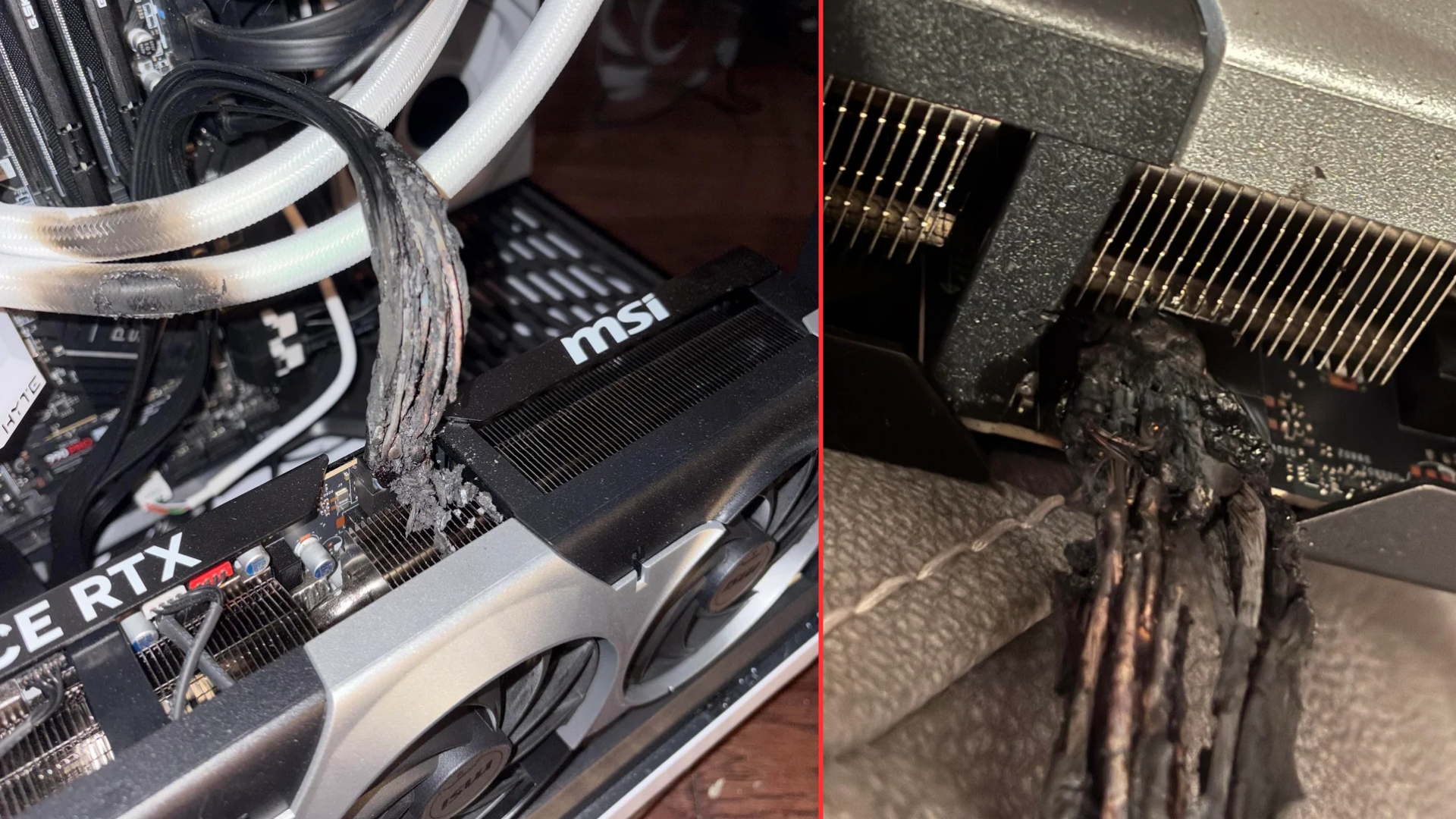
A user-reported incident shows an Nvidia GeForce RTX 5090 12V-2x6 power connector melting and catching fire—damaging the GPU-side connector and scorching adjacent AIO cooler tubing—despite using the native cable supplied with a PowerSpec 1050 GFM PSU. The episode highlights recurring high-amperage connector failure modes (connectors handling near ~600W can overheat if pins lose contact), posing reputational, safety and potential recall/retrofit risks for GPU vendors and OEMs, though available evidence is anecdotal and immediate broad financial exposure appears limited.
Market structure: This incident increases near-term reputational and warranty risk for NVDA (ticker NVDA) and GPU OEM brands (MSI, ASUS), putting modest pressure on pricing power for ultra-high-end cards; estimate a 1–3% unit sell-through decline for flagship cards over the next quarter and potential gross-margin erosion of ~50–200 bps if warranty/recall costs materialize. PSU/accessory makers (Corsair/Seasonic privately; minor boost to WDFC from DIY lubricant mentions) are small beneficiaries as consumers seek safer cables/monitors. Options market will price in this: expect NVDA short-dated IV +15–40% and widened credit spreads for related consumer-electronics suppliers by 5–15 bps.
Risk assessment: Tail risk includes a regulatory recall or class-action that could cost NVDA $0.5–1.5bn (stock shock 10–20%) — low probability (<10%) but high impact over 1–3 quarters. Immediate (days): headline-driven knee-jerk selling of ~3–8%; short-term (weeks–months): investigations and warranty accruals; long-term (quarters–years): potential market-share shift if consumer trust erodes. Hidden dependency: third-party 8→16-pin adapters and PSU quality, not just GPU design, drive incident frequency; catalyst set includes NVDA/OEM statements within 7–30 days, retailer/repair reports within 30–90 days.
Trade implications: Tactical hedges and volatility plays favored. Short-dated (30–60 day) ATM or 5% OTM NVDA puts (allocate 0.5% NAV) as a headline hedge, buy on IV spike >20% and price drop >5%. If NVDA weakness exceeds 8% and no systemic recall confirmed, initiate a tactical long (1–2% NAV) for 3–6 month mean reversion targeting 20–25% upside, stop -10%. Small tactical long WDFC (0.25–0.5% NAV) for 1–3 months to capture incremental DIY sales (target +5–10%). Pair trade: go long AMD (0.5% NAV) vs short NVDA (0.5% NAV) conditional on a formal recall announcement within 60 days.
Contrarian angles: Consensus may over-attribute blame to NVDA hardware rather than mixed PSU/adapter/user-install issues; historical parallel — RTX 4090 connector controversies caused transient 5–12% drawdown then recovery in 1–3 months after firmware/adapter fixes. If IV > historical 1yr vol +30% and the story remains isolated, consider selling short-dated premium (30–45 day strangles) sized to receive 2–4% of notional, but only after establishing a put hedge and strict risk limits.
AI-powered research, real-time alerts, and portfolio analytics for institutional investors.
Request DemoOverall Sentiment
moderately negative
Sentiment Score
-0.50
Ticker Sentiment
