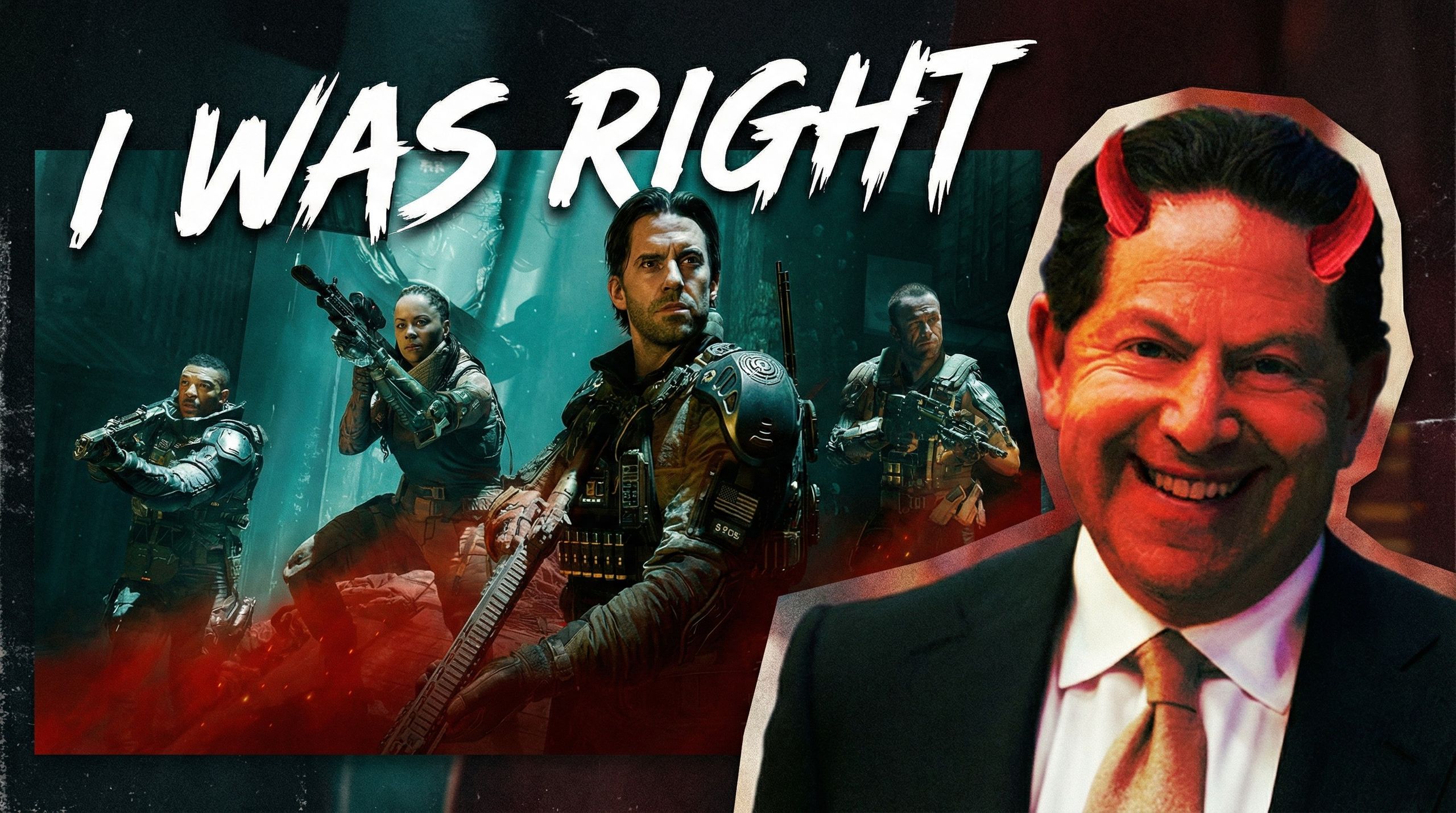
Bobby Kotick, defending his role in Activision Blizzard King's $69 billion sale to Microsoft, claims Call of Duty full-game sales are down more than 60% year-over-year—an argument meant to justify selling before a projected valuation collapse amid intense competition (e.g., Battlefield) and distribution effects from Microsoft’s Game Pass. Swedish pension fund AP7 has sued in Delaware alleging Kotick rushed the deal to avoid accountability for internal scandals and to secure personal compensation; industry tracker Circana and November 2025 physical sales data corroborate a real sales decline but Kotick has not produced the cited 60% evidence, and Bloomberg reporting suggests Game Pass may have reduced standalone revenue (approx. $300m cited for a prior title).
Market-structure: A >60% drop in Call of Duty full-game sales (if true) shifts value from boxed/unit revenue to subscription/recurring (Game Pass). Winners: Microsoft long-term (recurring revenue, engagement) and rival publishers that convert COD buyers (EA, TTWO) in near-term; losers: physical-game retailers and any investor valuing Activision on annual boxed revenue multiples. Expect pricing power at platform/subscription level to rise while single-release monetization compression persists over 1–3 years.
Risk assessment: Key tail risks include a Delaware ruling forcing additional shareholder remediation (>$1–3B) or renewed antitrust action reversing parts of the deal; both would hit MSFT equity and increase credit spread volatility. Near-term (days–weeks) litigation headlines and November-like retail weakness can cause 5–10% episodic share moves; long-term (12–36 months) the structural shift to subs and Game Pass likely smooths revenue volatility but lowers per-unit revenue.
Trade implications: Tactical hedges on MSFT are prudent: short-dated put protection or put spreads to guard 2–4% portfolio exposures while selectively overweighting diversified publishers (EA, TTWO) that can capture share if COD softens. Options IV on MSFT/Gaming names will spike on news — favor defined-risk structures (verticals) and relative-value pair trades (long EA/short MSFT beta-neutral) over outright directional gamma.
Contrarian angles: Consensus may over-penalize Microsoft for an episodic COD weakness; Game Pass cannibalization converts one-time sales into durable ARPU — a potential underappreciated re-rating catalyst if Microsoft proves cross-sell into Live/Cloud. Conversely, don’t ignore governance/legal risk: a plaintiff win (material payout or governance changes) remains a low-prob, high-impact negative within 6–18 months.
AI-powered research, real-time alerts, and portfolio analytics for institutional investors.
Request DemoOverall Sentiment
moderately negative
Sentiment Score
-0.45
Ticker Sentiment
