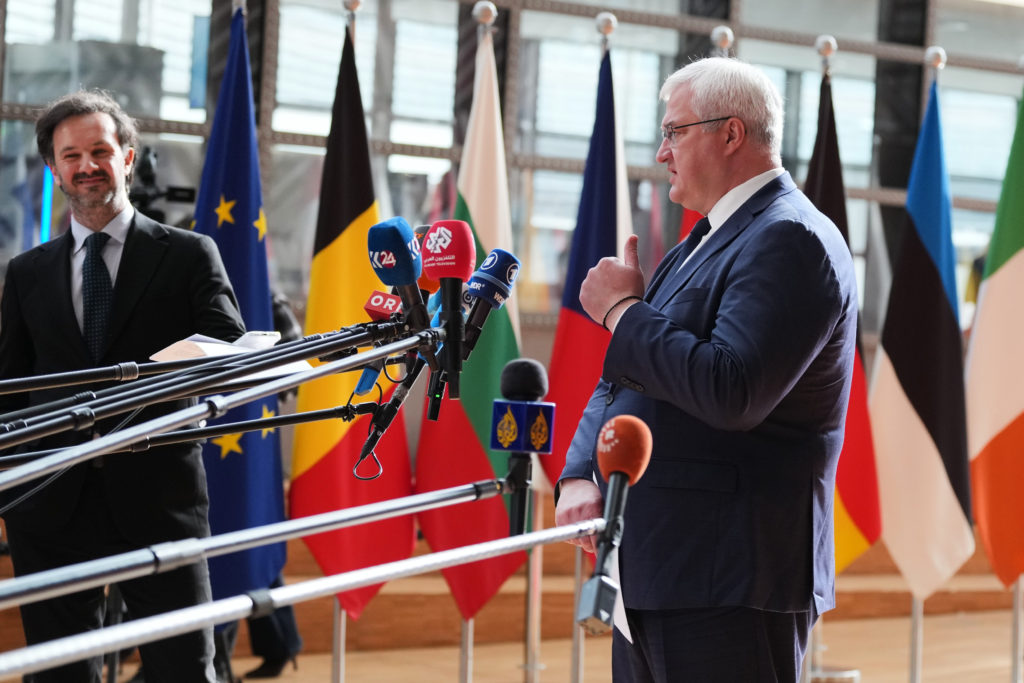
The EU imposed sanctions on 16 officials and seven centers linked to the abduction and militarized indoctrination of an estimated 20,500 Ukrainian children since Russia’s 2022 invasion. More than 130 people and entities are now under EU travel bans and asset freezes, while the ICC has already issued an arrest warrant for Vladimir Putin over the abductions. The move escalates geopolitical pressure on Russia and reinforces the EU’s stance on war-related human rights abuses.
This is a sanctions escalation with low immediate macro beta but meaningful second-order implications for Europe’s defense, cyber, and compliance stack. The key market read is that Brussels is widening the aperture from battlefield support to the human-rights/legal narrative, which increases the odds of more coordinated transatlantic measures and a broader enforcement regime against Russian state-linked intermediaries. That tends to support defense procurement visibility in Europe, while raising the cost of doing business for any firms still exposed to Russia-facing logistics, education, identity, or prisoner/exchange-adjacent services.
The more important effect is on duration: child-abduction sanctions are not the kind of measure that gets rolled back in a ceasefire-heavy headline cycle, because they are tied to ICC-style accountability and domestic political salience in the EU. That makes them sticky and cumulative, so even modest future tranches can keep chipping away at Russian elite networks, travel access, and offshore asset utility. The market implication is a slow bleed for Russia-linked asset values and a modest tailwind for European firms selling border control, forensics, identity verification, and sanctions-screening software.
The contrarian miss is that this is not just symbolic diplomacy; it tightens the path for any “normalization trade” in Europe. If the EU keeps expanding sanctions around abductions and indoctrination infrastructure, it raises the probability of secondary sanctions, procurement blacklists, and longer litigation over seized assets, which could weigh on European banks with residual CIS exposure and on insurers underwriting political-risk cover. The upside scenario for risk assets is a credible negotiating channel and verifiable child-return mechanism, but that would require hard evidence of reversals, not just rhetoric, and likely takes quarters rather than weeks.
For defense, the better trade is not broad beta but select beneficiaries with exposure to European border security, surveillance, and command-and-control modernization. For Russia-linked exposures, the near-term risk is less energy and more asset impairment, frozen cash flow mobility, and higher discount rates applied to any recoverable value tied to sanctioned counterparties.
AI-powered research, real-time alerts, and portfolio analytics for institutional investors.
Request DemoOverall Sentiment
strongly negative
Sentiment Score
-0.75
