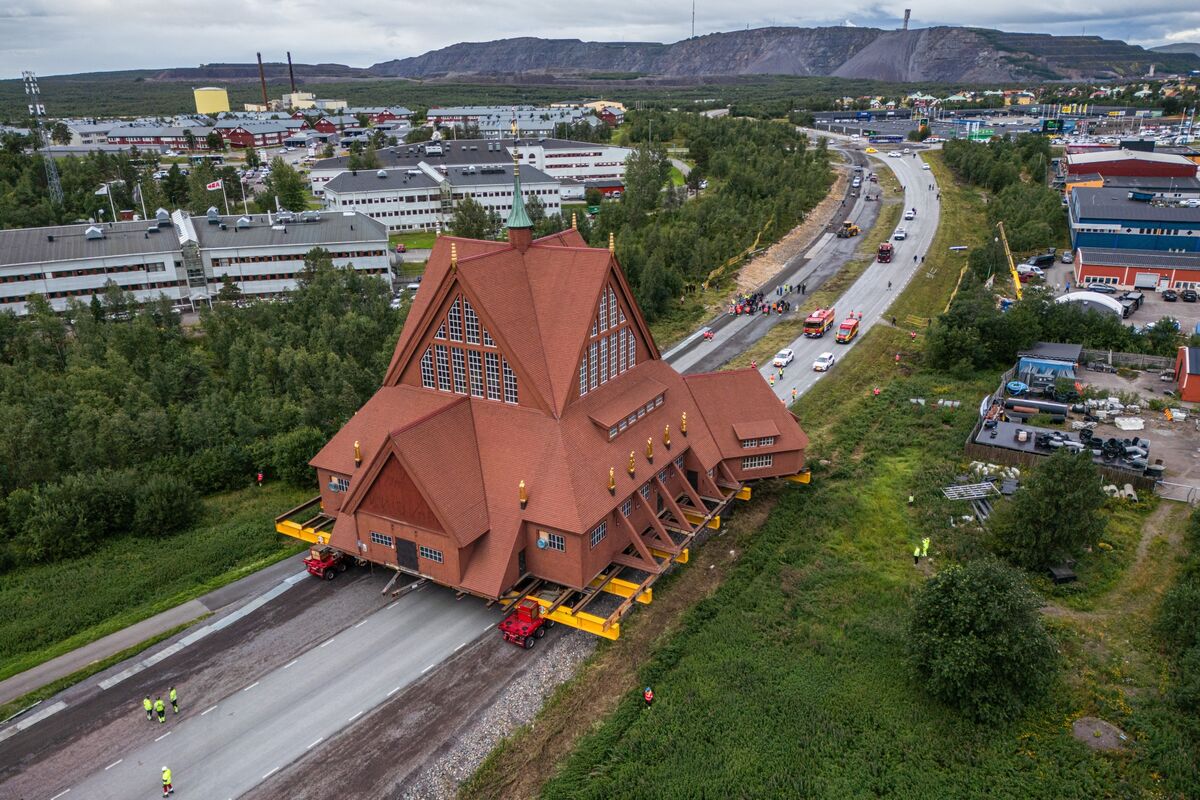
Sweden's Arctic municipality of Kiruna is requesting state aid to relocate an additional one-third of its population, roughly 6,000 residents and 2,700 homes, over the next decade. This significant displacement is driven by the expansion needs of the state-owned LKAB's iron ore mine, the world's largest underground operation, underscoring the substantial logistical and financial commitments required to secure continued output from a critical global raw material source.
The state-owned LKAB's plan to expand the world's largest underground iron ore mine in Kiruna, Sweden, has entered a new, more demanding phase, necessitating the relocation of an additional 6,000 residents and 2,700 homes over the next decade. This represents a significant escalation of a process ongoing since 2004 and now affects one-third of the town's population. The municipality's call for government assistance underscores the substantial and growing financial and logistical burden associated with the mine's expansion. For the commodity markets, this highlights the escalating non-extraction costs required to sustain output from a critical global source of iron ore. The project's future timeline and success are now increasingly dependent on political will and state funding, introducing a layer of governmental and execution risk to the long-term supply outlook from this key operation.
AI-powered research, real-time alerts, and portfolio analytics for institutional investors.
Request DemoOverall Sentiment
mixed
Sentiment Score
-0.10
