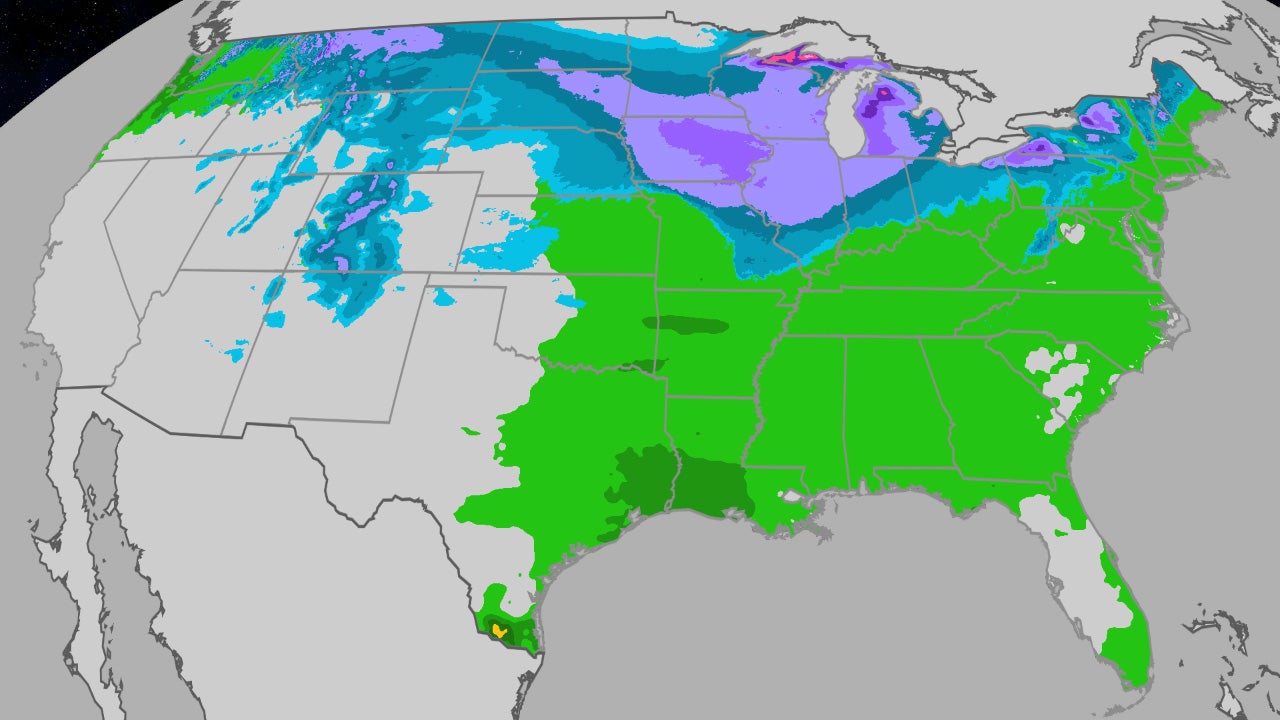
A potent mix of Winter Storm Bellamy and persistent lake-effect bands threatens significant travel disruption across the U.S. over Thanksgiving week, with whiteout conditions and heavy snow in Great Lakes snowbelts (Cleveland–Buffalo corridor, Syracuse, western Michigan), widescale snow across the Northern Plains and upper Midwest, and rain/thunderstorms with flash-flood and severe-risk in southern hubs. Major airports likely to face delays include Cleveland, Seattle, Portland (OR), Chicago-O'Hare, Dallas-Ft. Worth, Kansas City, Atlanta, New York City and other East Coast hubs; investors and trading desks with exposure to airlines, airport operations, logistics providers, and holiday retail staffing should monitor evolving forecasts and potential capacity constraints.
Market structure: Short-term losers are network airlines with hubs in the Great Lakes and Midwest (AAL, DAL, UAL, LUV, JBLU) because cancelled flights, rebooking and refunds hit ticket and ancillary revenue; ground carriers (UPS, FDX) face last‑mile delays but keep volume, and hotels (MAR, HLT) and car-rental (CAR) see higher ADR/occupancy from stranded travelers. Pricing power shifts toward lodging and local services for 48–96 hours while large carriers absorb uneven refund/costs; expect regional jet-fuel demand to fall modestly (estimated 1–3% vs normal regional demand) for 3–7 days, pressuring jet-fuel cracks relative to ULSD. Credit markets: short-term widening in airline HY spreads (+20–100bps) is plausible if cancellations cascade.
Risk assessment: Tail risks include multi-day hub closures (ORD, DFW, ATL >48 hours) producing a >=$100M hit to a major network carrier and systemic rebooking cascades; FAA flow restrictions or crew-hour rule enforcement could amplify losses. Immediate window (next 72 hours) concentrates operational risk; weeks 1–4 see booking churn and possible downgrade risk; quarters out, reputational effects on loyalty/ancillary spend may shave 1–3% off seasonal revenue if repeated. Hidden dependencies: crew positioning and insurance claims create second-order liquidity needs; catalyst thresholds: model consensus snowfall >6" or cancellations >10% at a hub trigger outsized market moves.
Trade implications: Near-term tactical: buy 10–14 day put-spreads on AAL and UAL (size 0.5–1% portfolio each) to hedge expected weekend volatility (strike ~7–12% OTM, capped premium). Opportunistic longs: buy 1–2% positions in MAR or HLT via short-dated calls to capture elevated ADR/occupancy over 1–2 weeks. Relative trade: long UPS (UPS) vs short FDX (FDX) 1%/1% pair — UPS’s denser ground network should outperform FedEx’s air-centric exposure during weather disruptions. Credit entry: if airline equity falls >10% or HY spreads widen >50bps, add senior airline bonds up to 2% allocation.
Contrarian angles: Markets often overshoot — if real cancellations remain <5% and TSA throughput rebound within 72 hours while equities are down 10–15%, buy Delta (DAL) 3‑month call spreads size 1% for mean reversion; historical winters (2018–2019) show 4–8 week recoveries post-weather shocks. Watch for unintended consequences: stronger hotel pricing can push freight to trucking (benefitting JBHT) and briefly inflate CPI components in regional services; if hotel ADR rises >5% week-over-week, rotate into lodging names and trim airline hedges.
AI-powered research, real-time alerts, and portfolio analytics for institutional investors.
Request DemoOverall Sentiment
mildly negative
Sentiment Score
-0.25
