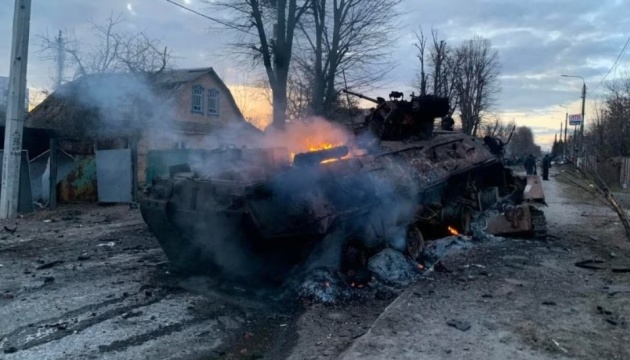
The General Staff of the Armed Forces of Ukraine reported that Russian forces lost another 1,220 personnel and one multiple-launch rocket system, with cumulative equipment losses listed as 11,477 tanks (+5), 23,841 armored combat vehicles (+4), 35,589 artillery systems (+19), 1,582 MLRS (+1), 1,264 air defense systems, 434 aircraft, 347 helicopters, 96,932 tactical UAVs (+400) and 72,010 vehicles/tankers (+119). As of Dec. 29, 22:00 there were 136 clashes along the front, with the Pokrovsk direction seeing 40 enemy attack attempts, underscoring sustained attrition and operational intensity that continue to shape defense demand and regional risk premia.
Market structure: Sustained high attrition materially benefits aerospace & defense prime contractors (LMT, RTX, NOC, GD) and munitions/specialty metals suppliers (NUE, MT, RHM.DE) as governments accelerate procurement; expect 6–12 month order backlogs and 5–15% price power on ammo and artillery components where capacity is constrained. Losers are Russian assets (FX, sovereign bonds, defense OEMs) and regional commercial sectors sensitive to sanctions; insurance and freight rates for Black Sea shipments remain elevated, raising logistics cost pass-through to commodity markets.
Risk assessment: Tail risks include NATO direct engagement or strikes on civilian energy infrastructure leading to >$10/bbl spikes in Brent and rapid sanctions escalation; immediate (days) impacts will be FX volatility and safe-haven flows to USD/Gold, short-term (weeks–months) hinge on US/EU aid votes, long-term (quarters–years) implies durable defense capex and supply-chain reshoring. Hidden dependencies: propellant, specialty steel, and microelectronics capacity are bottlenecks — failing to secure these would cap production despite funding. Key catalysts: US Congress aid approvals (next 30–60 days), major winter offensives, and significant strikes on logistics hubs.
Trade implications: Favored trades: establish 2–3% portfolio longs in ITA or XAR (diversified defense exposure) and 1–2% conviction longs in LMT and RTX; implement 3–6 month call spreads on LMT (buy 5–10% OTM, sell 20% OTM) to limit cost while capturing upside from new contracts. Hedge with 1% GLD and 1% UUP for risk-off spikes; short RSX or use CDS/futures on Russian sovereign debt for tactical 1–3 month plays if aid stalls; pair long RTX vs short JETS (airline ETF) to capture sector divergence.
Contrarian angles: The market may overprice perpetual demand — a diplomatic ceasefire or rapid munitions scaling (via NATO pooling) could compress defense multiples 10–25% quickly; conversely, underowned European names (RHM.DE, MT) can re-rate if Berlin expands orders. Unintended consequences: faster defense-driven inflation forces tighter monetary policy, pressuring broad equity multiples — keep 10–15% cash/hedge buffer and use tight stop-losses (15%) on high-beta defense longs.
AI-powered research, real-time alerts, and portfolio analytics for institutional investors.
Request DemoOverall Sentiment
moderately negative
Sentiment Score
-0.45
