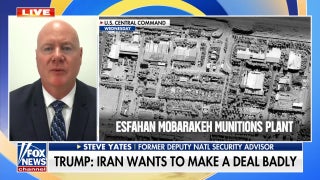
U.S. ordered deployment of additional elements of the 82nd Airborne Division (including Maj. Gen. Brandon R. Tegtmeier, headquarters staff and infantry battalions) to the Middle East to pressure Iran and create military options. Analyst Michael Eisenstadt warns Iran could shift to guerrilla-style hit-and-run attacks that would significantly increase U.S. casualties and complicate conventional operations. U.S. planning contemplates operations to seize and hold terrain such as Kharg Island (~20 miles off Iran’s Gulf coast), a move that could deny Iranian oil exports and exacerbate disruptions in the Strait of Hormuz; note that U.S. strikes on March 13 reportedly destroyed more than 90 Iranian military sites.
Escalation of asymmetric, hit-and-run tactics materially raises the marginal cost of forward-deployed forces: force-protection, ISR, and logistics spending will rise sharply and persist. Expect defense procurement timelines to compress and discretionary procurement to be reallocated toward survivability (ISR, EW, counter-UAS, secure comms) within a 3–12 month window, not quarters; that favors firms with supply chains able to scale fast and with existing classified program footholds.
Energy and maritime logistics face immediate frictional cost increases via rerouting, higher insurance premiums, and slower loading cycles — a realistic shock is +3–6 days per tanker voyage and a 5–12% rise in freight & insurance bills within weeks. That transmits into a near-term delivered crude premium (back-of-envelope) of $5–$15/bbl on constrained shipments, amplifying price volatility while refiners with short crude cycles see margin compression.
Winners are concentrated: primes and niche ISR/EW suppliers with backlog and fast production conversion; specialist insurers/underwriters who can reprice risk; selective oil-field services that can flex quickly. Losers include Gulf-exposed refiners/terminals, passenger carriers with Mideast routes, and EM credits funding regional trade — performance divergence should unfold over 1–9 months as contracts and insurance reprice.
Key catalysts that reverse the trajectory are rapid diplomatic de-escalation, coordinated SPR releases, or a demonstrable degrading of asymmetric strike capacity; conversely a targeted hit to export infrastructure would extend the shock to 6–18 months. Monitor shipping insurance BMS/war-risk spreads, short-term tanker routing data, and timely award notices for emergency defense contracts as high-signal indicators.
AI-powered research, real-time alerts, and portfolio analytics for institutional investors.
Request DemoOverall Sentiment
strongly negative
Sentiment Score
-0.60
