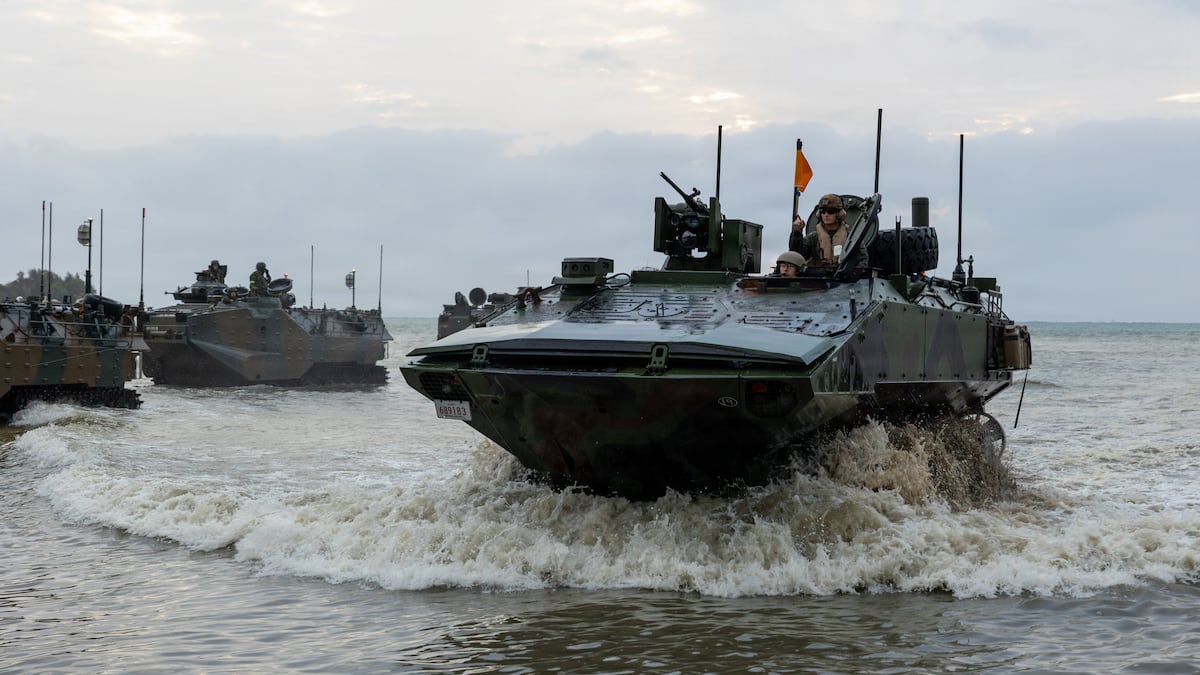
Pentagon is drafting plans for weeks-long ground operations in Iran while U.S. forces mass in the region, including the Tripoli Amphibious Ready Group with the 31st MEU and elements of the 82nd Airborne; final authorization rests with President Trump. An Iranian missile/drone strike at Prince Sultan Airbase wounded a dozen U.S. service members (two seriously) and reportedly damaged an E-3 AWACS and multiple KC-135 tankers; Operation Epic Fury has produced 13 KIA and nearly 300 WIA since Feb. 28. This escalation materially raises geopolitical risk and is likely to prompt risk-off positioning and greater oil-price and regional-asset volatility.
Heightened military contingency planning lifts a regional risk premium that will transmit fast to energy and insurance markets: expect a 3–8% bump in freight/war-risk insurance tariffs within 2–6 weeks and a $3–9/bbl implied lift in Brent forward curves if chokepoints or tanker rerouting are perceived as persistent. That translates into 100–300bp margin expansion for integrated and midstream energy names over the next quarter, but only while volatility remains elevated — a fast mean reversion is likely if a diplomatic thaw appears.
Defense sector flows will be front-loaded into expendables (munitions, spares, ISR sensors, expeditionary logistics) rather than major platform OEM revenue, concentrating near-term earnings surprises into distributors and suppliers with short lead times. Expect contract announcements and aftermarket re-rating windows in 1–6 months; however political/appropriations risk can truncate upside if budgetary pushback emerges, capping multi-year re-rates absent sustained operations.
Macro cross-currents favor USD and safe-haven real assets in the immediate term, pressuring regional EM FX and sovereign curves for 1–3 months; inflation impulses from energy represent a 6–12 month risk to duration-sensitive assets. Position sizing should account for binary geopolitical outcomes: a rapid de-escalation can unwind spreads quickly, while protracted friction would widen energy and defense premia materially over several quarters.
AI-powered research, real-time alerts, and portfolio analytics for institutional investors.
Request DemoOverall Sentiment
strongly negative
Sentiment Score
-0.70
