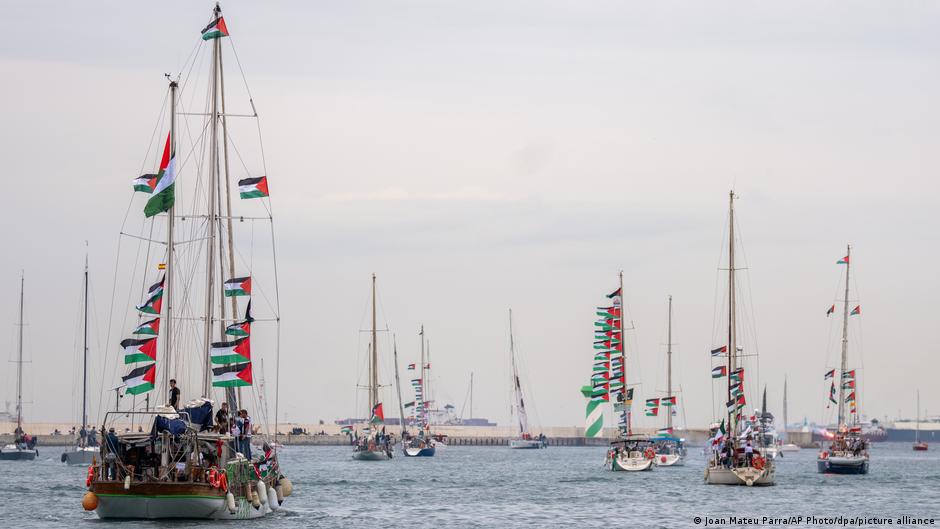
Israel intercepted more than 20 Gaza-bound aid ships carrying 175 activists in international waters near Greece, with the flotilla organizer saying 15 boats were seized near Crete. The incident escalates geopolitical tensions around the Gaza blockade and the Israel-Hamas war, which has already produced more than 72,000 reported Palestinian deaths since October 2023. The event is likely to sustain risk-off sentiment across Middle East-exposed assets and broader geopolitical markets.
The immediate market read is not about Gaza supplies; it is about the widening gap between battlefield friction and maritime/legal risk. Any escalation that moves from interception to casualties, hostage-style detentions, or a forced boarding incident raises the probability of insurance exclusions, rerouting, and delay premia across Eastern Mediterranean shipping lanes, even if the core conflict remains geographically contained. The first-order effect is on sentiment; the second-order effect is on voyage economics, where charterers start pricing a higher geopolitical shock premium into routes touching Cyprus, Greece, Turkey, and Suez-adjacent transits. The biggest losers are not traditional defense primes in the first instance, but logistics and marine services exposed to regional uncertainty: container lines, bulk carriers, port operators, and marine insurers. If this becomes a recurring pattern, the market will increasingly treat the Eastern Med as a semi-contested corridor, which tends to widen spreads in freight derivatives before it shows up in spot rates. Defense names can benefit only if the event is interpreted as evidence of persistent regional instability that supports replenishment and maritime surveillance spending; otherwise the trade is too indirect for immediate upside. The contrarian point is that a high-profile interdiction can actually reduce near-term shipping risk if it reinforces deterrence and discourages follow-on activist voyages or private-charter copycats. That would make the market's instinct to bid up disruption-sensitive names too aggressive on a 1-2 week horizon. The real tail risk is political: if a misstep generates sanctions talk, a legal challenge to the blockade regime, or broader protests, the issue can jump from a niche maritime story to a sovereign-risk headline within days, with effects that persist for months through insurance, contracting, and port-security costs.
AI-powered research, real-time alerts, and portfolio analytics for institutional investors.
Request DemoOverall Sentiment
strongly negative
Sentiment Score
-0.65
