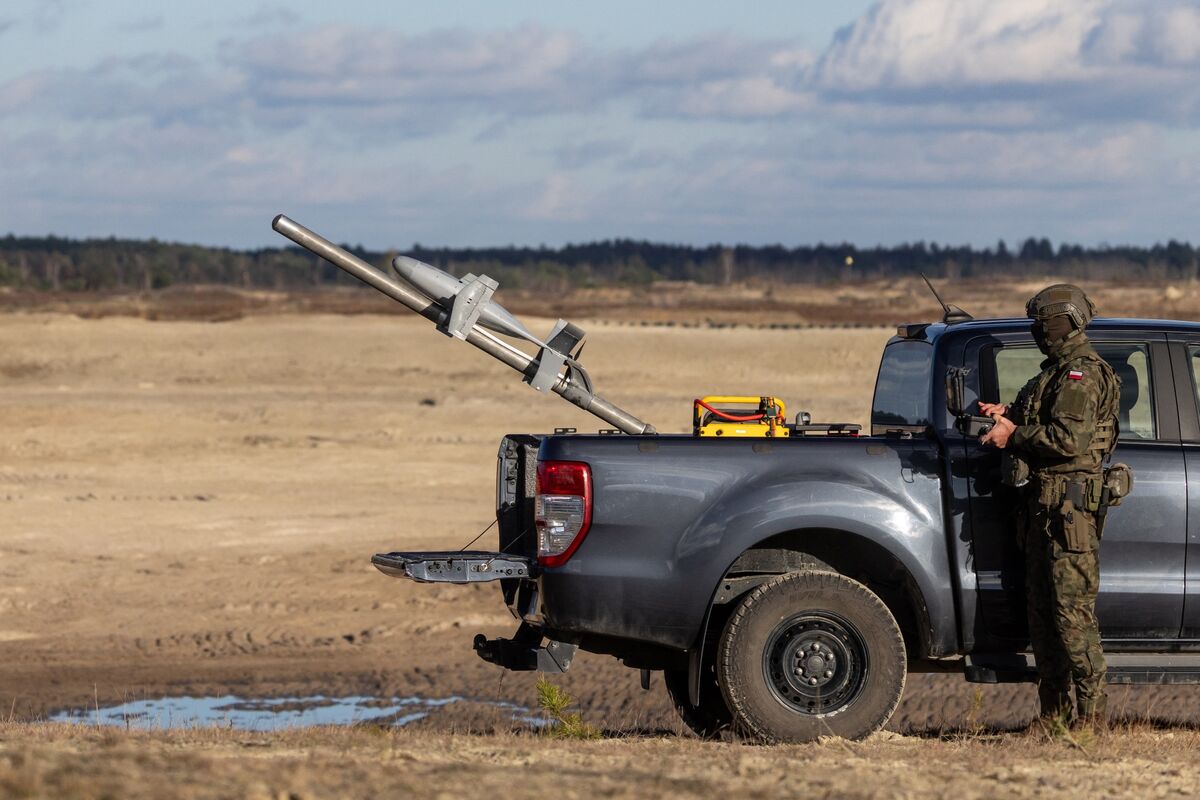
Poland, the largest recipient of the EU's military funding program, plans to allocate up to €8 billion ($9.3 billion) of those loans toward drones and anti-drone systems, Defense Minister Wladyslaw Kosiniak-Kamysz said. The move is aimed at strengthening aerial defenses amid Russian incursions and signals substantial upcoming procurement opportunities for defense and drone technology suppliers, as well as a material increase in Poland's defense-related capital spending financed via EU military funds.
Market structure: €8B (≈$9.3B) earmarked for drones/anti‑drone systems is a material multi‑year demand shock concentrated in EM‑EU defense procurement; direct winners are specialized UAV OEMs, sensor/EO suppliers, RF countermeasures and prime integrators (Rheinmetall, Leonardo, Airbus defense units) while low‑end consumer drone OEMs and Russia‑linked suppliers lose addressable market. Pricing power will rise for scarce subcomponents (RF modules, gimbals, AESA sensors, MCUs) and for integrators able to meet NATO standards; expect 10–30% margin expansion for niche suppliers that secure contracts over 12–36 months.
Risk assessment: Tail risks include EU funding delays or strings attaching procurement to European suppliers (procurement concentration risk), export controls on key semiconductors, and supply‑chain shortages (chips/composites) that could push delivery timelines out 6–24 months. Immediate market moves likely muted (days), tender news and RFPs will drive short term (weeks–months) re‑rating, while realization of domestic industrialization and margin capture plays out over 2–5 years; key catalysts are EU grant approvals, Polish tender issuances, and any Russia escalation.
Trade implications: Tactical: tilt into European defense primes (RHM.DE, LDO.MI) and niche anti‑drone names (DRO.AX) while hedging with US drone components (AVAV, KTOS) via defined‑risk option structures; expect to scale positions on RFP announcements within 30–90 days. Macro cross‑asset: modest upward pressure on Polish sovereign yields and EUR/PLN volatility—consider reducing duration in PLN‑denominated debt until yields stabilize within ±50bp of current levels.
Contrarian angles: Consensus underestimates on‑shoring: domestic Polish contractors and small caps may capture disproportionately high margins once localization rules bind — a 10–20% reallocation from primes to local suppliers is plausible over 2–4 years. Conversely, competition for scarce components could compress OEM margins if orderbooks spike simultaneously across EU, so avoid paying up for long duration growth without contract visibility.
AI-powered research, real-time alerts, and portfolio analytics for institutional investors.
Request DemoOverall Sentiment
mildly positive
Sentiment Score
0.25
