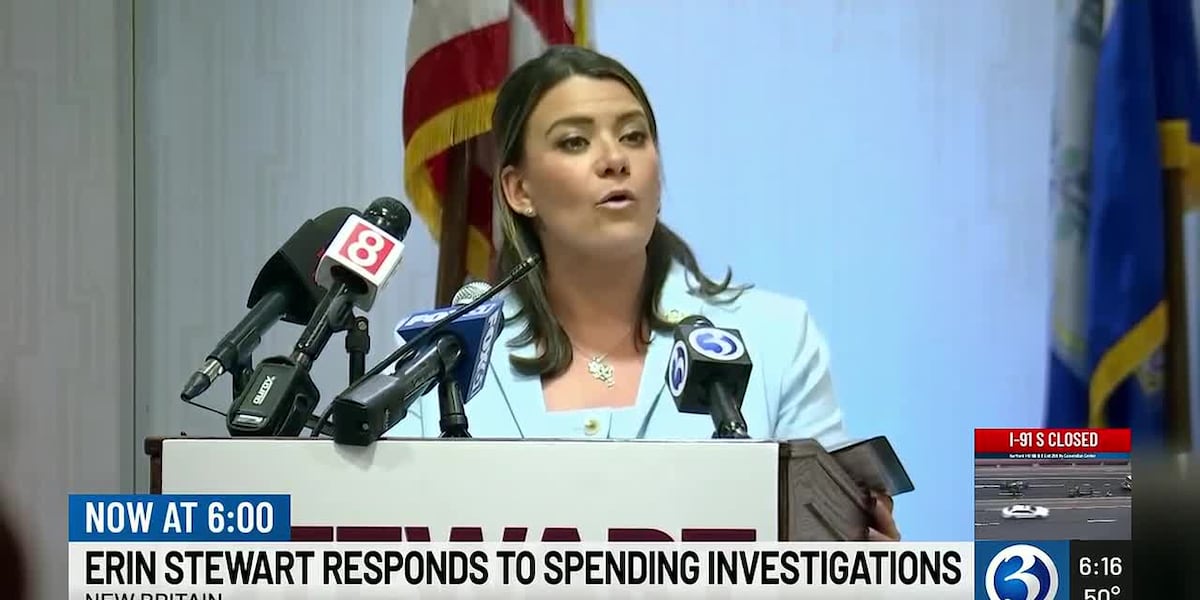
Republican gubernatorial candidate Erin Stewart suspended her campaign after an independent investigation said she showed a reckless disregard for public-fund policies and misused a city-issued credit card. The report cited roughly $207,000 in charges over 12 years, including non-municipal purchases such as cat toys, lingerie, makeup, decorations, and party items, and state police have opened an investigation. The news is materially negative for Stewart and politically relevant in Connecticut, but the direct market impact is likely limited.
This is not a single-name catalyst, but it is a governance shock with second-order effects on Connecticut state politics and any issuer exposed to municipal-state fiscal controls. The immediate market read is a small but meaningful increase in the probability of a more defensive, compliance-heavy posture across Connecticut local government, which can tighten procurement discretion and slow spending decisions in the near term. That tends to favor larger, process-driven vendors with stronger documentation and hurts smaller vendors reliant on relationship-based municipal sales. The bigger risk is reputational contagion inside the Republican field and any broader “anti-incumbent” narrative getting reframed as an ethics narrative. If the investigation widens or becomes criminal, the event moves from a local headline to a months-long political liability that can alter down-ballot turnout, fundraising efficiency, and candidate recruitment. The faster the story resolves without charges, the more likely the market treats this as isolated; if subpoenas or arrests emerge, expect a sharper risk-off response for Connecticut-adjacent political assets and consulting/advertising spend tied to the cycle. Contrarian view: the consensus may overestimate the economic materiality and underestimate the cleansing effect. Governance scandals often create short-term noise but can improve institutional credibility if the response is transparent, which can actually support municipal-credit discipline and reduce long-run leakage. The investable angle is less about the political headline itself and more about which firms benefit from tighter oversight, audit-friendly workflows, and a slower but more rigorous municipal purchasing environment over the next 3-12 months.
AI-powered research, real-time alerts, and portfolio analytics for institutional investors.
Overall Sentiment
strongly negative
Sentiment Score
-0.55
