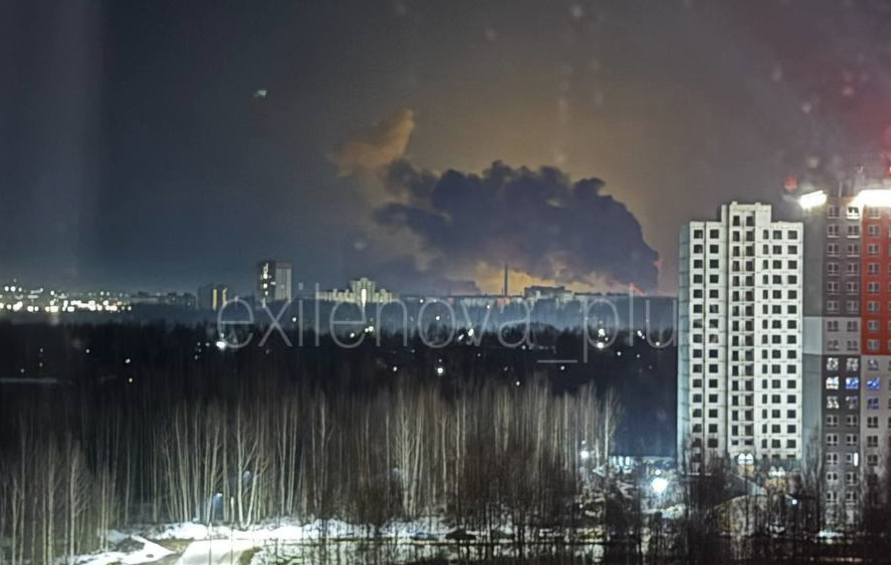
Ukrainian drones struck the Slavneft-YANOS refinery in Yaroslavl overnight on Mar 28; the refinery is one of Russia's five largest with capacity >15 million tonnes/year. Russia reported shooting down 155 Ukrainian drones across 16 regions overnight, while previous nights saw strikes on oil terminals at Ust-Luga and Primorsk and the Kinef refinery (Mar 26). These attacks—combined with geopolitical escalation that pushed oil above $100/bbl on Mar 8 and ongoing sanctions/price-cap regimes (plus a US temporary license on Mar 12 to sell stranded Russian cargoes)—heighten the risk of tighter Russian fuel supply and further volatility in oil markets.
Repeated deep strikes on refining and terminal infrastructure materially raise the probability that Russian refined product exports to nearby markets (Baltic/Black Sea/Western Russia trunks) will remain impaired for months rather than days. Spare-part bottlenecks from sanctions, combined with physical damage to complex FCC/alkylation units, create a credible 2–6 month window of reduced processing throughput that can't be quickly backfilled by crude-only exports.
The immediate market transmission is not just higher crude prices but a structural widening of refined product cracks (diesel/jet/MAK) into Europe and Turkey, and a surge in tanker arbitrage flows to re-route product from distant hubs; expect freight rates and war-risk premia to spike near-term, disproportionately benefiting owners of Aframax/Suezmax/VLCC capacity.
Second-order winners include refiners with access to spare processing capacity and short shipping legs (Turkey, India, some Mediterranean refiners) and tanker owners; losers are insurers, owners of fixed-route product pipelines, and any downstream players long on just-in-time diesel inventories in NE Europe. A key reversal catalyst would be either a rapid Russian repair program circumventing sanctions (6–12 weeks) or a coordinated diplomatic cooldown that reduces strike frequency; either would compress cracks and normalize freight within 1–3 months.
AI-powered research, real-time alerts, and portfolio analytics for institutional investors.
Overall Sentiment
mildly negative
Sentiment Score
-0.35
