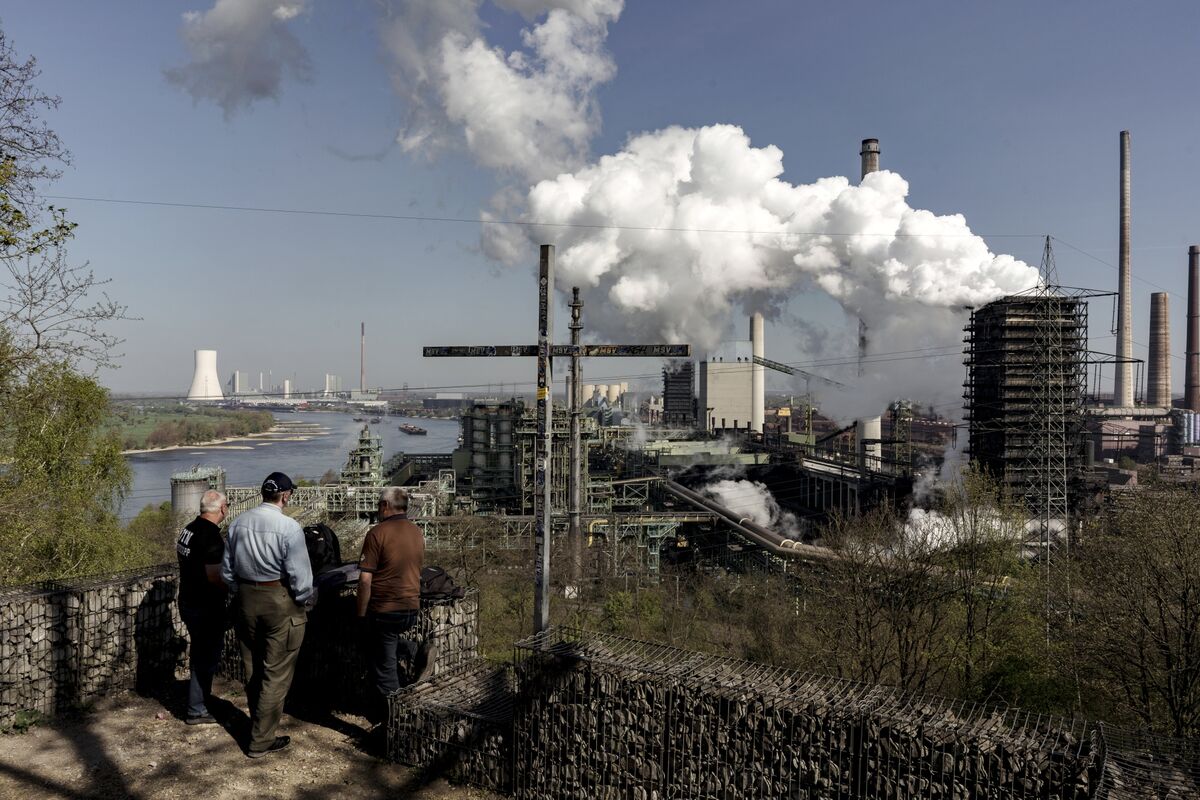
Donald Trump's renewed focus on transforming global trade practices poses a significant risk to Germany, particularly its auto and steel industries, which are highly susceptible to potential tariffs. Trump's long-standing grievances against Germany suggest a targeted approach, increasing the likelihood of protectionist measures impacting the German economy.
Donald Trump's ongoing campaign, with its stated aim to 'transform the way the world does business,' presents a significant and specific geopolitical risk to Germany, which the article identifies as 'uniquely vulnerable.' The German automotive and steel industries are highlighted as particularly exposed to potential U.S. tariffs, a risk compounded by Trump's documented historical grievances towards Germany. The associated data signals reinforce this concern, indicating a 'strongly negative' sentiment (score -0.7) and a 'pessimistic' tone, coupled with a high market impact score of 0.7, suggesting substantial potential economic consequences. Key themes such as 'Tax & Tariffs,' 'Trade Policy & Supply Chain,' 'Geopolitics & War,' 'Elections & Domestic Politics,' and 'Automotive & EV' accurately frame the multifaceted nature of this impending challenge for the German economy.
AI-powered research, real-time alerts, and portfolio analytics for institutional investors.
Request DemoOverall Sentiment
strongly negative
Sentiment Score
-0.70
