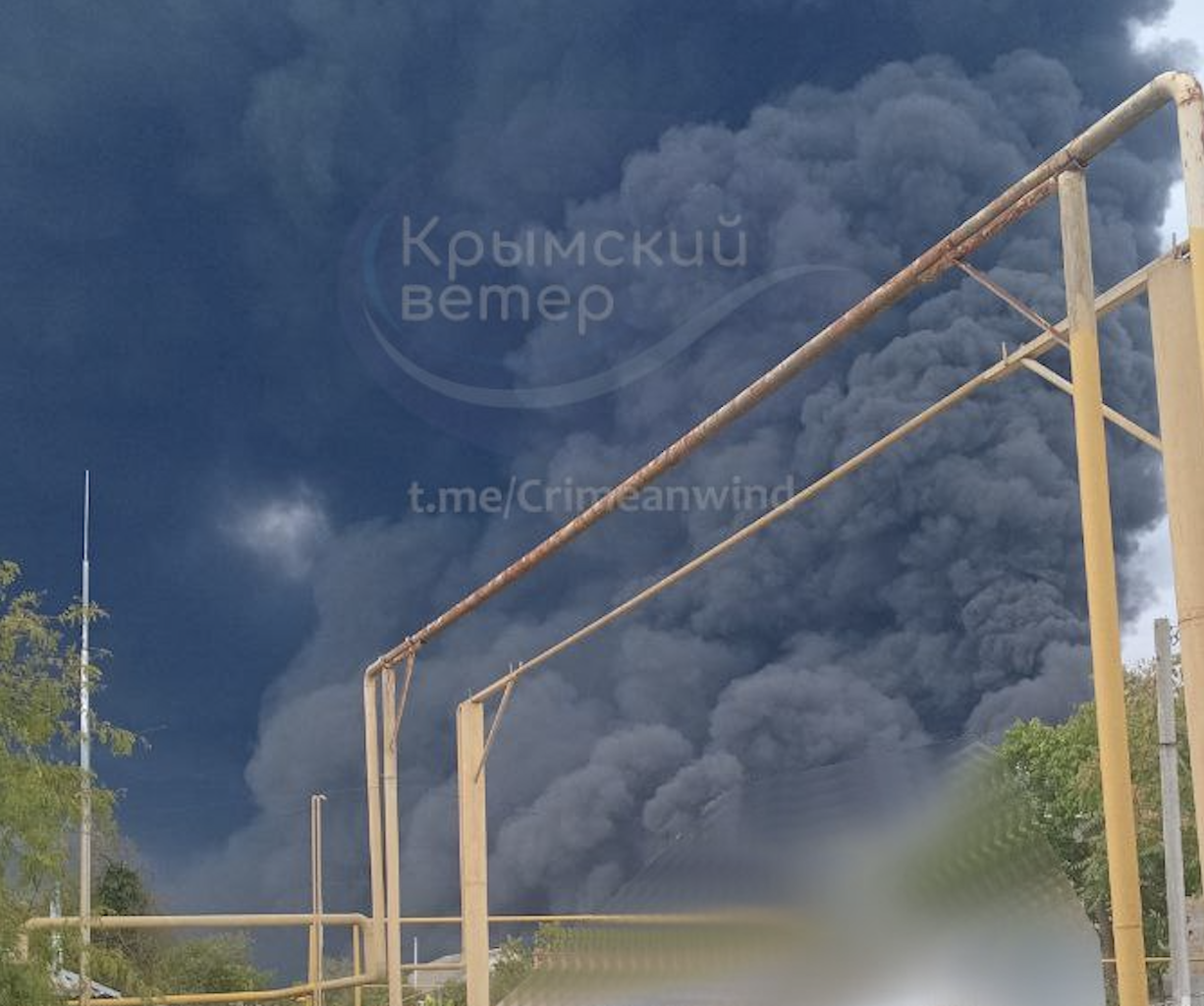
Ukrainian drone strikes severely damaged 16 fuel tanks at the Morskoi Neftianoi Terminal in occupied Feodosia, Crimea, a critical logistical hub for Russian military fuel supplies with a 193,000 cubic meter capacity. This incident is part of Ukraine's broader campaign targeting Russian energy infrastructure, which has reportedly reduced Russia's oil processing capacity by 21% and led to fuel shortages in several regions, signaling continued geopolitical risk and potential impacts on commodity markets and Russian operational capabilities.
Ukrainian forces executed a drone strike on October 13 against the Morskoi Neftianoi Terminal in Russian-occupied Feodosia, Crimea, damaging 16 fuel tanks and igniting a large-scale fire that remained visible from 25 kilometers away. This facility, located 259 km from Ukrainian-controlled territory, is a critical logistical hub for supplying Russian forces in southern Ukraine, possessing an estimated storage capacity of up to 193,000 cubic meters of oil products. This incident marks the second confirmed attack on this specific terminal within a week, indicating a persistent targeting strategy.
The strike is part of a broader Ukrainian campaign aimed at dismantling Russia's military infrastructure and undermining its warfighting capabilities, which also involved coordinated attacks on a radar system, a drone command post, and an ammunition depot. Commander-in-Chief Oleksandr Syrskyi has reported that these targeted strikes have already reduced Russia's overall oil processing capacity by 21%. This reduction is reportedly contributing to fuel shortages across several Russian regions.
The sustained targeting of critical Russian energy infrastructure, particularly military supply points, significantly elevates geopolitical risk and carries tangible implications for global energy markets. The substantial damage to a key fuel depot and the reported 21% reduction in Russia's oil processing capacity underscore potential disruptions to both Russian domestic supply and export capabilities. This situation suggests continued volatility in commodity prices, particularly crude oil and refined products, driven by supply concerns and heightened conflict intensity.
AI-powered research, real-time alerts, and portfolio analytics for institutional investors.
Request DemoOverall Sentiment
strongly negative
Sentiment Score
-0.70
