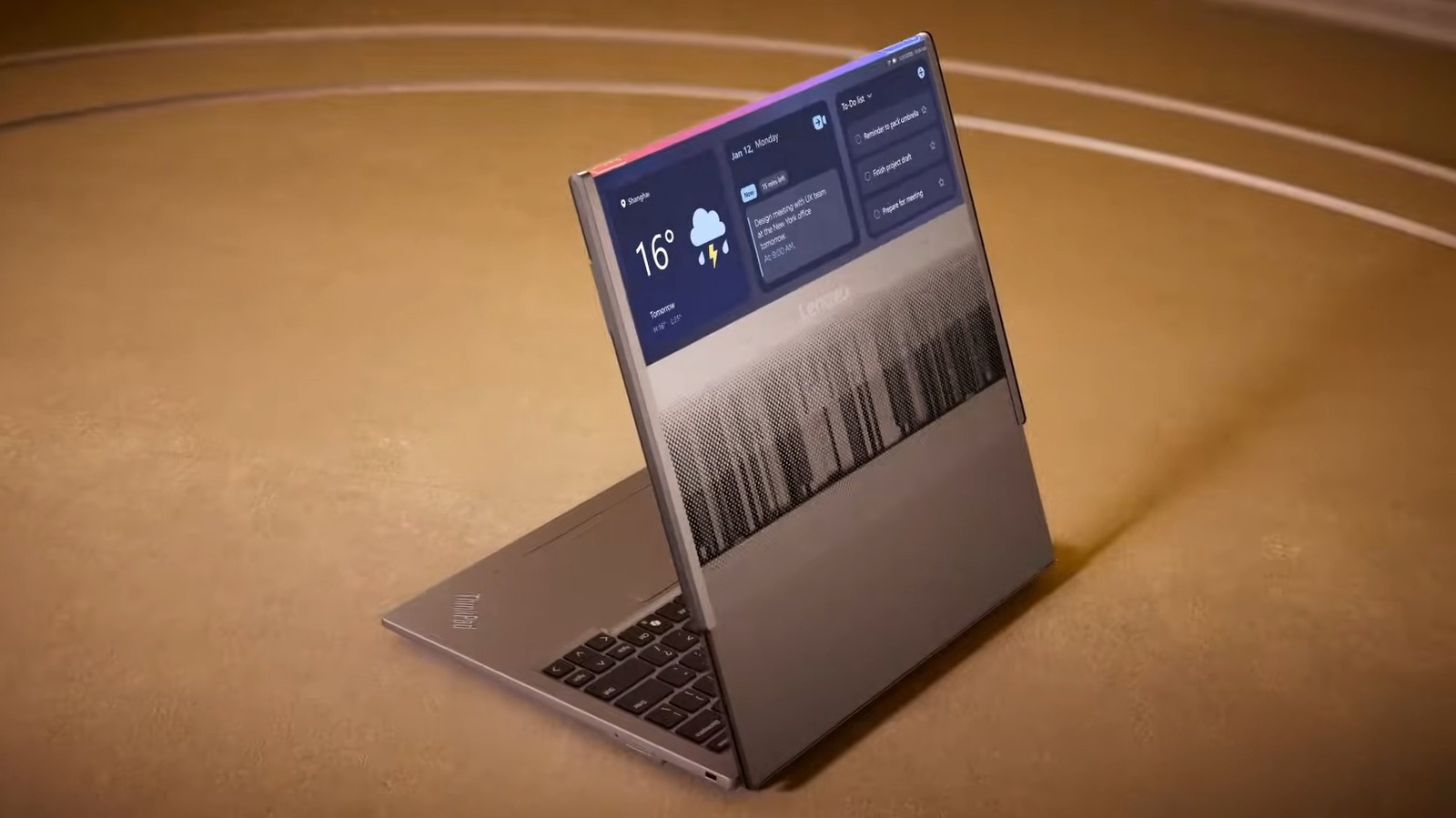
At CES 2026 Lenovo unveiled two concept laptops using rollable OLED displays: the Legion Pro Rollable (horizontally expanding via a tension-based dual-motor design to 16-inch Focus, 21.5-inch Tactical and 24-inch Arena modes) and the ThinkPad Rollable XD (vertically extending from 13.3 to 16 inches with voice and touch controls and a Corning Gorilla Glass Victus 2 lid). The gaming-focused Legion concept is shown with an NVIDIA GeForce RTX 5090 Laptop GPU and Intel Core Ultra processors; both devices are concepts with no release date announced. The designs signal potential product and supply-chain implications for OLED display suppliers and PC OEMs if rollable screens reach commercialization, but near-term market impact is limited given the conceptual status.
Market structure: Rollable OLED laptops concentrate winners in flexible OLED panel suppliers, specialty cover-glass (GLW) and high-performance GPU vendors (NVDA) for premium gaming SKUs, while legacy LCD supply chains and low-end OEMs face margin pressure. Lenovo’s use of Intel Core Ultra limits immediate market share swings but signals OEM differentiation rather than broad channel disruption; expect premium ASPs +10–25% on rollable SKUs versus standard laptops if yields improve.
Risk assessment: Tail risks include mechanical reliability leading to >5% RMA rates, OLED fab capacity bottlenecks driving 20–40% panel lead times, or delayed mass production (push beyond 12–18 months). Near term (days–weeks) market moves will be muted; monitor 60–90 day supplier announcements for binary outcomes; medium term (6–24 months) adoption depends on yield curves and app/software support.
Trade implications: Direct plays favor GLW (durable moat) and NVDA exposure to high-end gaming GPUs; deploy options to express upside without full equity exposure. Use pair trades to capture relative value (premium OLED glass suppliers vs legacy LCD suppliers) and size positions modestly—1–3% portfolio each—until supply agreements or sell-through data confirms demand.
Contrarian angle: Consensus overweights headline novelty and NVDA’s role; adoption historically follows a 2–3 year ramp (flex OLED phones/tablets analog). Hidden risk: higher warranty and repair costs could compress OEM margins by 200–400bps if mechanical failures occur. Mispricing opportunity exists in GLW and select panel suppliers before mainstream adoption is priced in.
AI-powered research, real-time alerts, and portfolio analytics for institutional investors.
Request DemoOverall Sentiment
mildly positive
Sentiment Score
0.35
Ticker Sentiment
