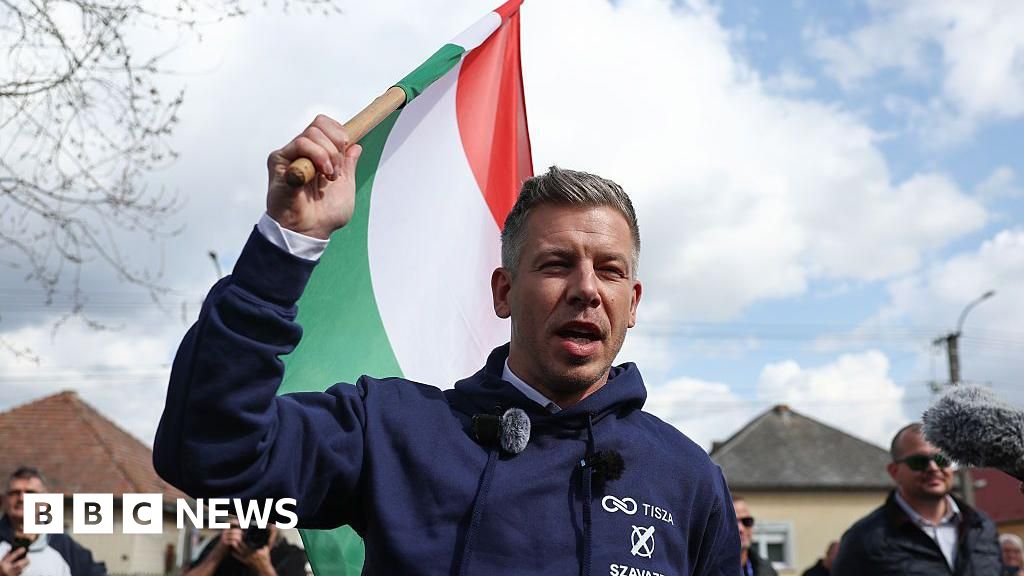
Peter Magyar, a former Fidesz insider, is mounting a credible challenge ahead of the 12 April elections after his new party Tisza won 29.6% and 7 seats in the European Parliament vote versus Fidesz's 44.8%. He vows to tackle corruption and to unlock "billions of euros" in EU funds currently frozen over rule-of-law concerns, while criticizing Orban's ties to Russia—creating political uncertainty that could affect Hungary's EU relations and investor sentiment toward Hungarian assets.
This is a classic high-conviction insurgency inside an entrenched system: the market should price a binary outcome with an asymmetric tail rather than a smooth drift. If the challenger credibly accelerates EU funds disbursement, the direct channels are: (1) a cyclical uplif t to Hungarian banks' deposit growth and loan demand, (2) a liquidity-driven narrowing of sovereign spreads versus the EU core, and (3) an appreciation of the HUF that mechanically improves local-currency earnings for domestically listed corporates. These effects would materialize within 3–12 months as money managers reallocate into regional financials and construction-related names.
The offsetting mechanism is institutional entrenchment: control of media, state appointments and legal levers enable near-term countermeasures (smear, legal suits, regulatory interference) that can sap momentum inside weeks. That creates a high realized-volatility regime for Hungary-specific assets and a non-linear correlation path into broader CEE risk assets — expect episodic spillovers into Polish and Czech sovereign curves and into regional bank stocks within 48–72 hours of major campaign shocks.
From a fund-construction perspective, treat Hungary as a political option: entry should be staged and hedged, not a directional outright equity stake. The cleanest implementations are credit protection (CDS) to cap tail losses and FX forwards/forwards-style option structures to arbitrage the EU-funds-unlocking scenario versus the media/regulatory retaliation scenario. Monitor two short-term catalysts: official EU conditionality decisions (30–90 days) and any legal filings against the challenger (days–weeks).
AI-powered research, real-time alerts, and portfolio analytics for institutional investors.
Overall Sentiment
neutral
Sentiment Score
0.00
