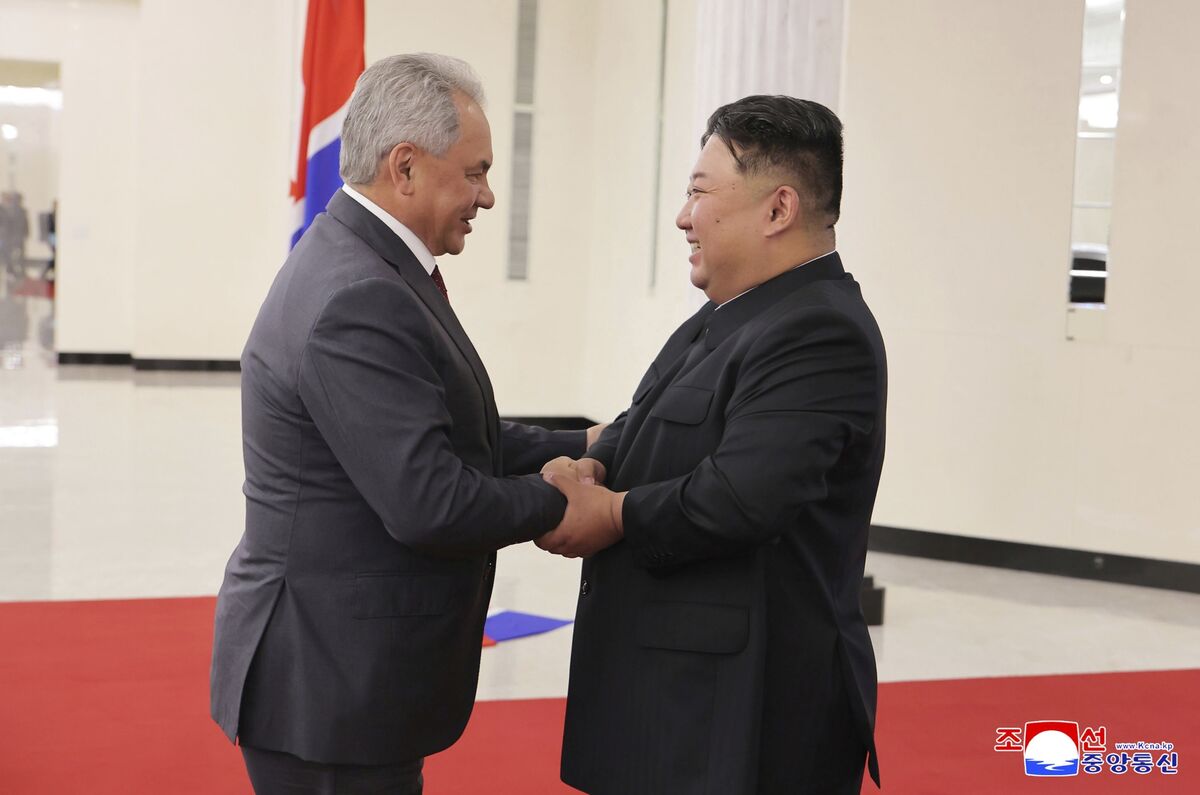
Kim Jong Un and Vladimir Putin's top security aide Sergei Shoigu discussed ongoing cooperation, according to North Korean state media, amid reports that Pyongyang plans to send more military personnel to support Russia. Russian media, citing Shoigu, reported that North Korea will deploy an additional 6,000 military workers to Russia’s border region of Kursk, signaling further military assistance from Pyongyang to Moscow.
The reported meeting between North Korean leader Kim Jong Un and Russian security aide Sergei Shoigu, focusing on ongoing cooperation, signals a strengthening of ties between Pyongyang and Moscow. A key development arising from this engagement, as per Russian media citing Shoigu, is North Korea's plan to deploy an additional 6,000 military workers to Russia’s Kursk border region. This intended deployment represents a material increase in Pyongyang's support for Russia, directly impacting the geopolitical landscape and classified under themes such as "Geopolitics & War" and "Infrastructure & Defense." The associated "strongly negative" sentiment score of -0.6 and a moderate market impact score of 0.6 underscore the market's adverse reaction to escalating military collaboration, which could also trigger further discussions around "Sanctions & Export Controls."
AI-powered research, real-time alerts, and portfolio analytics for institutional investors.
Request DemoOverall Sentiment
strongly negative
Sentiment Score
-0.60
