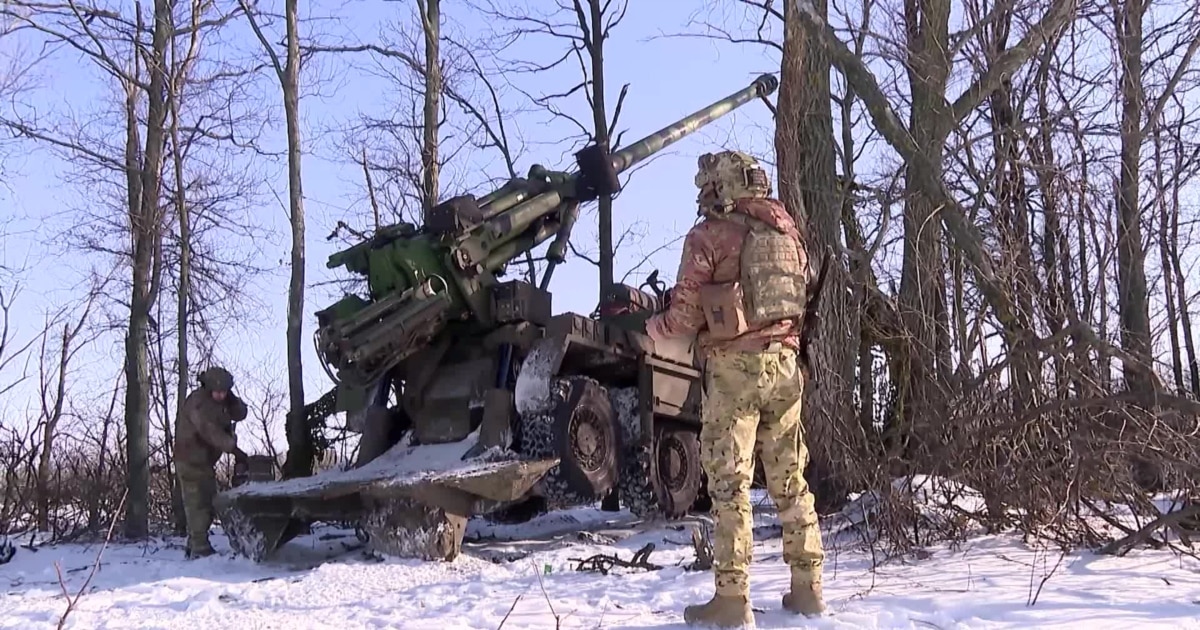
Russian forces are conducting slow, costly, incremental advances along an approximately 1,100-kilometer front, with contested fights in key logistics hubs including Kupyansk (where about 60 Russian infantrymen were reported holed up as of Jan. 26) and Kostyantynivka, while Pokrovsk is reported to be roughly 80–90% under Russian control. Moscow has achieved greater success degrading Ukraine’s electricity grid and municipal heating infrastructure, leaving civilians exposed to subzero cold, even as battlefield gains remain limited and contested (e.g., a false Russian claim of control over Kupyansk-Vuzloviy, ~10 km away). The operational picture—described as ‘dynamic stagnation’—implies persistent regional instability and medium-term downside risk to energy delivery and logistics rather than an immediate decisive strategic shift.
Market structure: The conflict’s “dynamic stagnation” favors defense primes (LMT, NOC, RTX, GD; ITA ETF) and suppliers of power-resilience (GNRC, ETN, ABB) as governments likely increase procurement by a meaningful uplink (we estimate incremental EU+US defense procurement +5–15% over 12–24 months). Energy traders should pay up for European gas and spot power (TTF) volatility into late winter/early spring as grid attacks and reservoir constraints keep upside skew. Civilian-facing sectors in Eastern Europe (banks, travel, rail logistics) are losers; expect local market dislocations and widening CDS spreads in EM-Europe by 100–300bp if frontline gains persist.
Risk assessment: Key tail risks: a NATO entanglement or Russian strategic escalation could spike Brent >$120/bbl and gold >$2,300 (low-prob/high-impact), while a credible ceasefire/large aid package could compress defense equities by 20–35% quickly. Near-term catalysts: Abu Dhabi talks Feb 1 (days) and US congressional appropriations votes (weeks). Hidden dependencies include US/European weapons production capacity and munitions supply chains — shortages could cap defense revenue growth for 6–12 months.
Trade implications: Tactical approach — overweight defense and power-resilience for 3–12 months, long short-dated gas convexity into spring, and underweight/hedge European cyclicals and EM-Europe financials. Use LEAPS on select primes for long-dated upside and call spreads on TTF/Henry Hub to express seasonal gas risk without unlimited theta decay. Size positions conservatively (1–3% per idea) with event stop/target rules tied to Feb 1 outcomes and spring thaw (Mar–Apr) operational windows.
Contrarian angles: Consensus prices a protracted war with incremental gains; market may underprice demand for distributed power and microgrids — an asymmetric play in small-cap industrials (GNRC, ETN) that could rerate +30% if infrastructure attacks continue. Conversely, defense is crowded — a negotiated ceasefire or a large EU reconstruction package (>$100bn) would catalyze a 20–30% mean reversion; structure trades to retain convexity against both outcomes.
AI-powered research, real-time alerts, and portfolio analytics for institutional investors.
Request DemoOverall Sentiment
moderately negative
Sentiment Score
-0.50
