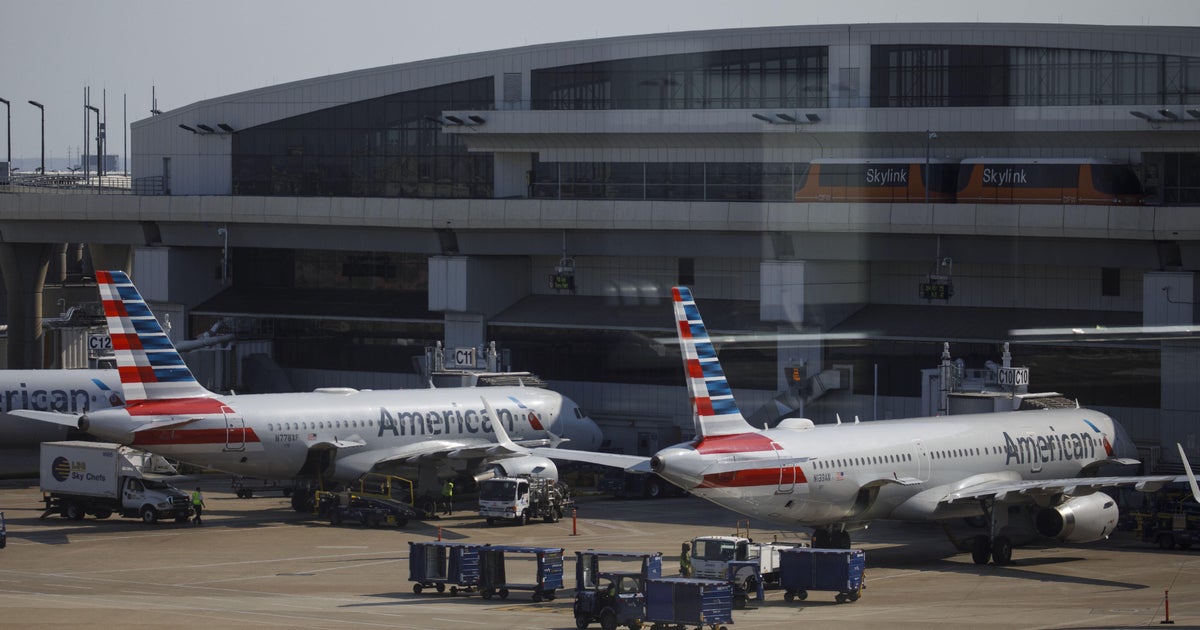
American Airlines is restructuring operations at its largest hub, Dallas–Fort Worth, expanding flight banks from 9 to 13 beginning in April to improve connections at an airport that handles over 30% of the roughly 700,000 daily American flyers. The carrier said the change — affecting about 100,000 customers on some 930 peak-time flights — will include longer scheduled block times to boost on‑time arrivals and baggage connectivity, more favorable early‑morning departure windows, and steps with TSA to roll out facial‑recognition identity checks. The measures are intended to raise punctuality and customer experience and could yield modest operational efficiency gains without changing network breadth or schedule quality.
Market structure: American (AAL) gains a tactical advantage at its largest hub (DFW) by expanding banks from 9 to 13, directly improving connectivity for ~100k peak customers on 930 flights and potentially reducing missed-connection costs and irregular-operation payouts by mid-single-digit percentages within 6–12 months. Winners include AAL, DFW concession and ground-handling vendors, and identity-tech suppliers if TSA facial recognition scales; losers are carriers with weaker hub coordination and any regional partners exposed to tighter connection buffers. The move signals demand is robust enough that schedule optimization — not capacity growth — is the lever, implying a modest improvement in yield per connecting passenger (order of 1–2%) rather than large ASM growth.
Risk assessment: Tail risks include regulatory pushback on facial recognition (policy reversal or litigation within 3–12 months), crew/slot constraints that nullify bank gains, and fuel-price shocks that could erase marginal yield gains; each could swing AAL equity ±15% quickly. Short-term (days/weeks) expect modest positive sentiment; medium-term (3–12 months) operational metrics (DOT OTP, mishandled baggage rates) will determine P&L impact; long-term (2–3 years) improved hub efficiency could lift unit revenue by ~1–2% if sustained. Hidden dependencies: benefits hinge on TSA adoption, gate/gate-crew reoptimization, and alliance/interline throughput; catalyst triggers include quarterly ops reports and DOT/TSA bulletins.
Trade implications: Direct play — establish a 2–3% long AAL equity position, target 15–25% upside over 12 months and hard stop at -10%; scale in over 2–6 weeks around ops updates. Options — if AAL 3–6m implied vol <40%, buy 3–6 month call spreads (10–20% OTM) sized 0.5–1% notional; if IV >50% consider selling 30–45 day covered calls to collect premium. Pair trade — dollar‑neutral long AAL / short LUV (1–3% net each) over 6–12 months to express hub-connectivity premium vs point‑to‑point exposure. Fixed income — if AAL senior paper yields >BMark+550bp (OAS>300bp), buy selective 1–3% credit exposure expecting spread compression as ops improve.
Contrarian angles: Consensus may underweight the incremental CASM hit from longer block times — utilization could fall and raise CASM 1–2% if not offset by yield, so upside is conditional. The market might also be underpricing regulatory risk from biometric ID; a privacy/legal setback could force reversals and rebooking chaos, compressing short-term upside. Monitor DOT OTP at DFW, baggage-mishandling rates and TSA approvals over the next two quarters; if neither improves by >200bp OTP or 20% baggage reduction, trim positions aggressively.
AI-powered research, real-time alerts, and portfolio analytics for institutional investors.
Request DemoOverall Sentiment
mildly positive
Sentiment Score
0.35
Ticker Sentiment
