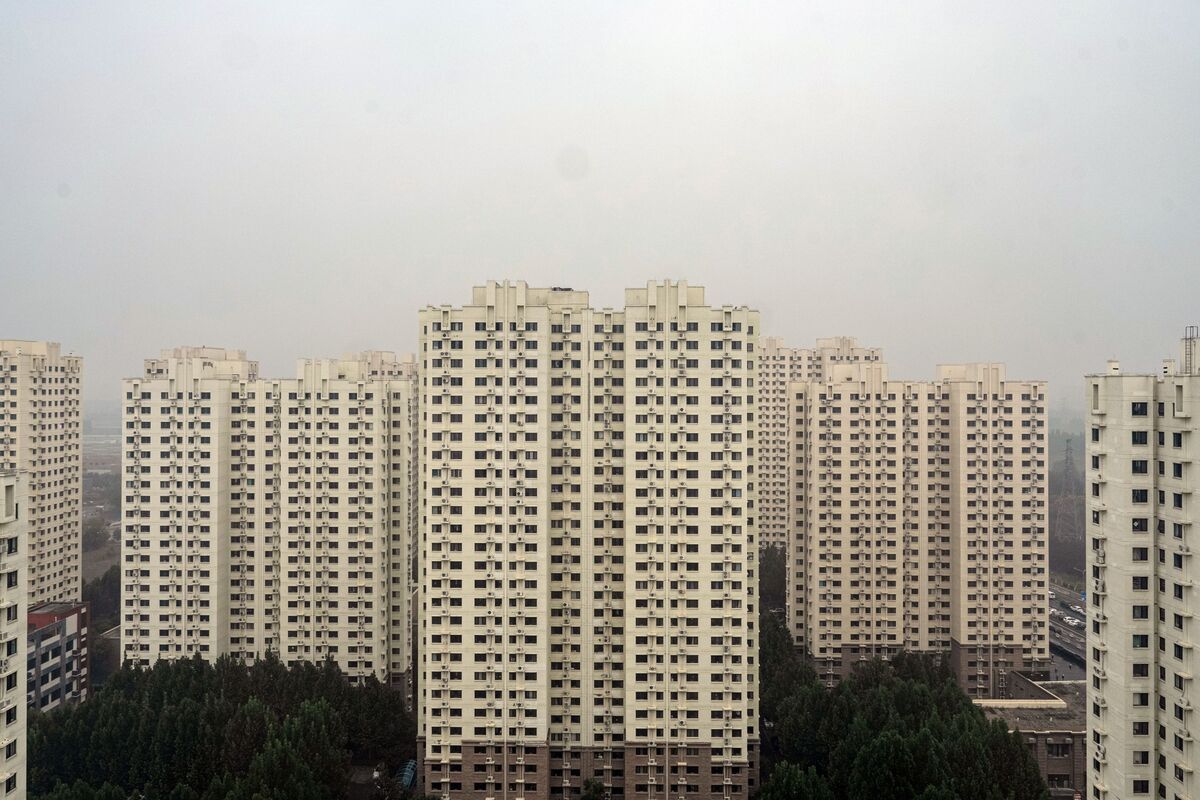
Morgan Stanley economists say Beijing could deploy mortgage subsidies of roughly 400 billion yuan (~$57 billion) a year to shore up consumer confidence and arrest weakness in the property market, with a gradual, flexible fiscal stimulus approach possible in 2026. The proposal — highlighted by chief China economist Robin Xing — signals potential targeted fiscal easing that would materially support housing demand and related sectors if implemented, though it remains contingent on further policy debate and additional property-market deterioration.
Market structure: A targeted mortgage subsidy (~400bn CNY/year per Morgan Stanley) is an explicitly demand-side tool that principally benefits state-linked banks (mortgage origination), higher-quality developers with healthy presales (e.g., Longfor 0960.HK, Vanke 2202.HK), and consumer cyclicals tied to home purchases (appliances, construction materials). Weak, highly leveraged private builders (e.g., Country Garden 2007.HK) and provincial land-sale-dependent local governments are likely losers as subsidies improve sales but do not erase balance-sheet stress. Expect modest restoration of pricing power for quality developers and a likely rise in transaction volumes: a reasonable scenario is a 5–15% YoY lift in volumes within 6–12 months of rollout.
Risk assessment: Tail risks include policy half-measures that revive demand but leave developer solvency unresolved (contagion to bank provisioning), a sharper-than-expected RMB depreciation if capital outflows accelerate, or local governments overleveraging to co-finance subsidies. Time buckets: immediate (days) — market knee-jerk relief rallies on rumors; short-term (weeks–months) — pilot programs and presale flows will reveal efficacy; long-term (quarters–years) — moral hazard, land-market distortions and commodity cycles. Key hidden dependencies: local fiscal capacity, developer willingness to complete projects, and mortgage eligibility rules (LTVs, down-payment thresholds); catalysts include pilot subsidy announcements, December/2025 budget signals and monthly property transaction data.
Trade implications: Priority direct plays are long state banks (ICBC 1398.HK, CCB 939.HK) and selective long positions in low-leverage developers (0960.HK, 2202.HK) while shorting the weakest credits (2007.HK) — expected asymmetric payoff if subsidies restore sales but fail to help insolvent names. Cross-asset: buy duration in onshore CGBs (7–10y) if 10y yields compress >20–30bps post-announcement; expect modest CNH appreciation and commodity demand uptick (steel, copper) over 3–12 months. Use 6–12 month call spreads on FXI (size 1–2% NAV, cost-capped) to express equity recovery without unlimited downside.
Contrarian angles: Markets may underprice a faster pilot rollout — a well-publicized subsidy in a Tier-1 city could produce outsized local equity performance before national rollout, presenting short-term arbitrage. Conversely, consensus may underappreciate the fiscal drag on local governments; over-subsidization could boost commodity inflation and push up bond yields, blowing up duration plays. Historical parallel: 2008–09 China stimulus boosted metals and infrastructure but created long-term overcapacity; prefer selective quality exposure and use credit shorts to hedge systemic replay.
AI-powered research, real-time alerts, and portfolio analytics for institutional investors.
Request DemoOverall Sentiment
mildly positive
Sentiment Score
0.28
Ticker Sentiment
