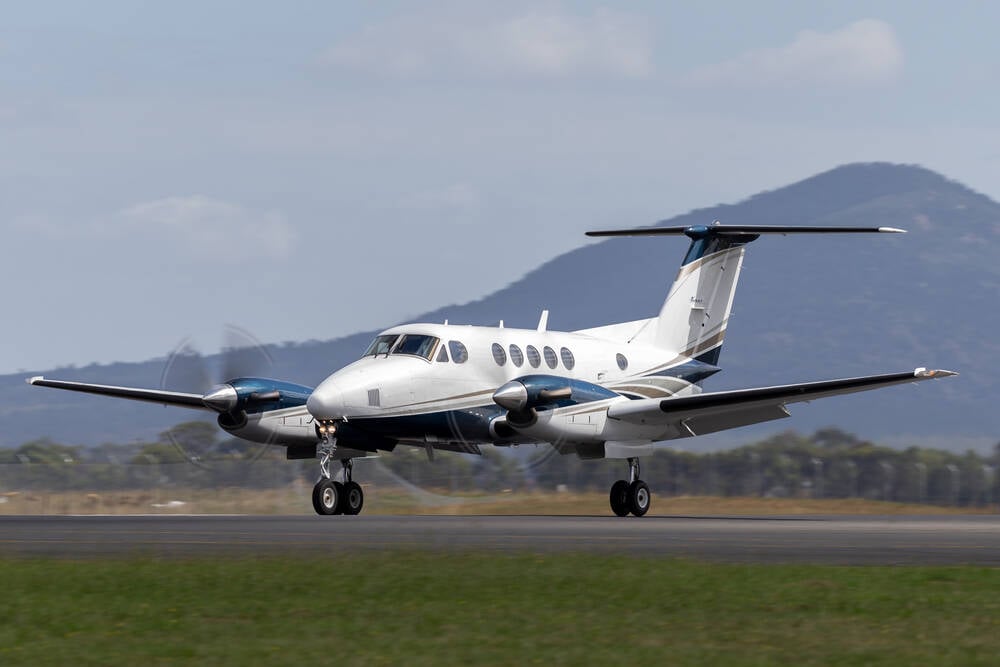
Garmin's Emergency Autoland system successfully conducted a fully automated emergency landing of a Beechcraft Super King Air B200 at Rocky Mountain Metropolitan Airport after a rapid, uncommanded loss of cabin pressurization; the FAA confirmed the aircraft landed safely with two people on board and is investigating. The operator said pilots deliberately left Autoland engaged and both crew exited uneventfully; the event represents the first start-to-finish emergency use of the Autoland feature and validates the technology for charter and potential defense customers, while also inviting regulatory scrutiny and liability considerations.
Market structure: Garmin (GRMN) is the clear near-term beneficiary — this first field use de-risks Autoland and should lift OEM ordering and retrofit demand, creating a potential +5–10% incremental avionics revenue stream for GRMN over 12–36 months if adoption follows conservative uptake curves. Textron (TXT) and other turboprop OEMs may see modest demand tailwinds for King Air‑class aircraft; legacy avionics providers (Honeywell HON, L3Harris LHX) face pressure in the small-aircraft aftermarket where software-driven solutions win on feature set and TCO.
Risk assessment: Key tail risks include an FAA safety directive or liability claim that forces low‑margin mandatory retrofits (could compress GRMN operating margin by 100–300bps and hit free cash flow by an estimated 10–30% in a severe scenario), cybersecurity exploits, or a failed Autoland incident that could trigger a 20–40% share drop. Timeframes matter: immediate (days) = press‑driven price moves; short term (30–180 days) = FAA/incident investigations and order announcements; long term (12–36 months) = market share migration and service revenue realization. Hidden dependencies include certification pipelines, supplier chip constraints, and insurer acceptance.
Trade implications: Primary actionable is a modest long on GRMN funded with defined‑risk options: buy 9–12 month call spreads ~15–25% OTM to capture adoption announcements while capping downside. Consider a relative value pair (long GRMN vs short HON) sized 2:1 for 3–6 months to express software over hardware differentiation. Rotate portfolio toward aerospace/software suppliers and trim exposure to small charter operators that may face $50k–$250k per‑aircraft retrofit capex over 6–18 months.
Contrarian angles: The market may be overpricing immediate revenue upside — certification, retrofit economics, and insurer acceptance historically take 12–36 months (TCAS/GPWS precedent). If GRMN rallies >20% without FAA/large OEM order confirmation, expect mean reversion; conversely a quiet 30–90 day FAA response followed by OEM purchase orders would be a structural catalyst. Unintended consequences include regulatory harmonization demands or cybersecurity mandates that slow adoption but raise long‑term switching costs in Garmin's favor.
AI-powered research, real-time alerts, and portfolio analytics for institutional investors.
Request DemoOverall Sentiment
mildly positive
Sentiment Score
0.25
Ticker Sentiment
