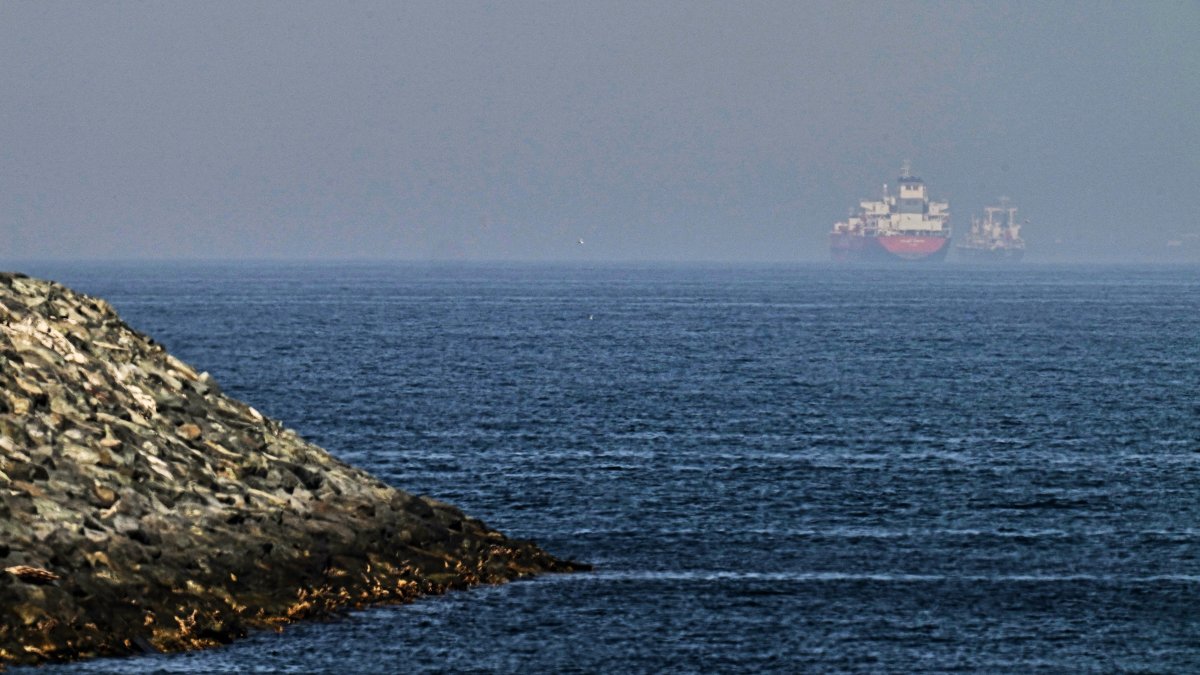
The U.S. launched 'Project Freedom' to guide stranded ships through the Strait of Hormuz, deploying an enhanced security area amid warnings that travel near normal shipping lanes is 'extremely hazardous' due to unmitigated mines. The disruption is still blocking roughly one-fifth of global oil flows, with 49 commercial ships ordered to turn back and Iran threatening force against foreign military forces entering the strait. The standoff keeps energy markets, shipping, and insurers on edge and risks broader supply-chain and oil price volatility.
The market is underpricing the asymmetry between a narrow supply shock and a broad confidence shock. Even if physical barrels do not fully disappear, the bigger near-term effect is marine insurance, chartering, and demurrage repricing: a few additional days of transit delay can cascade into multi-week inventory dislocations for refiners that run just-in-time crude slates, especially in Asia. That creates a second-order winner set in floating storage, tanker rates, and non-Gulf alternative barrels, while the first-order loser is not just oil consumers but any asset with a long-duration input-cost exposure.
The most important catalyst is not the maritime operation itself but whether it is perceived as a credible de-risking mechanism or a fresh escalation vector. If ships start accepting escorts, risk premia can compress quickly; if a single high-profile incident occurs, Brent can gap higher in hours and the inflation impulse will bleed into rates volatility before it shows up in CPI prints. The tighter the strait remains for even 1-2 weeks, the more likely we see refinery run cuts, product shortages, and a forced draw on strategic inventories across import-dependent economies.
The contrarian angle is that the revenue loss to Iran may be less important than the signaling effect on its future bargaining power: prolonged disruption may harden the political regime and reduce the probability of a near-term deal, extending the risk premium longer than oil bulls expect. But consensus may also be overestimating how much actual global supply is at risk; if the corridor remains partially open, the biggest monetizable move could be in shipping, insurance, and energy-volatility rather than in outright crude direction. In that case, long-vol and relative-value energy trades should outperform simple directional oil exposure.
AI-powered research, real-time alerts, and portfolio analytics for institutional investors.
Request DemoOverall Sentiment
strongly negative
Sentiment Score
-0.55
