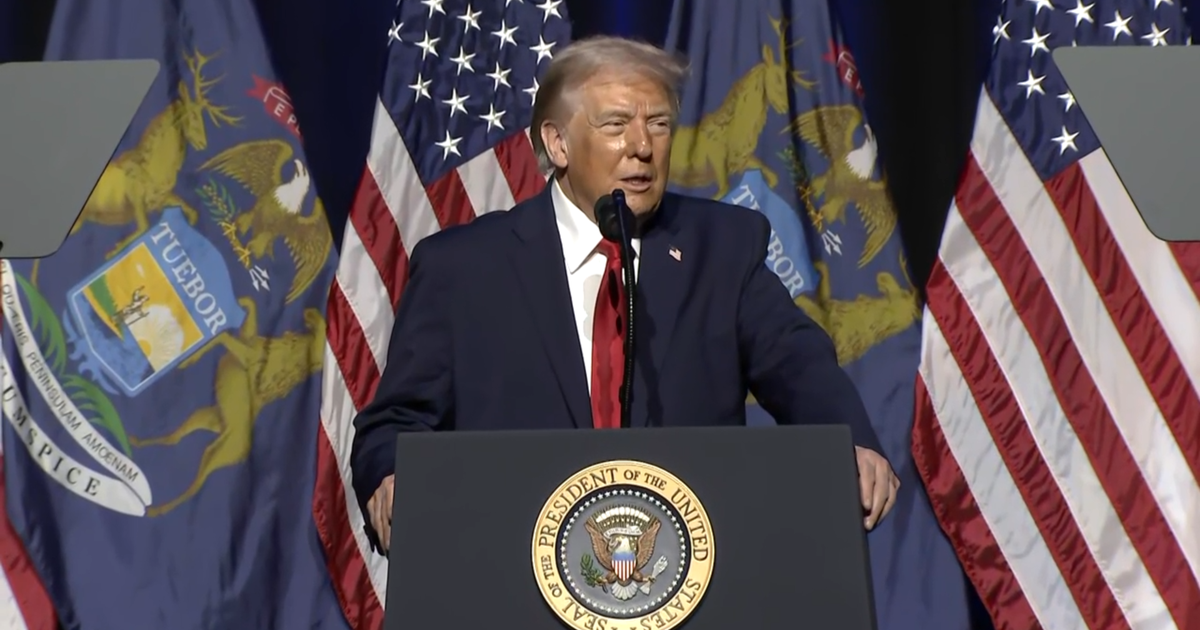
Speaking at the Detroit Economic Club after visiting a Ford plant, President Trump touted tariffs as having closed the trade deficit and helped Michigan's auto industry while defending his second-term economic agenda. The context includes a cooling labor market—December added just 50,000 jobs and the unemployment rate was 4.4% (down from 4.5% in November)—and his meetings with oil executives to discuss U.S. investment in Venezuelan oil amid references to recent U.S. military action and the capture of Nicolás Maduro, developments that raise geopolitical and energy-policy risk but are not immediate market-moving events.
Market structure: Tariff-friendly rhetoric and a push to open Venezuelan oil to U.S. capital explicitly favors domestic heavy-industry and legacy auto OEMs (Ford, suppliers, steelmakers) via protected volumes and higher local content. Expect a 1–3% near-term input-cost uplift for import-reliant players and a potential 3–7% share shift toward U.S.-made pickups/parts over 12–24 months, but demand risk from soft payrolls (50k adds in Dec) tempers pricing power.
Risk assessment: Tail risks include a Venezuela supply shock (oil +$10/bbl within weeks) or renewed broad-based tariffs leading to margin squeezes; conversely, rapid U.S. investment in Venezuelan oil could add supply and depress prices over 12–36 months. Immediate (days) market moves will be headline-driven; 1–3 month impacts on cost pass-through; 1–3 year structural reshoring effects may alter capex plans. Hidden dependency: tariff wins for OEMs can coincide with weaker consumer demand (unemployment >5% or consecutive months <100k jobs) that kills incremental volumes.
Trade implications: Favor selective cyclicals with pricing power (steel: CLF, STLD) and domestic OEMs (F) while hedging demand risk — avoid long-duration supplier/retailer exposure. Use oil volatility trades (buy 3-month WTI call spreads) as tactical tail hedges if geopolitical risk rises. Monitor policy calendar: tariff proclamations or Venezuela investment agreements in next 30–90 days as trade triggers.
Contrarian angles: Consensus assumes tariffs are net-positive for autos; markets underprice the inflation passthrough and Fed reaction. Historical parallel: 2018 U.S. tariffs delivered transitory domestic gains but net margin compression industry-wide; if monthly payrolls remain <150k for two consecutive months, auto demand re-prices lower and tariff-benefit narratives unravel. Unintended consequence: tariff-driven input inflation prompting tighter Fed policy, hurting cyclicals — size positions accordingly.
AI-powered research, real-time alerts, and portfolio analytics for institutional investors.
Request DemoOverall Sentiment
mixed
Sentiment Score
0.05
Ticker Sentiment
