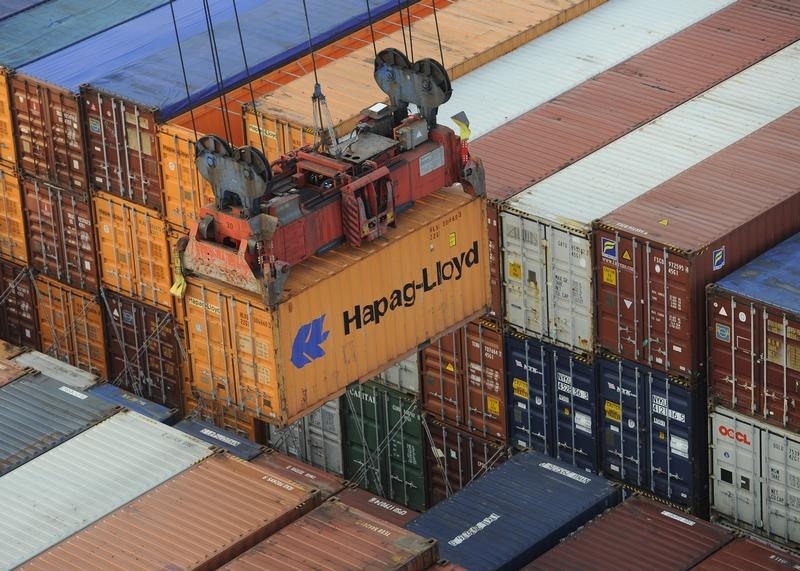
Kepler Cheuvreux analysts project that a U.S.-backed peace plan for the Israel-Hamas conflict could normalize Red Sea trade, which is currently disrupted by Houthi attacks, leading to an estimated 5.8% decline in container vessel demand and downward pressure on spot shipping rates. This outlook caused shares of major carriers like Hapag-Lloyd and Maersk to fall. However, the plan's implementation faces significant uncertainty, particularly regarding Hamas's agreement and potential sticking points over disarmament and Palestinian statehood.
A potential U.S.-sponsored peace deal between Israel and Hamas presents a significant headwind for the container shipping sector. According to analysis by Kepler Cheuvreux, a successful ceasefire could lead to the gradual resumption of trade through the Red Sea, which has been disrupted by Houthi attacks. This normalization would reverse the trend of carriers like Maersk (MAERSKb) and Hapag-Lloyd taking longer, more expensive routes. The reversion to shorter distances is projected to cause a 5.8% decline in demand for container vessels, all else being equal, creating substantial downward pressure on spot shipping rates. The market has already reacted to this outlook, with shares in Maersk and Hapag-Lloyd trading lower. However, the materialization of this scenario is highly uncertain; the proposal's success hinges on the agreement of Hamas, which has reportedly not been contacted for talks and would be required to disarm and relinquish power, creating a significant obstacle.
AI-powered research, real-time alerts, and portfolio analytics for institutional investors.
Request DemoOverall Sentiment
mildly negative
Sentiment Score
-0.30
Ticker Sentiment
